29 Leaning Art Ideas for a Rental Apartment
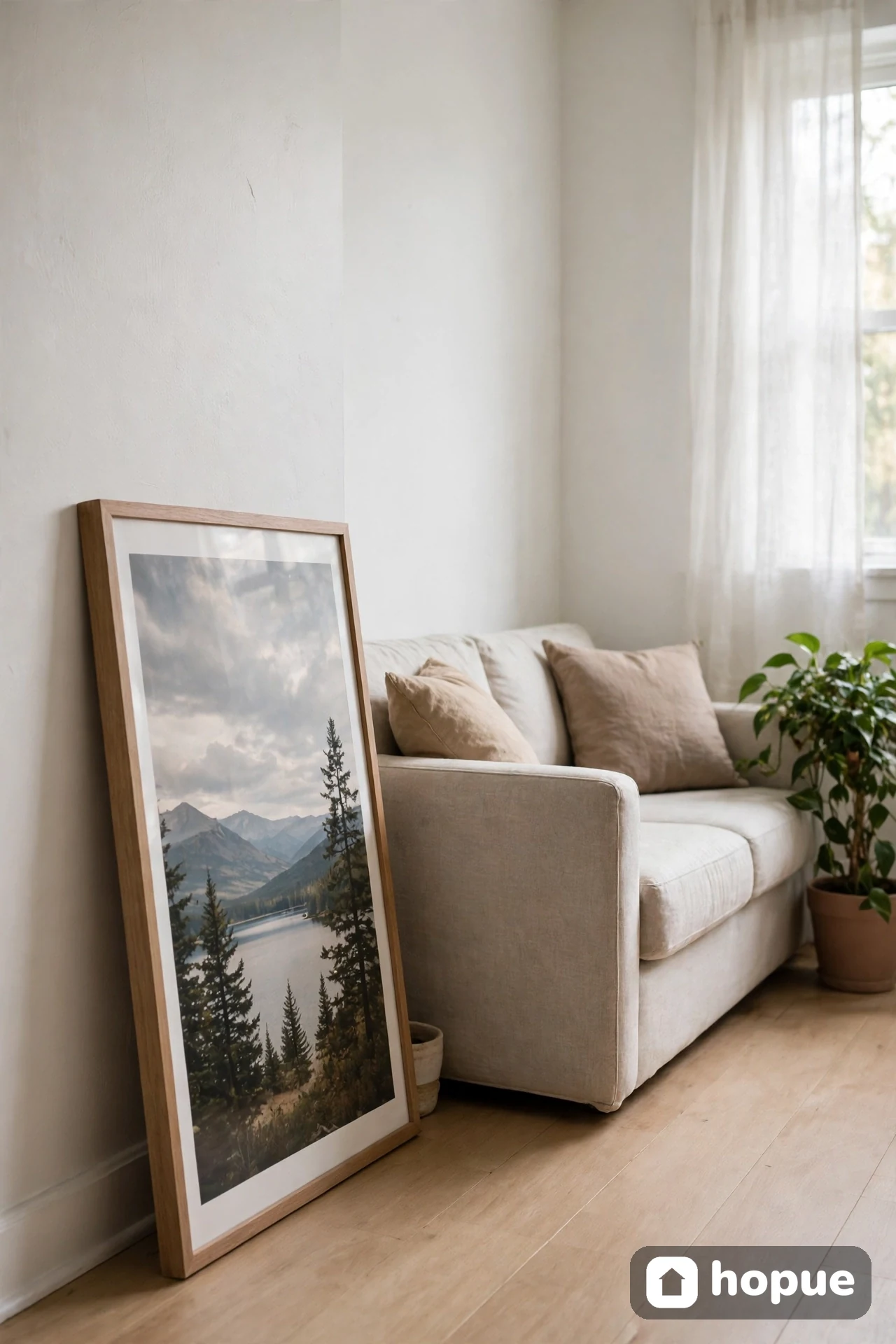
If you rent, you know the drill. You find a print you love, hold it up to the wall, and then remember the lease, the deposit, and the last time you tried to patch a nail hole and it still showed. Leaning art gets around all of that. You set the frame on the floor, on a shelf, or on a piece of furniture, tilt it back against the wall, and you are done. No drill. No nails. No argument with a landlord later.
These 29 leaning art small apartment rental ideas all work the same way: nothing hung, nothing drilled. Each one uses a different spot, a different size, or a different kind of frame, so you can pick the ones that fit your rooms instead of leaning the same big frame in the same corner again and again. Some are large and meant to anchor a room. Some are small enough to sit on a nightstand. All of them can move with you when the lease ends.
1. Start With One Big Floor Lean in the Living Room
Pick the wall you look at most, usually the one across from the sofa, and lean one large frame there, right on the floor. A tall print in a thin black frame looks calm and modern. A chunky wood frame feels warmer and a bit more lived-in.
Give it room. Do not crowd it with a plant on one side, a basket on the other, and a lamp in front. One frame, a clear bit of floor, and the wall does the rest. I tried this in a studio where the sofa faced a blank wall for months. The day the frame went down, the room finally looked finished, and I had not made a single hole.
2. Layer Two Frames on the Sideboard
You already have a stage if you own a sideboard or a low credenza. Lean a medium frame at the back, then set a smaller one in front of it and off to one side. The overlap is what makes it look planned instead of propped up by accident. Keep the front frame low enough that you can still see most of the back one.
A black-and-white photo behind a small color print works well. So does a line drawing behind a framed postcard from a trip. Leave one end clear for keys or a lamp, or the whole thing starts to look like a shop display.
3. Use the Mantel, Real or Fake
Does your rental have a mantel, even a shallow decorative one? Lean a medium frame in the center and let it rest against the wall above the fireplace. No fireplace? A narrow console table pushed against the wall can play the same role. I have seen renters do this with a secondhand table and a frame they already owned, and guests assumed the mantel had always been there.
Keep anything flammable well away from a working fireplace, and do not lean a frame where it blocks a vent. The best part is how fast it changes. Lifting a frame off a mantel takes seconds.
4. Lean a Small Print on the Kitchen Counter
Most small kitchens have one bare stretch of counter, between the stove and the sink or at the end of the run. That is enough. Lean a small framed print against the backsplash, behind the cutting board and the soap bottle, where splashes will not reach it every day. A food print, a market scene, or a simple botanical suits a kitchen without shouting about it. Use a frame with glass you can wipe clean, and stop at one print. Two or three will eat the space you need to actually cook.
5. Tuck a Print Onto an Open Kitchen Shelf
Open shelves can look bare when every shelf holds the same mugs and bowls. Slide one small print onto a shelf you do not reach for every morning, and lean it against the wall. A slim frame fits best. A wide frame will stick out past the shelf edge and look ready to fall. One print per shelving unit is plenty. The rest of the shelves can stay useful, which is the whole point of having them open.
6. Lean a Large Piece Behind the Bed
Skip the headboard hunt. Center a large frame on the bed, push the bed up close so the frame cannot tip forward, and let the top of the frame rise above the pillows. It does the same visual job as a headboard, without the cost or the fixings.
A soft landscape, an abstract in muted colors, or a large textile-style print keeps a bedroom calm at night. Check the frame before you sleep next to it. It must sit flat and steady, with no rocking. If the floor is uneven or the frame wobbles, pick a different spot. Your head should never be under a frame you do not trust.
7. Set a Frame on the Dresser and Leave Space Around It
It is easy to fill every inch of a dresser top. Resist that. Lean one medium frame at the back, then leave a clear patch in front of it. That empty space keeps the frame visible and gives you somewhere to set down a watch or a book without shoving things into the glass.
Pair the frame with one lamp or one small dish for jewelry, not both plus a stack of books plus a plant. In a small bedroom, a dresser lean often reads better than a floor lean, because the art sits at eye level when you walk in.
8. Lean a Small Frame on Your Desk
Staring at a blank wall above a laptop gets old fast. Lean a small, light frame on the desk, against the wall, to one side of your laptop. A heavy frame on a crowded desk will get bumped every time you reach for a notebook. A postcard-size print, a quote you actually like, or a photo from a walk you took works.
I kept a small framed sketch on my desk in a rental with no wall space to spare, and it made the corner feel like mine in a way the laptop alone never did. When you need the desk for paperwork, you can move the frame to a shelf in one motion.
9. Put a Print on the Bathroom Vanity
Bathrooms get skipped because people worry about steam. A small lean on the vanity can still work if you choose the right frame and the right spot. Pick a sealed frame, keep it away from the direct splash zone by the faucet, and lean it against the wall or the mirror edge where it will not get soaked.
A simple line drawing or a coastal print suits a bathroom and does not fight with towels and bottles. If your bathroom stays damp for hours after a shower, use a cheap print you would not mind replacing. Better a plain bathroom than a ruined print.
10. Lean Art Just Inside the Front Door
The entry in a small apartment is often a wall, a mat, and not much else. Lean a narrow frame on the floor just inside the door, on the side where people do not walk straight into it. A tall, slim print fills the vertical space without sticking far out into the walkway.
Watch the door swing first. A frame in the path of the door will get hit on day one. Put a small tray nearby for keys, and let the art do the welcoming. Pick something that makes you glad to be back, because it is the first thing you see when you come home.
11. Slide a Frame Into the Bookshelf
Find the shelf with the books you never reach for. Pull a few books out of that shelf, lean a small frame against the back, and put a couple of books in front of one edge to hold it in place. The frame breaks up rows of spines and gives the shelf a focal point.
Eye level works best. Too low and nobody notices it. Too high and it is hard to keep steady. Use a print with some color if your books are mostly dark spines, or a black-and-white print if the shelf is already busy. One framed piece per bookcase. More than that, and the shelf stops being a bookcase.
12. Use a Deep Windowsill as a Ledge
Some rentals have deep windowsills, wide enough for a small frame to sit on without hanging over the edge. If yours does, lean a small print there against the window frame. The light will change how it looks through the day, which is part of the charm.
Keep it clear of curtains that get pulled shut every night, and do not block a window you need to open. Water any plant next to it over the sink, not over the sill. I learned that one the hard way, with a damp mat and a print that never quite dried flat again.
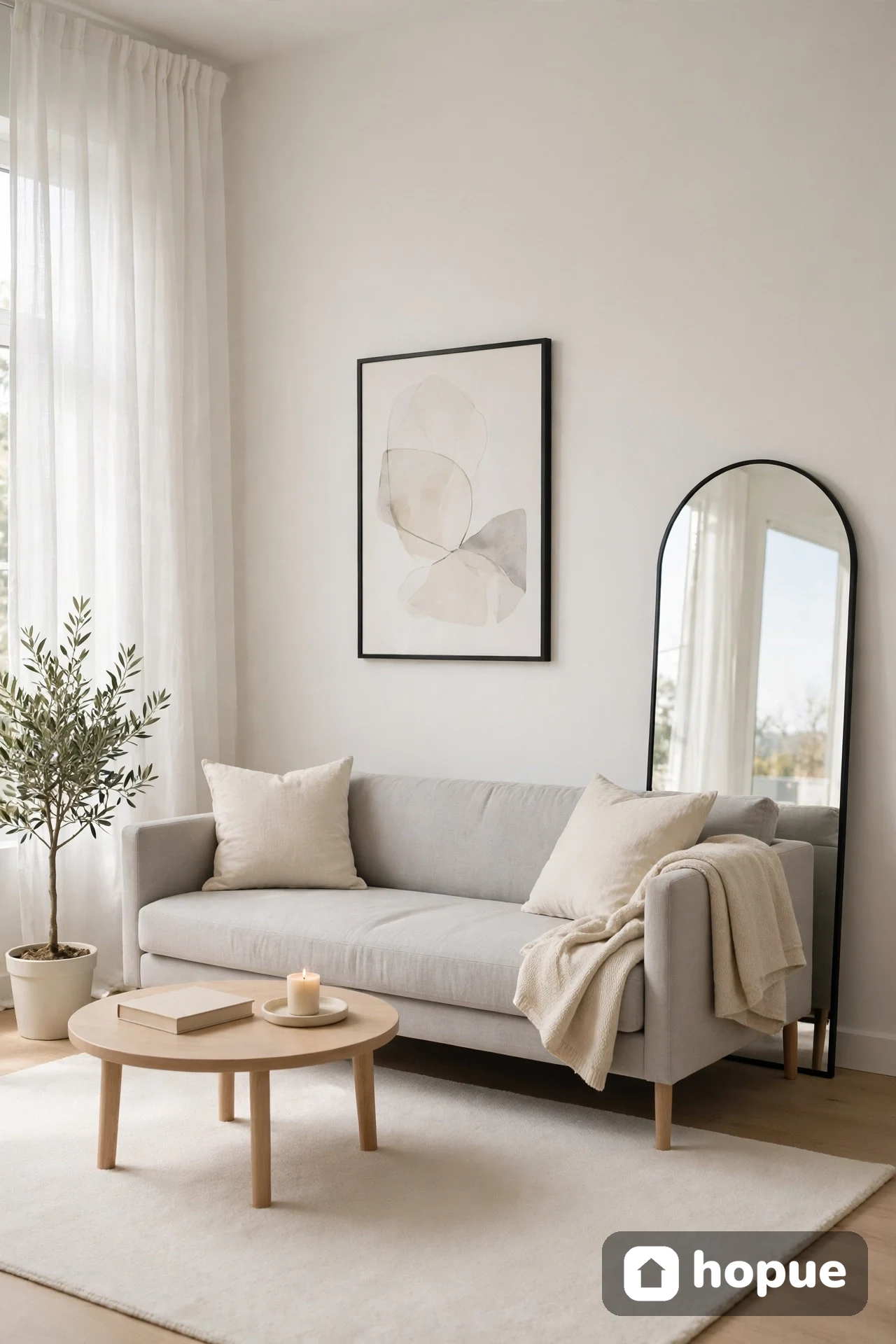
13. Pair a Floor Lean With a Floor Mirror
If you already own a floor mirror, you already own half of this pairing. Both pieces are tall, both rest on the floor, and neither needs a nail. Set the mirror first, then lean a frame beside it, slightly in front or slightly behind, so the two overlap just a little. The mirror bounces light around, and the art stops the mirror from looking like it is waiting to be hung.
Keep the pairing in a corner or along one wall, not in the middle of a walkway. Leave a small gap between them. If the frame leans into the mirror, it can press on the glass.
14. Let Art Peek Over the Sofa
No room to hang art over the sofa? Lean it behind the sofa instead. Set a large frame on the floor behind the sofa so the top shows above the back cushions. From the front, you see the upper part of the print, like a headboard for the sofa. This also removes the worry of a hung frame falling where people sit.
Push the sofa back until it holds the frame steady, but not so hard that it bows the frame. A landscape or a wide abstract works well, because you only see part of it. Save detailed prints, the ones with small text or fine lines, for a spot where you can see the whole image up close.
15. Lean Art on the Dining Sideboard
Dinner in a small apartment usually happens at one table, a few chairs, and whatever storage sits against the wall. Lean a medium frame on that unit, centered or off to one side. A still life, a vintage food poster, or a print in warm colors fits a place where people eat and talk.
Keep the frame back from the front edge so elbows and serving dishes do not knock it. If the sideboard doubles as a serving station, choose a frame you can lift off in seconds and set on the floor nearby. Art should make dinner nicer, not make serving harder.
16. Wake Up a Blank Hallway With a Narrow Lean
Hallways are narrow, dark, and easy to ignore. One slim frame leaned on the floor can change that without blocking the path. Choose a tall, narrow print and set it flat against one wall, where the hallway is widest or at the end where it turns. Avoid wide frames here. They stick out and catch hips, bags, and laundry baskets.
A row of frames would turn a hallway into an obstacle course. One good print, with light spilling in from a nearby room or a small lamp, and the hallway stops feeling like a passage you rush through.
17. Lean Art on a Low Storage Bench
That low bench by the door, under a window, or at the foot of the bed is not just storage. Lean a medium frame on it, toward the back, and leave the front clear for sitting or for a folded blanket. The bench lifts the frame to a height you can see from a chair, and keeps it off the floor, away from feet and vacuum cleaners.
If people actually sit on the bench, keep the frame to one end and test it. Sit down, stand up, and see if anything shifts. If it does, move the frame somewhere people will not bump it.
18. Layer Three Frames on the Floor
Once one floor lean feels easy, try three. Lean the largest frame at the back, a medium one in front of it and to one side, and a small one in front of that, on the other side. The sizes should step down clearly, or the group will look like a pile.
Keep the colors or the frame finishes related, all black, all wood, or all mixed metals on purpose, so the group reads as one arrangement. This takes more floor space than a single lean, so save it for a living room corner or a wide bedroom wall. Step back and look. If one frame hides another almost completely, shift it. Every print should show most of itself.
19. Put a Lean on Top of the Wardrobe
The top of a wardrobe is dead space in most rentals. Lean a light frame up there, against the wall, where it can be seen from across the room but never gets touched. A large, simple image works best at that height. Fine detail will be lost from the floor below.
Make sure the frame sits well back from the front edge and cannot slide forward when you open and close the doors. If the wardrobe wobbles, skip this spot entirely. Good looks are not worth art on top of shaky furniture.
20. Fill a Picture Ledge Without a Single Nail
You do not need nails to use a picture ledge — a narrow shelf made for leaning art. Some rentals already have one. If yours does not, a freestanding ledge shelf that rests on furniture, or a slim shelf unit with a lip, can do the same job without drilling. Line up three or four small frames along the ledge, overlapping them slightly. The lip keeps them from sliding forward.
This is the easiest way to rotate art, because you lift one frame off and set another down. Keep the frames light. A ledge loaded with heavy frames sags. Mix the sizes a little, but keep the bottoms level so the row looks tidy.
21. Lean a Frame on the TV Stand
The TV takes up most of the attention in a living room, but the stand underneath it often has a bare end. Lean a small or medium frame there, to the side of the TV, angled slightly toward the room. Do not put it in front of the screen or in front of a speaker. Sound matters, and so does the remote signal.
A frame with a simple image works here. A busy print will fight with whatever is on screen. If the stand is low and the frame is tall, it may rise above the TV and look odd. Use a shorter frame then, or move the lean to the floor beside the stand.
22. Build a Reading Nook Around a Floor Lean
You do not need a spare room for a reading nook. A chair, a lamp, and a cushion in a corner will do. Lean a large frame on the floor beside the chair, on the side away from the lamp cord. The art gives the corner a backdrop and makes it feel set apart from the rest of the room, even when the nook is just a corner of the living room.
Pick a print that suits quiet time, a landscape, a calm abstract, or a photo of a place you like. Add a small side table for a mug, but keep it between the chair and the frame, not in front of the frame. You want to see the art when you look up from the book.
23. Lean a Small Print on a Bar Cart
A bar cart is already a display piece, so a small leaning print fits right in. Set a slim frame on the top shelf, at the back, behind the bottles and glasses. A vintage drink poster, a small botanical, or a black-and-white photo all suit a cart. If you roll the cart around, take the frame off first. A rolling cart and a leaning frame are not friends.
24. Lean an Unframed Canvas
Not every lean needs glass and a frame. A stretched canvas, the kind with the image wrapped around the edges, can lean right on the floor or on furniture as it is. Canvas is lighter than a framed print of the same size, and it has a softer, less formal look.
A large canvas leaned in a living room corner feels relaxed. A small canvas on a shelf feels casual in a good way. Check the back first. Some canvases have a raw wood edge that can mark a wall. A couple of felt pads on the back corners solves that, and also stops the canvas from slipping on a smooth floor.
25. Put a Plant in Front of the Lean
Try this when a lean looks a little flat. Set the frame first, then put a potted plant in front of one corner, not right in the middle. The leaves break up the straight lines of the frame, and the frame gives the plant a backdrop. You still want to see most of the art.
Choose a plant that fits the light in that spot, and put a tray under the pot. Water finds its way onto the floor, and a tray keeps it off the frame and the floorboards. A medium plant with a larger frame works best. A tiny plant in front of a huge frame looks lost. A huge plant hides the art completely.
26. Lean a Small Frame on the Nightstand
Look at your nightstand right now: lamp, phone charger, glass of water. There is still room for one small frame if you keep it slim. Lean it against the wall at the back, on the side away from the water glass. A photo of family, a small print from a trip, or a simple drawing works here because it is personal and close.
Keep it low and light. A tall frame gets knocked when you reach for the lamp in the dark. I have knocked over more than one. A small frame, set back and steady, stays put and gives you something kind to see first thing in the morning.
27. Lean Art on a Filing Cabinet or Storage Cube
In a rental, a home office is often just a filing cabinet, a cube unit, or a low storage box in a corner. Lean a medium frame on top of it, against the wall. That lifts the art to a height you can see from your desk, using furniture you already own.
Keep the top mostly clear apart from the frame. A pile of papers in front of the art defeats the purpose. One framed print, plus maybe a small plant at the other end, is enough. And check the drawers. If a drawer sticks, make sure the frame does not sit where it blocks you from opening it.
28. Keep One Spot for Rotating Seasonal Art
Pick one leaning spot, a mantel, a sideboard, or a floor corner, and make it your rotating spot. The frame stays in the same place, but the print inside it changes with the season, a holiday, or just your mood. A beach print in summer, a warm-toned print in fall, a simple winter scene when the days get short.
You only need one good frame and a few prints you swap in and out. Keep the spares flat in a folder or under the bed so they stay clean. It is a budget-friendly habit. You get a fresh room through the year without buying new furniture or making a single hole.
29. Make the Lean Move-Out Friendly
This last idea is less about looks and more about leaving. Set up every lean so you can take it down in minutes on moving day. Use felt pads where the frame meets the wall and the floor. Keep frames where you can reach them without moving heavy furniture. Do not wedge a frame so tight that you have to drag furniture to free it.
Take a photo of each lean you love, so you can set it up the same way in the next place. Renting means moving, sometimes sooner than you planned. Art that leans, instead of hanging, moves with you. That is the whole point.
Leaning art suits rental life because it asks so little of the apartment and gives back so much. You can try a frame in the living room on Saturday, move it to the bedroom on Sunday, and put it back without anyone ever knowing. Start with one lean in the room where you spend the most time, see how it feels for a week, and then add another only if the first one earns its place. The best leaning art in a small apartment is not the biggest or the priciest frame. It is the one that stays steady, stays visible, and still makes you smile when you walk in the door.
Frequently Asked Questions
Will a leaning frame slide or fall over?
It can, if it is set up badly, but a careful lean is steady. Set the frame on a flat spot, tilt the top back so it rests against the wall, and keep the bottom a little out from the wall so the weight presses back, not forward. Put felt pads or small rubber bumpers on the back top corners where the frame meets the wall. They add grip and stop the frame from marking the paint. Keep large, heavy frames on the floor, where they are hardest to knock, and keep light frames low too if they sit in a walkway. Test it with a gentle push before you walk away. If it rocks or slides, move it to flatter ground or a different spot.
Will leaning art damage my floors or walls?
It should not, if you protect the contact points. A bare wood or metal frame can scratch a wood floor when it gets dragged, and a rough back edge can scuff paint. Stick felt pads on the bottom edge of the frame and on the back corners that touch the wall. Lift the frame to move it, instead of sliding it across the floor. Check behind the frame every few weeks for dust and grit, which can grind into a floor or a wall over time. If you see a mark forming, add another pad or shift the frame a touch. Most damage from leaning art comes from sliding and grit, not from the lean itself.
Is leaning art allowed under most leases, and will it protect my deposit?
Leaning art is usually the safest choice for a deposit because it makes no holes, uses no adhesive, and leaves no marks if you protect the wall and floor as above. That said, leases differ, and some set rules about large items against walls, fireplaces, or heaters. Read your lease, and if anything is unclear, ask your landlord in writing before you lean a very large or heavy piece. Keep the frame away from heaters, vents, and radiators, and do not block exits, smoke alarms, or electrical panels. When you move out, the wall behind a lean should look the way it did when you moved in, which is exactly what a deposit return depends on.
What if I have kids, a dog, or a home that shakes when someone walks past?
Be more careful with placement, and pick your frames accordingly. Put large leans in corners and behind furniture, where a child or a dog is less likely to run into them. Use lighter frames at low heights in busy rooms, and save heavy glass frames for spots behind a sofa or a sideboard. In a home with a bouncy floor, avoid tall, narrow leans in the middle of a walkway. A frame that is wedged between furniture and the wall is far steadier than one standing alone in open floor. If a frame still feels wobbly after you have tried a better spot and pads, take it down. No print is worth a bumped head or a broken frame.
Can I lean art in a bathroom or kitchen where it gets steamy?
You can, with limits. Steam and cooking grease are hard on paper, mats, and raw wood frames. In a bathroom, use a sealed frame with glass, keep it away from the shower and the faucet, and give the room time to air out after a hot shower. In a kitchen, keep the lean away from the stove and the sink splash zone, and wipe the glass now and then. If a print starts to ripple, fade, or smell damp, move it to a drier room. Use a print you can replace cheaply in the dampest spots, and save the pieces you love most for the living room and bedroom, where they will last longer.