29 Scandinavian Decor Ideas for a Small Apartment
Scandinavian decor suits a small rental because it starts with what most rentals already give you: white walls, plain floors, and not much room to spare. The look is light wood, pale cloth, and clear surfaces, with enough soft texture that the place still feels lived in. Nothing here needs paint, new floors, or a landlord’s permission. Every idea below is something you can carry out the door when the lease ends.
I learned this the slow way in my first small place, a studio with one good window and beige carpet I could not change. I kept buying dark, heavy pieces because they looked rich in the store, and the room kept getting smaller. When I swapped in a pale rug, sheer curtains, and a light wood stool instead of a bulky side table, the same room felt bigger without moving a single wall. That is the whole trick in this list. Light where you can, wood where it counts, and soft things you actually touch every day.
1. Let the White Walls Do the Work
Most rentals come with white or off-white walls. Use them. Do not fight them with dark furniture or a wall of busy color. A pale wall bounces light around a small room, and it makes a light wood table or a cream chair stand out without shouting.
I left my walls bare for the first month in one apartment and thought the place looked unfinished. Then I added one pale wood shelf and a black-framed print, and the white suddenly looked like a choice. You do not need much on a white wall. One or two pieces, hung at eye level, will do more than a crowded gallery.
2. Hang Sheer White Curtains and Leave Them Open
Heavy curtains eat light and make a window look smaller than it is. Sheer white panels let daylight through while they soften the view of the building next door. Hang them high, close to the ceiling, on a tension rod or a removable hook rod if you cannot drill.
In my place they stay pulled to the sides most days. The point is not privacy at noon. It is the way the light comes in soft in the morning and the room still feels private after dark when I close them. If your window faces a brick wall, sheers help even more. They blur what is outside and keep the brightness.
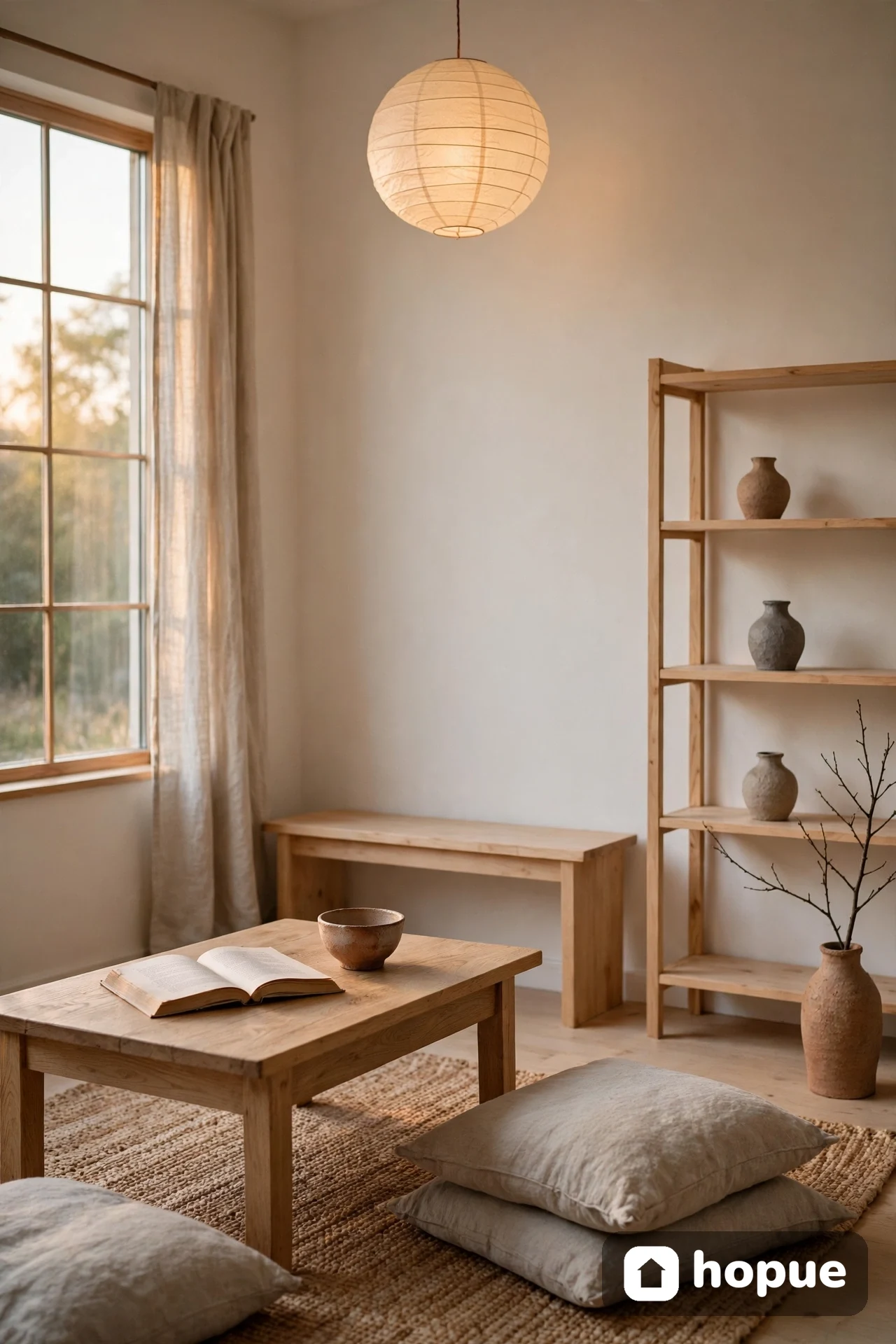
3. Pick One Light Wood Coffee Table
A coffee table in pale oak, ash, or birch sets the tone for the whole living area. Dark wood can work in a big house. In a small apartment it tends to sit like a heavy block in the middle of the room. Light wood reads lighter, even at the same size.
Look for a simple shape. Straight legs, a flat top, no extra shelf full of clutter underneath. I found mine secondhand with a few scratches, and the scratches bothered me for about a week. Now I like them. The table gets used every day, and pale wood hides daily wear better than a dark glossy finish does.
4. Cover the Sofa in White or Cream Linen
If your sofa is dark, patterned, or just tired, a loose linen slipcover in white or warm cream changes the room in an afternoon. It is washable, which matters in a small place where the sofa is also the dining chair, the office, and the guest bed some nights.
Buy one you can take off and wash. The cover on my sofa has been through the wash more times than I can count, and it still looks fine because linen is supposed to wrinkle a little. Keep the cushions simple. Two plain ones, maybe one in a soft gray, and stop there. A sofa covered in ten pillows is hard to sit on.
5. Layer a Wool Throw, Not Five of Them
Scandinavian rooms feel warm because of wool, not because of a pile of blankets. One good wool or wool-blend throw, folded over the arm of the sofa or the foot of the bed, adds weight and texture. It is the throw you reach for on a cold night, not decoration you are afraid to touch.
I keep one in a soft oatmeal color on the sofa and one darker gray on the bed. Two throws, two rooms, done. When friends come over, the throw gets used. It gets folded again after. A single throw that gets used beats a stack that only gets photographed.
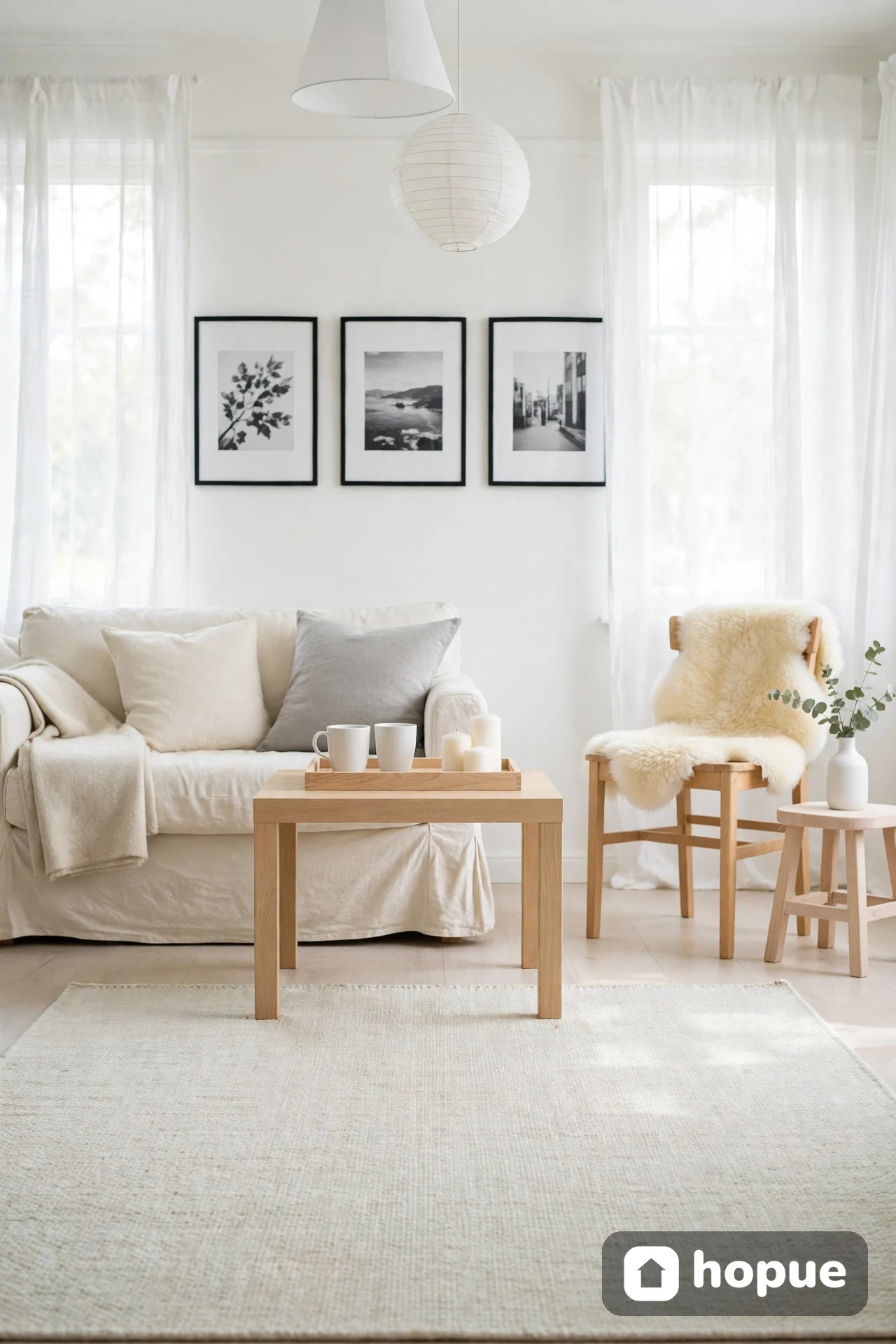
6. Drape a Sheepskin Over a Plain Chair
A sheepskin, real or faux, over a dining chair or a plain wooden chair softens hard edges fast. It makes a cheap chair comfortable to sit on for a long dinner, and it adds the one bit of shaggy texture that keeps a pale room from feeling flat.
The chair by the window wears it most of the year. In summer I fold it over the back. In winter it goes on the seat. It sheds a little at first. Shake it outside and it settles down. If you have a pet that sheds, pick a short-pile faux version. It still gives you the look, and it goes in the wash.
7. Frame Black-and-White Photos in Thin Black Frames
Thin black frames with black-and-white prints are a Scandinavian staple for a reason. They add contrast to a pale room without adding color, and they keep a wall feeling calm. Pick photos that mean something: a street you walked on, a lake, your grandparents’ house.
I printed three of my own phone photos in black and white at a drugstore, and they look better on the wall than the art prints I bought online. Keep the frames the same thin style and the same size, or close to it. Mixed frame styles can look fine, but matching thin frames are easier to get right in a small space.
8. Use a Pale Wood Picture Ledge Instead of Nails Everywhere
A picture ledge is a narrow shelf you lean frames and small prints against. One ledge holds three or four frames, and you can swap them without new holes. In a rental, that matters. Use a ledge that mounts with two screws, or a freestanding one if your lease is strict about holes.
Lean the largest frame at the back and smaller ones in front. Add one small object, like a pale stone or a tiny plant, at one end. Do not fill the whole ledge edge to edge. The empty space is part of it. When I get bored, I change the order. The wall stays the same.
9. Hang a Paper or Linen Pendant Light
A big paper lantern or a linen drum shade over the dining table or in a corner gives soft, even light. It also fills the empty space above a table without a heavy fixture. Most rentals have one harsh ceiling light. A pendant on a plug-in cord or a shade that fits over the existing fitting fixes that without an electrician.
The shade over my table is plain white paper, and it hums a little when the heat runs. I do not mind. At night it makes the table glow instead of blasting the room. Keep the bulb warm white. A cool white bulb under a paper shade makes the whole room feel like an office.
10. Group Candles Together on a Tray
Candles are not an extra in Scandinavian homes. They are the evening light. Group three or five plain candles — pillars, tapers, or tea lights — on a pale wood or stone tray, and light them when it gets dark instead of turning on every lamp.
I do this most nights in winter, even if I am only reading for half an hour. It changes how the room feels more than any lamp I own. Use unscented candles if you are sensitive to smell, and keep the tray away from curtains and the throw. Blow them out before bed. A tray keeps wax off the table and makes the group look intentional, not scattered.
11. Style a Light Wood Tray on the Ottoman or Bench
A tray gives a soft surface a hard spot to hold a mug, a book, or a candle. Pick one in pale wood with low sides, big enough for two mugs and a small book. It keeps the surface tidy, and you can lift the whole thing off when you need the seat.
My tray holds a mug, my keys, and whatever book I am reading. Nothing else lives there most days. When the tray starts collecting mail and chargers, I clear it. A tray works because it has edges. Once things spill over the edges, it stops working, and the room looks cluttered again.
12. Store Things in Structured Seagrass Baskets
Baskets hold the stuff that makes a small apartment look messy: spare blankets, dog toys, chargers, board games. Pick structured baskets in pale seagrass or light rattan with straight sides, not floppy ones that sag. They stack better, and they look neater next to pale furniture.
I have two under the coffee table and one by the door for shoes. Lids help if the basket holds things you do not want to see. Labels help more. A basket without a lid becomes a junk pile in a week, in my experience. Put the lid on, and nobody knows what is inside, including you, which is sometimes a blessing.
13. Lay a Pale Flatweave Rug
A flatweave rug in cream, light gray, or a pale striped pattern defines the living area without adding bulk. Thick shag rugs look cozy in photos and trap crumbs, pet hair, and dust in a small place. A flat rug shakes out outside, vacuums fast, and slides under furniture without bunching.
Size matters more than pattern. Get one big enough that the front legs of the sofa and chairs sit on it. A rug that floats in the middle of the floor, touching nothing, makes the room look smaller. The rug I bought is a little too small, and I notice it every day. Measure the seating area before you buy, not after.
14. Choose Light Wood Dining Chairs
If your dining chairs are dark or mismatched, swapping in light wood chairs, or even painting old ones a pale color with landlord-safe paint on furniture you own, lightens the eating area. Bentwood chairs, simple spindle chairs, or plain beech chairs all fit. They are light to move, which helps when the dining table doubles as a desk.
I have four mismatched chairs I bought one at a time, all in pale wood. They do not match exactly, and that is fine. The wood tone ties them together. Keep chair cushions plain if you use them. A thin cream pad tied on is enough. Thick patterned cushions fight the calm of the rest of the room.
15. Put White Ceramics on One Open Kitchen Shelf
White mugs, bowls, and plates lined up on one open shelf look calm and make a rental kitchen feel cared for. You do not need a full open-kitchen remodel. One shelf, or the top of a cart, with only white pieces and nothing else, is enough.
I did this on the shelf above my sink. White mugs in a row, two bowls, one small plant. Everything else stays behind cabinet doors. The rule I follow: if a piece is chipped or stained, it goes in the cabinet. The shelf is for the pieces that still look clean. It sounds fussy. It takes two minutes, and the kitchen looks better for it.
16. Add Greenery in Plain White Pots
One or two plants in plain white or pale gray pots bring life into a pale room without adding color chaos. Eucalyptus in a vase, a small olive tree, or a pothos trailing from a shelf all fit. The pot matters as much as the plant. A plain pot keeps the focus on the green.
I kill most plants. Eucalyptus stems in water last weeks, and a pothos has survived three apartments with me. Put the plant where it gets light and where you will see it every day, so you remember to water it. A dead plant in a nice pot still looks dead. If you travel a lot, pick stems you can replace instead of a plant you have to keep alive.
17. Make the Bed with Oatmeal Linen
Oatmeal, warm white, or pale gray linen bedding is the fastest way to make a bedroom feel Scandinavian. Linen wrinkles, and that is the point. It looks soft and slept in, not pressed and stiff. Layer a flat sheet, a duvet in linen, and one folded throw at the foot.
I switched to linen two years ago and stopped making the bed the old way. I shake the duvet out, pull it up, and leave it. It looks fine. Wash linen in cold water and skip the fabric softener. It gets softer with every wash, which is the opposite of most bedding I have owned.
18. Keep the Bed Frame Low and Pale
A low bed frame in pale wood, or no frame at all with the mattress on a low platform, keeps a small bedroom feeling open. A tall, dark headboard eats wall space and makes the ceiling feel lower. If you already own a dark frame, a pale headboard cover or a light throw draped over the headboard softens it without buying a new bed.
My frame is barely higher than the mattress. Getting in and out took a day to get used to. Now a taller bed feels strange. Keep the space under the bed clear if you can. Under-bed boxes are useful, but a clear gap under a low frame makes the floor look like it goes on, and the room feels less stuffed.
19. Add One Matte Black Accent, and Stop There
Scandinavian rooms use black in small doses: a matte black lamp, black picture frames, a black vase, or black cabinet pulls. One or two black pieces give a pale room shape. Five or six black pieces turn it dark again.
I have a black floor lamp and black frames. That is my black. Everything else stays pale. When I tried adding a black throw and black cushions too, the sofa looked like a different room from the rest of the apartment. Take the black piece away for a week if you are unsure. If the room feels washed out without it, put it back. If you do not miss it, it was too much.
20. Set Up a Pale Wood Bench by the Door
A narrow bench in light wood by the front door gives you a place to sit, drop a bag, and keep shoes in line. It is more useful than a console table in a small entry, because you can sit on it. Add two or three wall hooks above it for coats, on removable hooks if you cannot drill.
My bench holds shoes underneath and a small basket for keys and mail on top. Guests use it without being asked. Keep the top mostly clear. A bench covered in bags and jackets becomes a dumping ground, and the first thing you see when you come home is clutter. One basket, one pair of shoes, and the rest goes in the closet.
21. Build a Reading Corner with a Pale Armchair
A reading corner needs three things: a chair you can sit in for an hour, a light you can read by, and a place for a mug. A pale armchair or a light wood chair with a cushion, a floor lamp with a warm bulb, and a small stool for the mug is enough. It does not need a rug, a side table, and a bookshelf to count as a corner.
My corner sits by the window, and it is where I drink coffee in the morning. The chair is not fancy. It is comfortable, and the cushion is washable. If the corner starts collecting laundry, move the laundry. A reading corner only works if the chair is free to sit in.
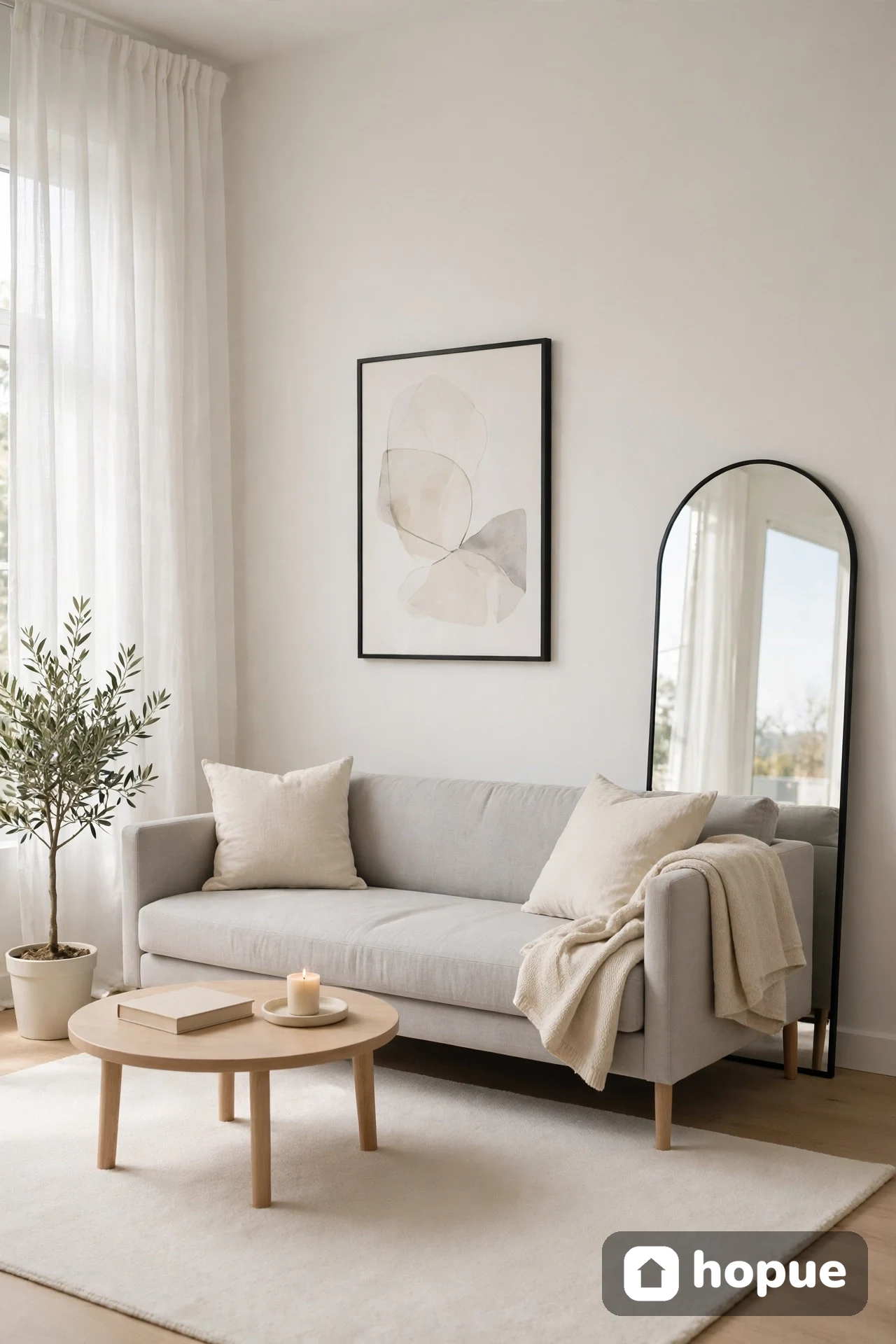
22. Lean a Large Mirror Against the Wall
A large mirror leaning against the wall bounces light from the window across the room and makes a small living area feel deeper. It does not need to hang, which helps in a rental. Lean it at a slight angle, secure the top to the wall with a removable strap if you have kids or pets, and keep the floor in front of it clear.
I leaned mine opposite the window, and the afternoon light reaches the back of the room now. Check what the mirror reflects before you settle on a spot. A mirror that reflects a blank wall or a messy shelf doubles the thing you least want to see. Angle it toward the window or toward a plant, and it earns its floor space.
23. Keep the Desk Pale and Mostly Clear
A small desk in pale wood or white, with a plain chair and one lamp, fits a work corner without turning the living room into an office. Keep the desktop mostly clear. A laptop, a notebook, and a mug is a working desk. A laptop under a stack of papers and cables is a storage pile with a chair.
I work from a desk that folds against the wall when I am done. It is not pretty, but the room gets its living space back at night. Hide the charger in a small basket or behind the desk leg. Run one cable, not five, if you can. The pale desk helps here too. Cables show less against light wood than they do against a dark desk, or so I tell myself.
24. Hang One Flat Woven Wall Piece in Neutral Tones
A flat woven wall hanging or a simple textile panel in cream, gray, and pale wood tones adds texture to a wall without the fringe and pattern overload that reads boho. Pick a graphic, simple design: stripes, a half-circle, a grid. Hang it with a single removable hook or a wooden dowel on a nail you can fill later.
The one on my wall is cream, with a single gray arc. It is the only textile on my walls, and that is why it works. Two or three woven pieces on one wall start to look like a market stall. One piece, hung straight, with empty wall around it, holds the eye without crowding the room.
25. Use a Light Wood Stool as a Side Table
A small stool in pale wood works as a side table, a plant stand, and an extra seat when friends come over. It takes up less floor space than a table with legs and a shelf, and you can move it from the sofa to the bed to the balcony in seconds.
One sits by the sofa and one by the bed. The one by the sofa holds a book and a glass of water. The one by the bed holds my phone and a glass of water. Same job, different room. Buy a sturdy one. A wobbly stool as a side table spills drinks, and I learned that the wet way.
26. Switch the Bathroom to White Towels and Light Wood
White towels, a light wood bath mat or stool, and one plain soap dish make a small rental bathroom feel cleaner and calmer. White towels show wear sooner than dark ones, so buy a few and rotate them. Bleach, used as the label directs, keeps them white longer than any color-safe trick I have tried.
My bathroom has a wooden stool that holds a towel and a book. It is the only wood in the room, and it warms up all the white tile. Keep the counter to three things: soap, a toothbrush holder, and one small plant or candle. Everything else goes in a basket under the sink. A bathroom counter with ten bottles looks busy no matter how nice the bottles are.
27. Make a Small Line-Art Gallery
Line drawings — a face in one line, a hand, a simple house or tree — fit a Scandinavian wall because they are mostly empty space. Group three small line prints in matching thin frames, in a row or a tight square, on one wall. Keep the paper white and the lines black or soft gray.
I have three above my desk, and they are the first thing I see when I sit down to work. They do not demand attention, which is why I still like them a year later. Loud art gets tiring in a small room because you see it all day. Quiet art holds up. If a print starts to annoy you, swap it. The frames stay, and the wall stays calm.
28. Layer Warm Light in the Evening
Scandinavian homes get dark early in winter, so light comes in layers: a floor lamp, a table lamp, and candles, all warm, instead of one bright ceiling light. In a rental, plug-in lamps and battery candles do the same job without wiring. Put lamps at different heights so the light pools instead of flooding.
I turn off the ceiling light at sunset and turn on two lamps. The room feels smaller and warmer, in a good way. It feels like evening. A dimmer plug for a floor lamp costs little and helps a lot, because you can drop the light as the night goes on. Keep bulbs warm white and roughly the same tone. Mixed cool and warm bulbs make a room look uneven, even if you cannot say why.
29. Keep Seasonal Decor Simple: Pine, Paper, and One Star
Scandinavian seasonal decor is restrained. A few pine branches in a white vase, a paper star in the window, and one string of warm lights is a full holiday look. It does not need a tree’s worth of ornaments in a small apartment, and it packs into one box in January.
I put a paper star in the window each December and pine branches on the table. That is the whole decoration, plus candles. Friends ask where the rest of it is, and then they sit down and say the room feels calm. In spring I swap the pine for a branch with buds. Same vase, same spot, different season. One seasonal swap keeps the room feeling current without a storage unit full of decor.
A small apartment does not need a full Scandinavian remodel to feel Scandinavian. It needs light, pale wood in a few key spots, and soft things you use. Start with the curtains and the rug, add one light wood piece you touch every day, and let the rest follow slowly. The rooms that feel best are the ones that changed one piece at a time, with time to notice what actually made a difference. Pick the idea that fixes the thing that bothers you most when you walk in the door, and start there.
Frequently Asked Questions
Can I do Scandinavian decor in a rental without painting or changing floors?
Yes. Scandinavian decor in a rental leans on portable moves: sheer curtains, a pale rug, light wood furniture you own, slipcovers, leaning art, and lamps. White walls and plain rental floors already fit the palette, so you work with them instead of covering them. Avoid anything that needs paint, new flooring, or built-in shelving, and choose pieces you can take with you.
How is Scandinavian decor different from minimalist decor in a small apartment?
Minimalist decor strips a room down to the fewest pieces possible, often in white, black, and gray. Scandinavian decor keeps the pale palette and clear surfaces, but adds warmth through wood, wool, sheepskin, candles, and plants. A Scandinavian room still has things in it. They are just soft, natural, and useful, where a strict minimalist room may feel bare.
How do I keep a white and pale room from looking cold or sterile?
Add texture and warm light, not color. A wool throw, a sheepskin, a pale wood table, and warm lamps make a white room feel lived in. Keep one black accent for shape, and add one plant for green. If the room still feels cold, check the bulbs first. Cool white light makes pale rooms feel clinical, while warm light makes the same room feel cozy.
What if my rental has dark floors or dark cabinets I cannot change?
Work around the dark surfaces with pale pieces at eye level and underfoot. A pale rug covers much of a dark floor, light curtains brighten the walls, and white ceramics and pale wood on counters pull the eye up. Keep large furniture pale so the dark floor reads as a frame, not as the main color. One dark surface in a pale room can ground it, as long as the rest stays light.
Can Scandinavian decor work on a tight budget?
Yes, and it often works better that way, because the look favors fewer, simpler pieces. Start secondhand for light wood furniture, use a slipcover instead of a new sofa, and buy one wool throw instead of five cheap blankets. Thrift stores and buy-nothing groups are good sources for pale wood stools, white ceramics, and plain frames. Spend on the pieces you touch daily, and leave the rest until you find the right version cheap.