29 Minimalist Decor Ideas for a Small Apartment
Minimalist decor in a small apartment is not about having almost nothing. It is about having less to look at, so the room feels calmer and a little bigger than it is. Most rentals already work against you here. The walls are white, the rooms run together, and every extra chair, basket, and pile of mail shows. You do not need to buy a whole new style to fix that. You need fewer visual interruptions, and you need the things you keep to work a bit harder.
I lived for years in a studio where the front door opened straight into the living room, and the kitchen was really just a wall. The weeks the place felt best were never the weeks I bought something new. They were the weeks I took two or three things away, put the rest where it belonged, and left some empty space alone. That is the approach in this list. Every idea is renter-friendly, removable, and meant for a real budget. Pick the three or four that bother you most, start there, and let the rest wait.
1. Pick Three Colors and Stop There
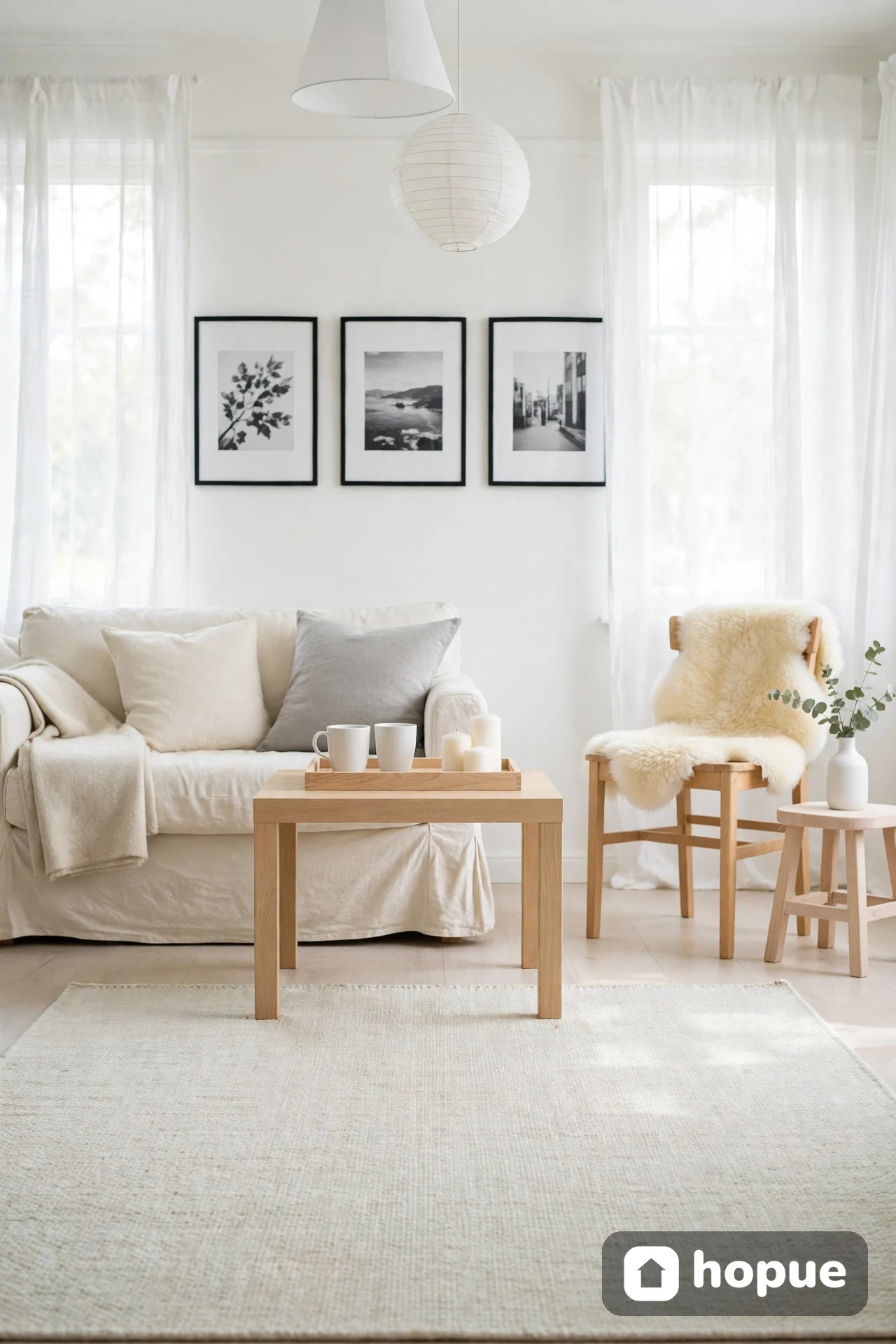
A small room gets noisy fast when every pillow, rug, and blanket is a different color. Pick three and let them repeat. Warm white, soft wood, and one quiet color is enough for most apartments. Sage, dusty blue, warm gray, or terracotta all work. The trick is repetition, not matching everything perfectly.
Try this in one corner first. If your sofa is gray, your throw is cream, and your plant pot is sage, you already have a palette. Shop your own home before you shop a store. Move the rust-colored pillow to the bedroom, bring the cream one out, and see how quiet the sofa looks. Color limits sound strict. In practice, they make shopping easier, because half the store stops being an option.
2. Give Every Surface a One-Item Limit
Flat surfaces collect things. A coffee table gets a mug, a remote, a book, mail, and a candle, and suddenly the whole room looks busy even when it is clean. Give each surface a limit: one useful thing, one pretty thing, and nothing else. Or just one thing, if the surface is small.
My rule for a side table is a lamp or a book, not both plus a charging cable and a water glass. It will not stay perfect. That is fine. The point is you know what “done” looks like, so putting the room back takes thirty seconds instead of a weekend reset. Start with the surface you see first when you walk in. That one sets the tone for the rest.
3. Let One Sofa Do the Talking
In a small living room, the sofa is the room. A second loveseat, an extra accent chair, and a pouf squeezed in beside it do not add seating so much as they add edges to bump into. If you can, keep one good sofa and skip the rest. A single folding stool tucked in a closet covers the rare night you have extra guests.
Choose a sofa in a solid, quiet color with clean lines and no busy pattern. Armless or slim-arm styles leave more breathing room, and a sofa that sits a little lower can make a low ceiling feel less pressing. Sit on it before you commit if you can. A minimalist living room still has to be comfortable at the end of a long day, or you will not stay in it.
4. Choose Low Furniture That Shows More Wall
Tall bookcases and high-backed chairs chop a small room into slices. Low, wide pieces do the opposite. A low media stand, a low dresser used as a TV stand, or a platform-style bed frame leaves more wall visible above it. Your eye reads that empty wall as space, even though the floor area has not changed.
This works best when you resist filling the wall above. Leave it bare, or hang one piece of art with plenty of space around it. I once swapped a tall, dark bookcase for a low credenza in a rental bedroom, and the room felt taller the same afternoon. Nothing else changed. The lesson stuck with me: height matters as much as footprint in a small place.
5. Use One Big Rug Instead of Layers
Layered rugs look great in photos. In a studio, they often just add lines and edges underfoot, and the smaller rug on top slides around. One rug, big enough that the front legs of your main furniture sit on it, calms the floor in one move. Pick a flat or low-pile rug in a solid color or a very faint pattern.
A rug that is too small is a common mistake, and it makes furniture look like it is floating apart. If a larger rug is out of budget right now, skip the rug altogether for a while and let clean floors do the work. Bare wood or laminate with one rug by the bed or sofa reads more minimal than three small rugs competing in one room.
6. Leave Space on Your Shelves on Purpose
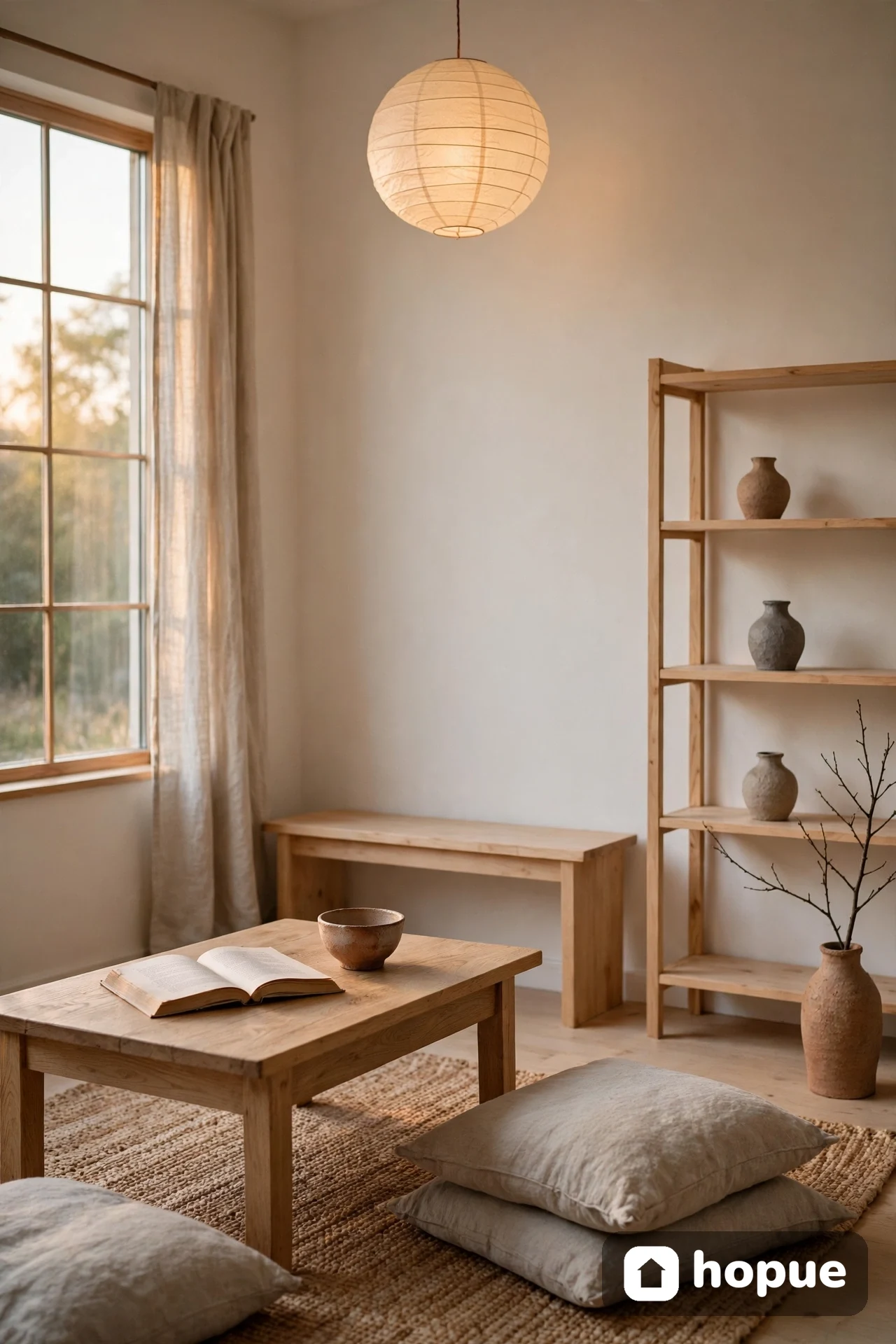
A shelf packed edge to edge stops being storage and starts being wallpaper. On floating shelves, leave about a third of each shelf empty. Group what stays in twos or threes, with space between groups, and let the wall show through.
This is not about owning fewer books or dishes. It is about what you display. Keep the everyday items behind closed doors and put only the pieces you genuinely like on open shelves: a vase, a stack of two books, a small framed photo. When a shelf starts to fill up again, that empty space is your warning sign. Take something off before you add anything new.
7. Hang One Large Piece of Art
A gallery wall can be lovely, but in a small apartment it is also a lot of frames, a lot of nail holes, and a lot for your eyes to sort out. One large piece does the same job with one decision. A big abstract print, a quiet landscape photo, or a simple line drawing in a thin frame gives the room a focal point without the clutter.
Use removable picture-hanging strips rated for the weight, and measure twice before you press them on. Hang the center of the piece at about eye level when you are standing, not up near the ceiling. If large art feels too pricey, frame a favorite calendar page, a piece of fabric, or a print you already own in a larger frame with a wide mat. Size does the work, not the price tag.
8. Lean a Tall Mirror Against the Wall
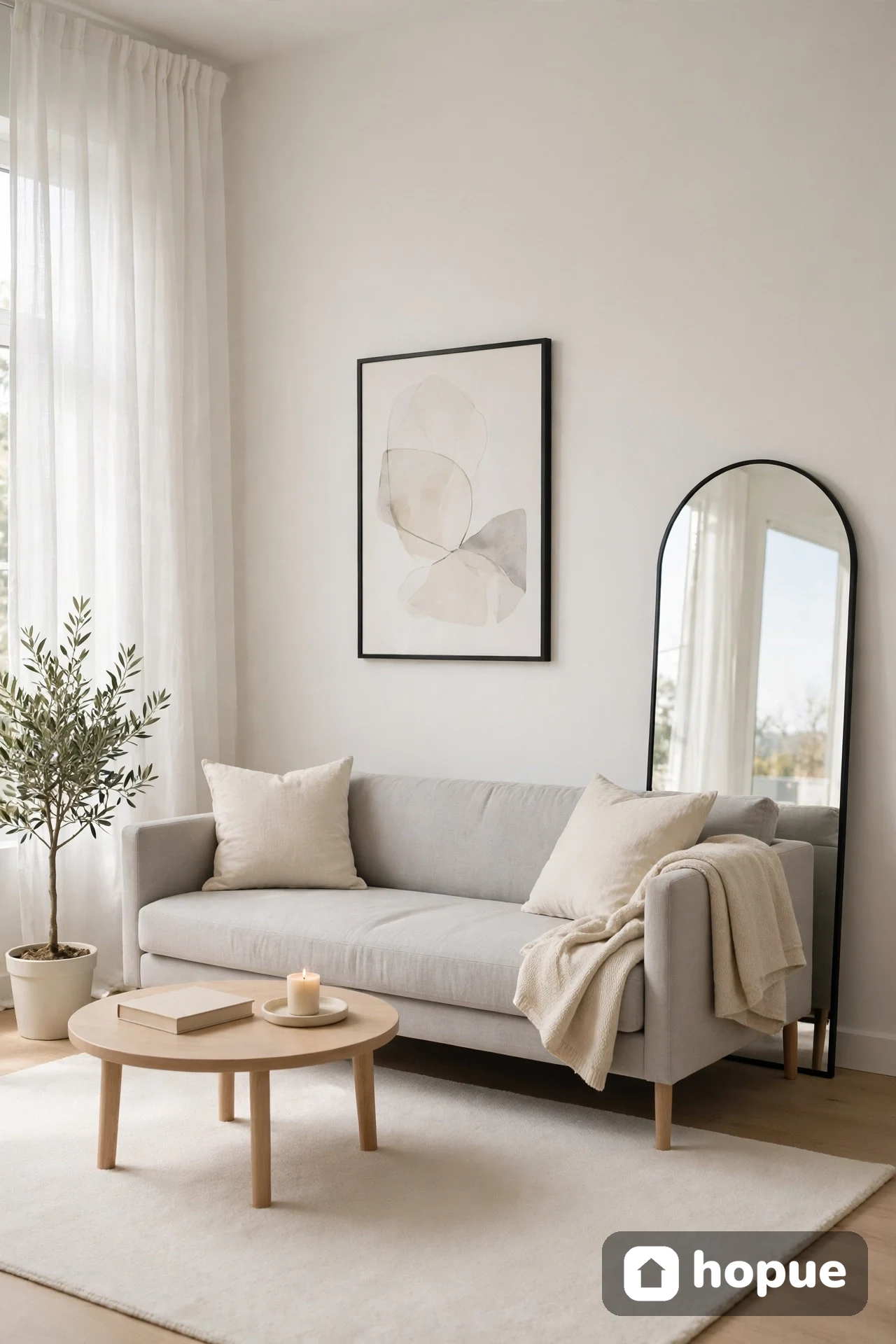
A tall mirror leaned against the wall bounces light around a dark rental and makes a narrow room feel wider. It also needs no holes, which is a gift when your lease is strict. Choose a simple frame in black, wood, or brass, and keep the shape plain: rectangle or arch, nothing fussy.
Place it where it reflects a window or a calm wall, not a pile of laundry or the open closet door. I have seen a leaning mirror double the feel of a hallway entry just by catching the light from the front door. Anchor it if you have kids or pets in the house, and keep the floor in front of it clear. A mirror with shoes and bags piled at its base loses the whole effect.
9. Keep One Wall Completely Bare
This one feels wrong at first. Pick one wall — often the one behind the sofa, beside the bed, or in the hallway — and leave it completely bare. No art, no shelves, no hooks, no clock. Just paint and light.
Empty wall space is what makes the decorated walls look intentional instead of crowded. It gives your eyes a place to rest, the same way a pause gives a sentence room to land. If the bare wall starts to feel unfinished, check whether another wall is overfull first. Usually it is. A bare wall costs nothing, takes nothing to install, and you can change your mind in a day.
10. Pick Furniture That Hides the Mess
Minimalist rooms are not mess-free rooms. They are rooms where the mess has somewhere to go. A storage ottoman, a bench with a lift-up lid, a coffee table with a drawer, or a bed with drawers underneath hides the chargers, blankets, and board games that would otherwise live on every surface.
Look for pieces that look plain from the outside. The storage should be a secret. A lidded basket by the sofa works the same way for throws and remotes, as long as the lid stays on. The test is simple: can a guest walk in on a normal Tuesday evening and see mostly clear surfaces? If yes, the hidden storage is doing its job, even if the inside of the ottoman is not tidy at all.
11. Match Your Storage So It Disappears
Five different bins in five different colors read as clutter, even when everything inside them is organized. Matching storage reads as furniture. Pick one material and one color for the bins and baskets you can see: all natural seagrass, all white, all light wood, all black fabric. Keep the mix-and-match bins behind closed closet doors.
You do not need to replace everything at once. Start with the two or three containers that sit out in the open, like the ones on top of the wardrobe or beside the sofa. Labels help too, but keep them small and plain. When storage looks calm from the outside, you stop noticing it, and the room feels edited without you having to throw anything away.
12. Cut Your Pillows Down to Two
Pillows multiply. Two becomes four, four becomes six, and soon half the sofa is pillows and there is nowhere to actually sit. Two pillows on a small sofa are plenty. One on each end, in your palette, in a texture you like touching. That is the whole arrangement.
If you love pattern, let one pillow carry it and keep the other solid. Fluff them, karate-chop the tops if you like that look, and leave the rest in the closet for a seasonal swap. The same rule works on a bed: two sleeping pillows and one or two decorative ones, not a wall of cushions you have to move every night. Sitting down should not require a relocation project.
13. Let One Soft Texture Carry the Room
Minimalist does not have to mean hard and cold. It means choosing one soft texture and letting it stand out, instead of piling on five. A chunky knit throw, a linen cushion cover, a nubby wool blanket, or a soft cotton throw in a calm color adds warmth without adding visual noise.
Drape it once, casually, over one arm of the sofa or folded at the foot of the bed. Do not layer a throw on top of a throw on top of a blanket. Touch matters here. In a store, run your hand over it. If it feels scratchy or thin, you will not reach for it, and it will just sit there looking decorative. The best texture is the one you actually use on a cold evening.
14. Keep Just One Plant That Earns Its Spot
A dozen small plants on every sill can turn a calm room into a greenhouse that needs constant watering. One larger plant — a fiddle-leaf fig, an olive tree, a tall snake plant, or a leafy monstera — gives you the same life and color with one pot to water and one spot to dust.
Pick a plant that fits your light honestly. A sunny south-facing window and a dark north-facing corner are different homes, and the plant that thrives in one will sulk in the other. Put it in a plain pot in your palette, on the floor or on a simple stand, and give it room. One healthy, happy plant looks far more intentional than five struggling ones crowded on a windowsill.
15. Edit Open Shelves to the Pieces You Actually Like
Kitchen shelves are where minimalism meets real life. Plates, mugs, glasses, and spices all need a home, and open shelves put all of it on display. Edit what shows: keep the everyday dishes you reach for, in one color if you can, and move the chipped mugs, novelty glasses, and one-off bowls behind a cabinet door.
Stack plates neatly, line up glasses in a row, and leave a gap between groups. A small plant or a wooden board leaning at one end breaks up the rows without adding clutter. This is not a call to own four plates. Keep what you use. Just stop displaying everything you own at once, and wipe the shelf down when you put dishes away. A clean, edited shelf makes even a tiny rental kitchen feel considered.
16. Make the Bed in One Calm Palette
The bed is the biggest thing in a small bedroom, so it sets the whole mood. Dress it in one quiet palette: white or cream sheets, a solid duvet in a soft neutral, and one accent in your chosen color if you want it. Skip the busy patterned duvet cover, the extra quilt, and the pile of throw pillows fighting for space.
A bed made simply also stays looking good longer. Pull the duvet up, smooth it once, place two pillows, and you are done. No hospital corners required, no fifteen-step routine. If white bedding worries you because of pets or coffee in bed, try warm gray, soft sage, or a light oatmeal tone. They hide a little more and still read calm and clean.
17. Hide the Cords Before You Buy Anything New
Nothing breaks a calm room faster than a tangle of black cords. Before you buy new decor, deal with the cords you already have. A cord cover along the baseboard, a cable box behind the TV stand, and a charging station inside a drawer or basket can make a room look finished for very little money.
Run lamp cords along the back leg of a table, use small adhesive cord clips under a desk, and keep one power strip tucked behind furniture instead of sprawled on the floor. I did this in a rental living room one Saturday morning and the room looked newly decorated, even though I had not bought a thing. Cords are invisible until they are gone. Then you notice the difference everywhere.
18. Use the Same Warm Light Everywhere
Mixed lighting makes a room feel restless. A cool white bulb in the kitchen, a yellow lamp in the corner, and a bluish overhead light in the bedroom do not read as minimalist, even if the furniture is. Choose one warm light tone for the bulbs you can control, and repeat it in every lamp.
Use plug-in sconces, a floor lamp, and a table lamp at different heights instead of relying on one harsh ceiling light. Light at sitting height feels softer and makes a small room feel cozier at night. Check the bulbs you already own before buying new ones. Swapping two mismatched bulbs is often enough, and it costs far less than a new lamp.
19. Shrink the Entry to Hooks, a Tray, and Nothing Else
The entry is where a small apartment falls apart first. Coats, keys, shoes, mail, and bags land there because there is nowhere else for them to go. Shrink the whole setup to three things: a row of hooks or a slim coat rack, a small tray or bowl for keys, and a mat or tray for shoes. Everything else lives in the closet.
Removable adhesive hooks work well here, and a single narrow bench with shoe space underneath can hold the rest without taking over the hall. Keep the tray empty except for keys and sunglasses. Mail goes straight to a sorting spot, not onto the tray to live for a week. A calm entry makes coming home feel different. You notice it most on the days you are tired.
20. Take the Labels Off in the Bathroom
Bathroom counters collect bottles fast, and every label is a different color, font, and shape competing for attention. Decant shampoo, soap, and lotion into matching pump bottles or squeeze bottles in one color, and put the originals under the sink. A small tray holds the two or three things you use every day.
This is a renter-friendly change with no tools and no damage. It also makes cleaning faster, because you wipe one tray instead of moving twelve bottles. Keep medicines, first aid, and anything guests might need in a closed cabinet or a single lidded box. The bathroom will feel like a hotel bathroom for a minute each morning, which is a small luxury in a rental.
21. Keep Books to One Short Row
Books are wonderful, and they are also heavy, colorful, and hard to keep tidy in a small space. Keep one short row where you can see them — on a shelf, on a nightstand, or stacked on a side table — and store the rest in a closet, under the bed, or in a closed cabinet. Rotate the row when you finish a book or when the season changes.
Arrange them upright in a row, or stack them flat in a pile of three or four, not both at once in the same spot. A single row reads as a choice. Five rows crammed on every surface read as storage. If you love the look of a full bookcase, give it one wall and keep the rest of the room quiet. One full shelf is a feature. Every shelf full is a warehouse.
22. Clear the Kitchen Counter to Two Things
Kitchen counters in small apartments are also prep space, landing space, and sometimes dining space. When they are covered in appliances and jars, cooking feels harder than it is. Clear the counter to two things you use daily — often a cutting board and a small plant, or a kettle and a utensil holder — and put the rest away.
The toaster, blender, and stand mixer can live in a cabinet and come out when you need them. It takes ten extra seconds, and you get your counter back. Wipe the counter down each night so you start the morning with a clear surface. A clear counter does not mean an empty kitchen. It means the kitchen works the way a small kitchen needs to work, with room to actually chop something.
23. Hang One Sheer Curtain Panel, High and Wide
Heavy curtains in a dark color can swallow a small window and make the whole wall feel smaller. One sheer or light linen panel, hung high near the ceiling and a little wider than the window, lets light through while softening the view. It also draws the eye up, which helps a low ceiling.
Use a simple rod and removable brackets if you cannot drill, and let the panel fall to just above the floor. Skip tiebacks, valances, and layered panels in a small room. One panel per window is enough, and in a studio you can use the same sheer fabric on every window for a calm, repeated look. If privacy at night worries you, add a simple roller blind underneath that disappears during the day.
24. Show the Floor Under Your Furniture
Furniture that sits flat on the floor can make a room feel heavy and closed in. Pieces with visible legs — a sofa on slim legs, a console on tapered legs, a bed frame you can see under — let light and floor show through underneath. The room reads as more open, even with the same amount of furniture in it.
This also makes cleaning easier, which matters in a small place where dust shows fast. A quick pass with a vacuum or a mop under the sofa keeps the whole room feeling fresher. If your current sofa sits low and legless, do not rush to replace it. Try the idea on the next piece you buy, like a side table or a media stand, and see if you notice the difference before you spend more.
25. Choose One Scent and One Candle
A collection of candles, diffusers, incense, and room sprays adds visual clutter and competing smells. Choose one scent you love and one way to use it: one candle on a tray, one reed diffuser on a shelf, or one plug-in in the hallway. When it runs out, replace it with the same one or try a new scent, one at a time.
Keep the candle on a small tray or plate so wax and matches have a home, and put it somewhere you will actually light it, not on a high shelf you never reach. Scent is part of how a home feels, especially a small one where smells travel fast. One soft scent — clean linen, cedar, or soft citrus, whatever you like — becomes part of the room’s identity in a way five half-used candles never do.
26. Give the TV a Quiet Home
A TV on a cluttered stand with a game console, speakers, remotes, and DVDs stacked around it becomes the loudest thing in the room, even when it is off. Give it a quiet home: mount it on the wall with a removable mount if your lease allows, or set it on a low, plain stand with closed storage. Hide the console and cables inside, and keep one remote in a small tray.
When the TV is off, it should fade into the wall or the furniture, not demand attention. A simple frame around it, a dark wall behind it, or a console in the same tone as the wall all help. If wall-mounting is not allowed, a stand with doors does the same job. The goal is not to hide that you own a TV. It is to let the room be a living room first, and a screen second.
27. Keep Seasonal Decor to One Small Box
Seasonal decor is where minimalism often breaks down. A box for fall, a box for winter, a box for spring, and soon the closet is full of things you use for three weeks a year. Keep seasonal decor to one small box. When you swap, something comes out before something new goes in.
One wreath on the door, one garland on the mantel or shelf, one set of pillow covers — pick the swaps that change the feel most, and skip the rest. Store the box on a high closet shelf or under the bed, labeled and closed. The limit forces a choice, and the choice is usually the right one. Your apartment still feels seasonal. It just does not feel like a storage unit in December.
28. Try a Tone-on-Tone Removable Accent Wall
An accent wall does not have to be bold to make a difference. A tone-on-tone removable wallpaper — a shade or two darker than the other walls, in a faint texture or a very subtle pattern — adds depth without shouting. In a small apartment, a quiet accent wall behind the bed or sofa can anchor the room without adding any furniture.
Peel-and-stick wallpaper is renter-friendly when you choose a product made for rentals and test a small piece first. Follow the instructions, press it on smoothly, and keep the pattern subtle. If wallpaper feels like too much, try a single large removable wall decal in a tone close to the wall color. Either way, keep the rest of the walls bare or nearly bare. One quiet accent is enough.
29. Use a One-In, One-Out Rule for New Decor
Minimalist decor is a habit, not a one-time purge. The simplest habit is one-in, one-out. When a new vase, throw, or frame comes home, an old one leaves — donated, passed to a friend, or stored out of sight for a swap later. The rule stops the slow creep that fills small apartments back up.
It also makes shopping more thoughtful. Standing in a store, you have to name what will leave before you buy. Half the time, the answer is “nothing, I like everything I have,” and you put the new thing back. That is not deprivation. That is a small apartment staying the size you can actually enjoy, instead of slowly filling until you need another purge.
A calm, minimalist small apartment is built slowly, one clear surface and one honest edit at a time. You do not need to throw everything away, paint every wall, or buy a matching set of anything. Start with the room you spend the most time in, choose the two or three ideas from this list that would change it most, and live with those changes for a week before you add more. The quiet you are after usually shows up sooner than you expect, and it stays when the choices behind it are simple enough to keep.
Frequently Asked Questions
Can minimalist decor work in a rental I cannot paint or drill into?
Yes. Most of the ideas in this guide need no paint and no holes. Removable hooks, adhesive picture strips, leaning mirrors and art, peel-and-stick wallpaper, and furniture placement all change how a room feels without touching the walls. Check your lease for the few rules that do matter, like no-drill clauses or wallpaper restrictions, and test any adhesive in a hidden spot first. If your walls must stay plain white, lean into the palette, lighting, and furniture ideas instead. White walls are already a calm starting point.
How do I keep minimalist decor from feeling cold or empty?
Add warmth through texture, light, and one or two personal pieces, not through more objects. A soft throw you actually use, warm-toned lamps, a wood tray, and a framed photo or piece of art you love will warm a room more than six extra decorations. Keep something with a story in sight: a mug from a trip, a book you keep rereading, a plant you have kept alive for years. A room feels cold when everything in it looks new and untouched. It feels calm and lived-in when a few well-chosen things show use.
Do I have to get rid of most of my things to decorate this way?
No. Minimalist decor for a small apartment is mostly about what is visible, not what you own. Keep sentimental items, hobby supplies, and extra bedding in closed storage — a closet, under-bed boxes, or a lidded ottoman — and edit only what sits out in the open. If you share the apartment, agree on shared visible surfaces together and keep personal items in private spaces. You can own plenty and still have a calm room, as long as the everyday view is edited and everything has a place to go back to.
What if my partner, roommate, or kids have different tastes and more stuff?
Start with shared spaces and shared rules, not with anyone’s personal things. Agree on a palette for the living room, a one-item limit for shared surfaces, and a home for coats, shoes, and bags by the door. Let bedrooms and desks stay personal. In homes with kids, use one lidded basket per child for toys in the living room and a closed cabinet for art supplies, so cleanup is one quick tidy rather than a negotiation every night. Quiet shared rooms and personal private corners can live in the same small apartment without a fight over every object.