29 Tapestry Wall Decor Ideas for a Rental Apartment
Most rental walls start out the same: flat white, a little scuffed, and strictly off-limits for paint. I learned that in my second apartment, when I asked my landlord about painting one wall a warm green and got a very polite no. A tapestry was the compromise that actually stuck. It covered a patch of wall I hated looking at, it came down in minutes when I moved, and it made the room feel like mine without an argument about the deposit.
That is the whole appeal. A tapestry can act like paint, like art, and like a headboard, all without asking the wall to commit. The trick is choosing the right size and hanging method for your lease, your wall surface, and the room you are in. These 29 ideas are built around that, with the deposit kept firmly in mind.
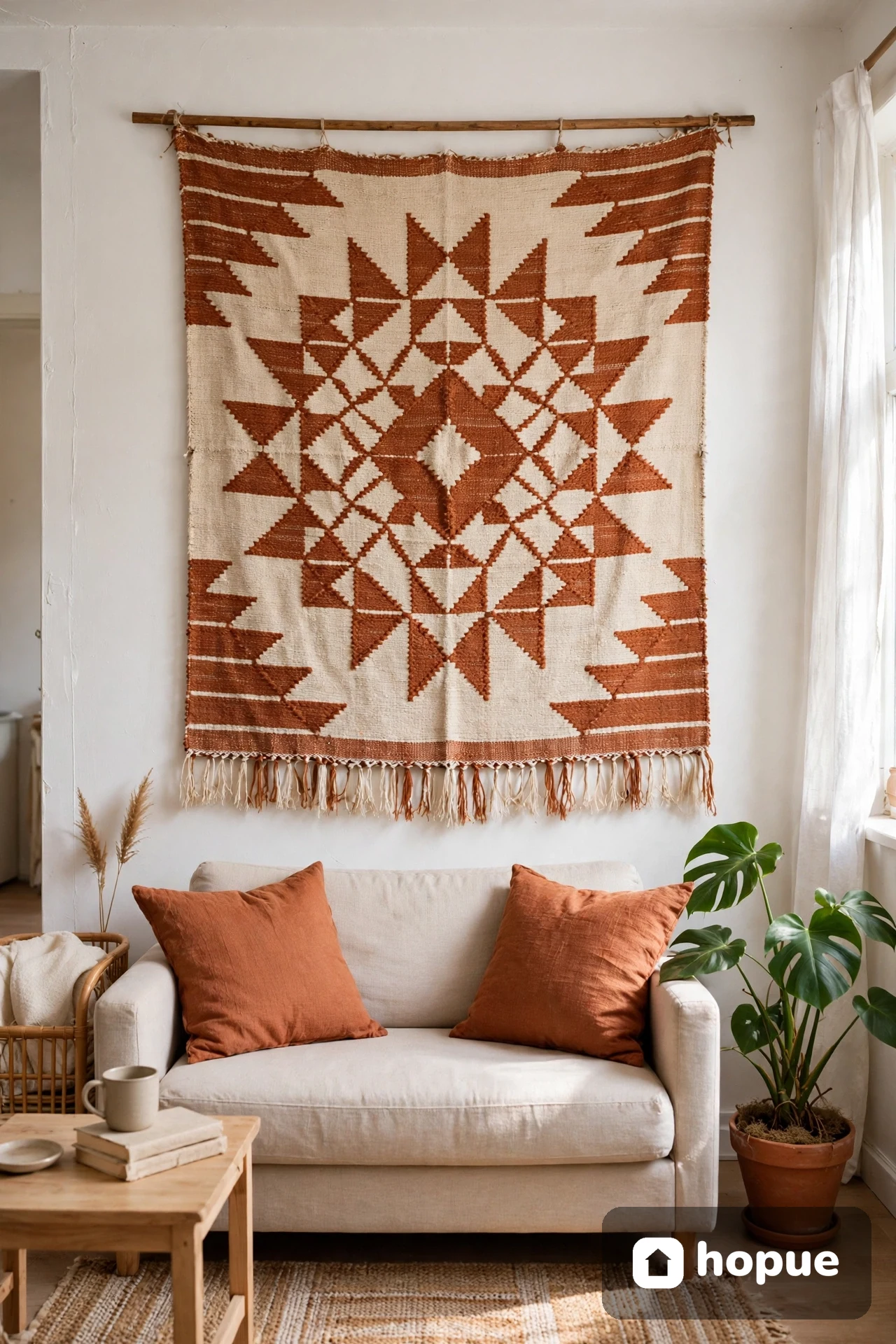
1. The Full-Wall Anchor Behind the Sofa
If your living room feels unfinished, start here. One large tapestry behind the sofa gives the whole seating area a center. Pick a pattern with one or two colors you already own — a rust cushion, a cream throw — so it ties in instead of fighting everything else. Hang it so the bottom edge sits just above the sofa back, not floating halfway up the wall. I once hung one too high and spent a month wondering why the room looked odd. Lower was better. Use adhesive hooks spaced along the top, within their stated limit, and check the product instructions for your wall type first.
2. A Headboard You Can Take With You
A real headboard costs money, needs tools, and often will not fit through a narrow apartment hallway. A tapestry behind the bed does a similar job with far less hassle. Choose a width close to the width of the bed so it reads as intentional, not like a poster that drifted off-center. Center it, step back, and check it from the doorway, because that is the view you will live with. Soft fabric above a bed also feels calmer than a hard frame when you are reading at night. When you move, it folds flat and packs in minutes.
3. A Small Accent Over a Reading Chair
Not every wall needs a big statement. A small tapestry over a reading chair or side table can mark a corner as a place to sit, not just walk past. This helps in apartments where the living room and hallway blur together. Look for a narrow piece you can hang with two clips or a single wooden rail. Scale matters more than pattern here. Too big and the chair disappears underneath it. A hand’s width of wall showing on each side is a good visual check. Add a lamp, and the corner suddenly has a job.
4. First Impression in the Entryway
Entryways in small apartments are often just a strip of wall by the door, with coats, keys, and shoes competing for space. A tapestry there sets the tone before anyone sees the rest of the place, and it hides the scuffs that collect where bags brush the wall. Keep it narrow and sturdy. People will brush past it. Avoid long fringe that catches on coat zippers, and avoid hanging it so low that a bag knocks it loose. A flat woven piece, hung taut, holds up better here than a loose, flowy one. My friend’s long boho piece kept tangling with her tote strap. Short and flat won.
5. The Video-Call Backdrop That Isn’t a Blank Wall
If you work from home, your wall is on camera more than you are. A tapestry behind your desk can look warm and put-together without a full shelf display. Choose a pattern that reads clearly on a small screen: simple shapes, steady colors, nothing too busy. Sit in your chair and check the frame before you commit. What looks great standing up can cut off strangely once you sit down. I moved mine twice before the top edge stopped slicing through the pattern on video. Skip anything sheer if your desk faces a bright window. Glare is worse than a plain wall.
6. A Cozy Corner for Kids (Without Paint)
Kids’ corners change fast. One month it is dinosaurs, the next it is space rockets. A tapestry lets you change the theme without repainting or sticking things to the wall that peel paint later. Hang it low enough for a child to see, but high enough that it does not drag on the floor or get stepped on. A cotton piece you can wash is the practical pick. Crayon, juice, and sticky fingers happen. Check the care label before you buy, not after the first spill. A friend learned that when her dry-clean-only hanging met a cup of chocolate milk. Washable wins here.
7. A Soft Divider in a Studio
In a studio, one room has to do everything. A tapestry hung from a tension rod can soften the line between sleeping and living areas without building anything. It will not block sound or give real privacy, and that is worth saying plainly. What it gives is a visual pause. Hang it where you naturally stop and turn — between the bed and the sofa, or beside a wardrobe. Let it hang straight down, with clearance so you are not pushing through it every time you walk past. A heavier woven fabric hangs straighter and billows less when you open a window.
8. Cotton Boho That Feels Lived-In, Not Costume-y
Boho gets a bad name when everything in the room tries too hard at once. One cotton tapestry with a mandala or sun pattern can be enough. Pair it with plain bedding and a wood side table, and nothing else competing for attention. Cotton is forgiving. It wrinkles, but it also steams out easily and usually survives a gentle wash. Hang it a little loose so it moves slightly, like fabric, not like a stretched canvas. That small bit of movement keeps it from looking like a poster. If the pattern feels too much on its own, fold the top edge over a dowel to soften it.
9. A Woven Neutral When You Want Texture, Not Pattern
Some rooms do not need more pattern. They need texture. A woven tapestry in cream, oatmeal, or warm gray adds depth without adding a picture to look at. This suits renters who already have patterned cushions, a busy rug, or art they love. A tight, flat weave reads calm and modern. A looser, chunkier weave reads rustic and warm. Both can work in the same apartment, just not on the same wall. I keep a woven neutral in my bedroom and a patterned one in the living room. Mixing them in one room made both look muddled, so I stopped trying.
10. Macramé for Warmth Without Color Overload
Macramé is all knots and fringe, no print at all. That makes it useful when you want a wall to feel warm but you do not want another color in the room. It works over a bed, over a sofa, or in a hallway where a flat tapestry might look too plain. The catch is dust. Those knots collect it, so shake it outside gently every few weeks. Macramé can also be heavier than it looks, so use hooks or adhesive products rated for its weight and follow the instructions for your surface. I once watched a piece slide slowly down a wall because the hook was meant for something much lighter.
11. Velvet for Winter Evenings
Velvet tapestries feel different the second you touch them. They catch light, hold color deeply, and make a room feel warmer on a cold evening. A deep green, rust, or plum velvet piece over a sofa or bed can carry a whole winter look without changing anything else. Velvet needs a bit more care. It marks easily if pressed hard, and it does not love being folded tight for months. Hang it flat, keep it away from direct sun if you can, and brush a crease lightly with your hand. In summer, swap it for cotton or sheer fabric and store the velvet somewhere dry.
12. Sheer Fabric Over a Window
A sheer tapestry over a window is less about pattern and more about light. It softens harsh afternoon sun, gives a bit of daytime privacy, and still lets the room stay bright. In a rental where you cannot change the blinds, this is a quiet fix. Hang it from a tension rod inside the window frame, or from adhesive hooks above the frame if your lease allows them. Make sure it does not block the window from opening, and keep fabric clear of radiators and heaters. A sheer piece will fade faster in strong sun, so treat it as a seasonal piece, not a forever one.
13. Botanical Prints That Don’t Shout
Leaf and fern prints are everywhere, and the good ones are quiet. Look for a botanical tapestry with space around the leaves — lots of background showing — rather than a wall-to-wall jungle. That breathing room keeps it calm instead of chaotic. This suits bedrooms and quiet corners, anywhere you want a natural feel without more plants to water. Pair it with one real plant nearby and the print looks intentional. Avoid pairing a big leaf print with leaf-patterned bedding and leaf cushions all at once. One botanical moment per room is plenty.
14. Moons and Stars for a Calmer Bedroom
Celestial patterns — moons, stars, constellations — suit bedrooms because they are naturally low-key. A navy or charcoal tapestry with a simple moon phase design can make a bedroom feel like a place to wind down, especially with warm lamps instead of overhead light. Keep the bedding simple: white or cream sheets, one dark cushion, done. If the pattern is detailed, hang it flat and taut so the stars do not distort. A wrinkled celestial print looks messy fast, because your eye catches every crooked star. A quick steam before hanging makes a real difference. I steamed mine in a steamy bathroom. Not fancy, but it worked.
15. Bold Abstract Blocks in a Plain Room
If your furniture is plain and your walls are white, an abstract tapestry with big blocks of color can be the one loud thing in the room. Think color-blocked shapes, arches, or a large sun — not a fussy, detailed scene. This is a good choice for renters who like modern art but cannot afford large framed prints. The scale gives you gallery size without gallery prices or wall damage. Hang it dead center over the main piece of furniture. Off-center abstract art looks like a mistake; centered, it looks deliberate. Let one color echo something small in the room, like a book spine.
16. Vintage and World Textiles With a Story
Kilim-style patterns, mudcloth-inspired designs, and vintage-looking woven pieces bring a sense of history to a new-build apartment. They suit a collected look — pieces that seem gathered over time, not bought in one afternoon. Be honest about what you are buying. Many pieces sold as vintage-style are new prints on cotton. That is fine, as long as you like the look. A true vintage textile needs gentler care and may not survive a machine wash, so read the label and ask the seller about cleaning first. Keep a heavier woven piece out of direct sun. Old dyes and strong sunlight are not friends.
17. Black Line Art for a Minimal Room
A tapestry with simple black line drawings — faces, arches, single-line figures — fits a minimal room where color would feel wrong. It reads like a large sketch, and pairs well with light wood, white bedding, and one or two plants. The risk is wrinkles. Line art shows every crease, because a straight line that bends looks wrong. Steam it, hang it taut, and use a bottom rail or dowel to add weight and stop the fabric curling. This is one style where ten extra minutes to hang it properly pays off every time you walk into the room.
18. Layered With a Mirror So the Room Feels Bigger
A tapestry and a mirror on the same wall sounds crowded. Done right, it makes a small room feel larger. Hang the tapestry on one part of the wall and a mirror beside it, not on top of it, so the mirror catches light and reflects part of the pattern. The mirror bounces light around. The tapestry warms the wall. Together they balance each other. Keep the mirror where it reflects something pleasant — a window, a plant — not desk clutter. I moved mine three times in a dark hallway before it stopped reflecting the shoe rack. Worth the fuss.
19. Draped Over Furniture — No Hooks at All
Some leases say no to adhesives, no to nails, no to anything on the wall. Some walls are plaster that crumbles if you look at it wrong. Draping is the answer. Fold a tapestry over a headboard, a wardrobe door, a tall bookshelf, or the back of a sofa. Let the fabric fall naturally and tuck the ends so it does not slide. It needs no hardware and leaves no marks, but check it after the first day, and again after a week. If it keeps sliding, fold it over twice for grip. Seasonal swaps are easy too. You are just lifting one piece of fabric off and putting another on.
20. Tension Rod in an Alcove
Alcoves, closet nooks, and recessed walls are awkward for art. A frame never quite fits, and the angles make hanging fiddly. A tension rod across the alcove solves it. The tapestry hangs from the rod like a curtain, filling the recess neatly. Hold the rod up and check the fit in person, rather than trusting a guess. Tension rods need a snug fit to stay put. This works beautifully for a reading nook or a small desk alcove, where the tapestry becomes a backdrop. When you move out, the rod comes down, the tapestry folds up, and the alcove looks as you found it.
21. Clip Rails for People Who Like to Swap Things Often
If you get bored easily, or you like changing your walls with the seasons, clip rails or magnetic hangers are your friend. A wooden rail with clips along the top holds the tapestry flat, and swapping it takes under a minute. No re-hanging, no new hooks. Hang the rail itself once, properly, using a method your lease allows. After that, the changes are free. Keep two or three tapestries in rotation — a light one for summer, a darker one for winter, a fun one for a holiday. Store the ones you are not using rolled, not folded tight, to cut down on creases.
22. The Thrifted Find
Thrift stores, estate sales, and online secondhand listings are full of tapestries someone else hung once and moved on from. The pieces often cost little, and they have a worn-in softness new fabric does not have yet. I found a woven hanging at a charity shop that cost less than lunch and still hangs in my hallway. Inspect before you buy. Hold it up to the light for thin spots, stains, or moth damage, and smell it. Musty fabric can sometimes be aired out, but smoke smell is harder to shift. Wash it before hanging if the label allows, and dry it flat.
23. Paint, Dye, or Stencil Your Own
A plain cotton tapestry is a blank canvas, literally. Fabric paint, tie-dye, or a simple stencil can turn a cheap base cloth into something no one else has, and match an exact color you cannot find in stores. Test on a corner first. Fabric paint can bleed, dye can come out darker than expected, and stencils slip. I tie-dyed a small tapestry on my balcony and the first attempt came out blotchy because I rushed the soak. The second, slower attempt came out even. Work outside or cover your floor well. Dye on a rental carpet is a deposit conversation nobody wants. Let it dry fully before hanging.
24. The Under-Thirty-Dollar Plan
You do not need a big budget to make a wall look finished. A small cotton tapestry, a pair of adhesive hooks, and a wooden dowel can stay under thirty dollars if you shop carefully and keep the size modest. Modest is the key word. A small, well-hung piece beats a large, cheap, wrinkled one every time. Shop sales, check secondhand listings, and do not pay extra for a hanging kit you can improvise. A dowel and some string do the same job as a branded rail for a light cotton piece. Check the return policy before buying online. Colors on a screen lie, and that warm terracotta can arrive looking orange.
25. Swap It With the Seasons
One tapestry all year can start to feel invisible. Swapping with the seasons keeps the room feeling fresh without buying new furniture. Light, airy cotton or sheer fabric for spring and summer. Deeper colors, velvet, or heavier weave for autumn and winter. Store the off-season piece clean, dry, and rolled. A damp tapestry folded into a closet will smell musty by the time you want it again. I keep mine in a cotton storage bag on a high shelf, away from bathroom steam. The swap itself takes ten minutes. The room feels different for months. That is a good trade.
26. Pet-Proof Thinking Before You Hang
Cats climb. Dogs shake and shed. A tapestry at pet height will get pawed, rubbed, and possibly used as a scratching post. Hang pet-zone tapestries high enough that a jumping cat cannot easily hook a claw into the bottom edge, and keep fringe short or tucked away. Choose a washable fabric, because pet hair and the occasional muddy paw print are part of life. A tight weave sheds hair more easily than a loose, fuzzy one. My friend’s cat turned a macramé fringe into a toy in one afternoon. The fringe never looked the same. Plan for the pet you have, not the pet you wish you had.
27. Small Rooms: Go Tall, Go Light, Leave Breathing Room
A common worry is that a tapestry will make a small room feel smaller. It can, if you cover every wall with dark, heavy fabric. It will not, if you follow a few simple rules. One wall only. Light colors or a light background. A vertical shape that draws the eye up, not a wide shape that eats the whole wall. Leave wall showing around the edges. That border of plain wall stops the tapestry from pressing in on the room. I hung a pale botanical piece in a tiny bedroom and the room felt calmer, not smaller, because the pattern was light and the edges were clean.
28. With Lights and Plants — Done Carefully
Fairy lights behind or around a tapestry look lovely in photos. In real life, they need care. Keep lights cool to the touch, keep cords tidy and away from walkways, and never trap a hot bulb against fabric. Battery lights with a timer are the low-stress option. Plants pair well too, but keep watering away from the fabric. A hanging planter dripping onto cotton will leave a water mark. Put the plant to the side, not directly above the tapestry, and wipe leaves over a sink, not over the wall hanging. Check the setup once a week for the first month until you trust it.
29. The Move-Out Test Before You Even Hang It
Before you hang anything, ask how it comes down. That one question saves deposits. Will the adhesive strips peel cleanly from this surface? Will the hooks leave marks? Do you know how to remove them without pulling paint? Read the removal instructions before you stick anything up, not on moving day when you are tired and rushed. Take a photo of the bare wall before you hang the tapestry. When you move out, take it down early and check the wall in daylight. I found one faint mark that way that I would have missed in the evening rush. A gentle clean fixed it, and the landlord handed back the full deposit.
A good tapestry in a rental is not about covering flaws or copying a photo you saw online. It is about choosing fabric you actually like, hanging it in a way your lease allows, and living with it for a while. Start with one wall and one piece, and see how the room feels for a week. If it feels right, keep it. If not, swap it or fold it away. The wall underneath stays untouched, and the next apartment gets a fresh start with a piece that already feels like home.
Frequently Asked Questions
Do I need my landlord’s permission to hang a tapestry in a rental apartment?
It depends on your lease and how you hang it. A tapestry draped over furniture or hung from a tension rod usually needs no permission, because nothing touches the wall. Adhesive hooks and strips are a gray area. Many leases allow them, some do not, and some allow them only on certain surfaces. Read your lease, and if it is unclear, send your landlord a short message describing exactly what you plan to use. A quick yes in writing saves an argument later. Never assume a product is allowed just because it says removable on the pack.
How can I hang a tapestry without damaging the walls?
Use methods that suit your wall surface and follow the product instructions closely. Adhesive hooks and strips work on many smooth, clean walls, but only within their stated weight limit and only if the surface is right for them. Tension rods, clip rails hung from one approved point, and draping over furniture avoid wall contact altogether. Clean the surface first, press firmly for the time the instructions state, and wait before hanging the full weight. Test one hook with a light load first if you are unsure. No method is guaranteed to leave walls untouched. The surface, the product, and how you remove it all matter.
How do I clean a tapestry, and what if it gets wrinkled?
Check the care label first, because cotton, woven, velvet, and macramé all need different care. Many cotton tapestries can be machine washed on a gentle cycle and dried flat, but some need hand washing or dry cleaning only. Washing a dry-clean-only piece is how good tapestries get ruined. I once washed a woven hanging on a normal cycle and it came out smaller and stiffer. For wrinkles, steam is usually the safest fix. Hold the steamer a hand’s width away and keep it moving. A bathroom full of hot shower steam can also relax light wrinkles. Always test a small corner first.
What size tapestry should I choose for a small rental room?
Match the tapestry to the furniture below it, not to the whole wall. A piece close to the width of the sofa or bed looks settled. A small accent piece works over a chair or a side table. Leave plain wall showing around the edges so the room does not feel boxed in. If you are between sizes, go smaller in a tiny room. A smaller tapestry hung well looks deliberate. A large one that crowds the wall and blocks a light switch or a vent looks like it does not belong. Check the wall for outlets, switches, and heaters before you decide.