29 String Light Decor Ideas for a Small Apartment
My first strand of string lights in a rental did not last a week. I hung it with the cheapest hooks I could find, stepped back to admire it, and woke up the next morning to half of it drooping onto my pillow. The adhesive had given up overnight. The second strand was better, but the battery pack died right in the middle of a quiet evening when I had friends over, and I spent ten minutes hunting for fresh batteries in a kitchen drawer. Those two small failures taught me more than any pretty photo did. String lights work best in a small apartment when you plan for real life first: how they hang, where the plug or battery pack lives, and how you will take them down without leaving marks.
That is what this list is for. These are 29 different ways to use string lights decor in a small apartment, from a bedroom canopy to a balcony railing to a desk corner that needs soft light after dark. They are all renter-friendly, budget-conscious, and built around LED and low-heat options. Check the product ratings and manufacturer instructions for any strand you buy, use a timer if you tend to forget, and never leave a damaged strand plugged in. The goal is not to turn your place into a holiday display. It is to add one warm layer of light that makes a small room feel finished.
1. A Canopy Over the Bed
Drape a strand across the ceiling above the bed and let it fall softly at the sides, like a canopy without fabric. Start from the center of the ceiling and work outward, or run two parallel lines from the wall above the headboard toward the foot of the bed. Sheer fabric is optional. On its own, the light already softens the whole sleeping area.
This works because the light sits above eye level. You notice the glow, not the wire. Use adhesive hooks rated for the weight of your strand and press them firmly, then wait before you hang the lights. I learned that the hard way. Give the hooks time to bond, or you will be re-hanging them at midnight. Keep the strand clear of pillows and bedding, and route the cord along the wall to the outlet so it is not stretched across the floor.
2. An Outline Around the Headboard
If a canopy feels like too much, trace the shape of your headboard instead. Follow the top edge and down the sides, tucking the wire just behind the frame so only the small bulbs show. The bed becomes the focal point without any new furniture.
Start here if you have never hung string lights before. It is a short run, it is easy to reach, and you can see right away if the spacing looks even. A warm white strand suits most bedrooms. Cool white can feel sharp this close to where you sleep, especially if the bulbs face outward. Face them slightly toward the wall if the glare bothers you.
3. A Curtain Wall Behind Sheer Curtains
Hang a curtain strand behind sheer curtains and you get a wall of soft light that still lets daylight through during the day. It is one of the most forgiving ideas on this list. The curtain hides uneven spacing, and the fabric diffuses the bulbs so nothing looks harsh.
Mount the strand on the wall or the curtain rod area with clips or hooks, then hang the sheers in front. In a bedroom this can replace a bedside lamp on nights when you just want a low glow. In a living room it turns a plain window wall into the prettiest corner after sunset. Check that the strand does not rest against fabric in a way the manufacturer warns against, and keep the plug accessible so you can switch it off without climbing behind the curtains.
4. Light Along the Front Edge of a Shelf
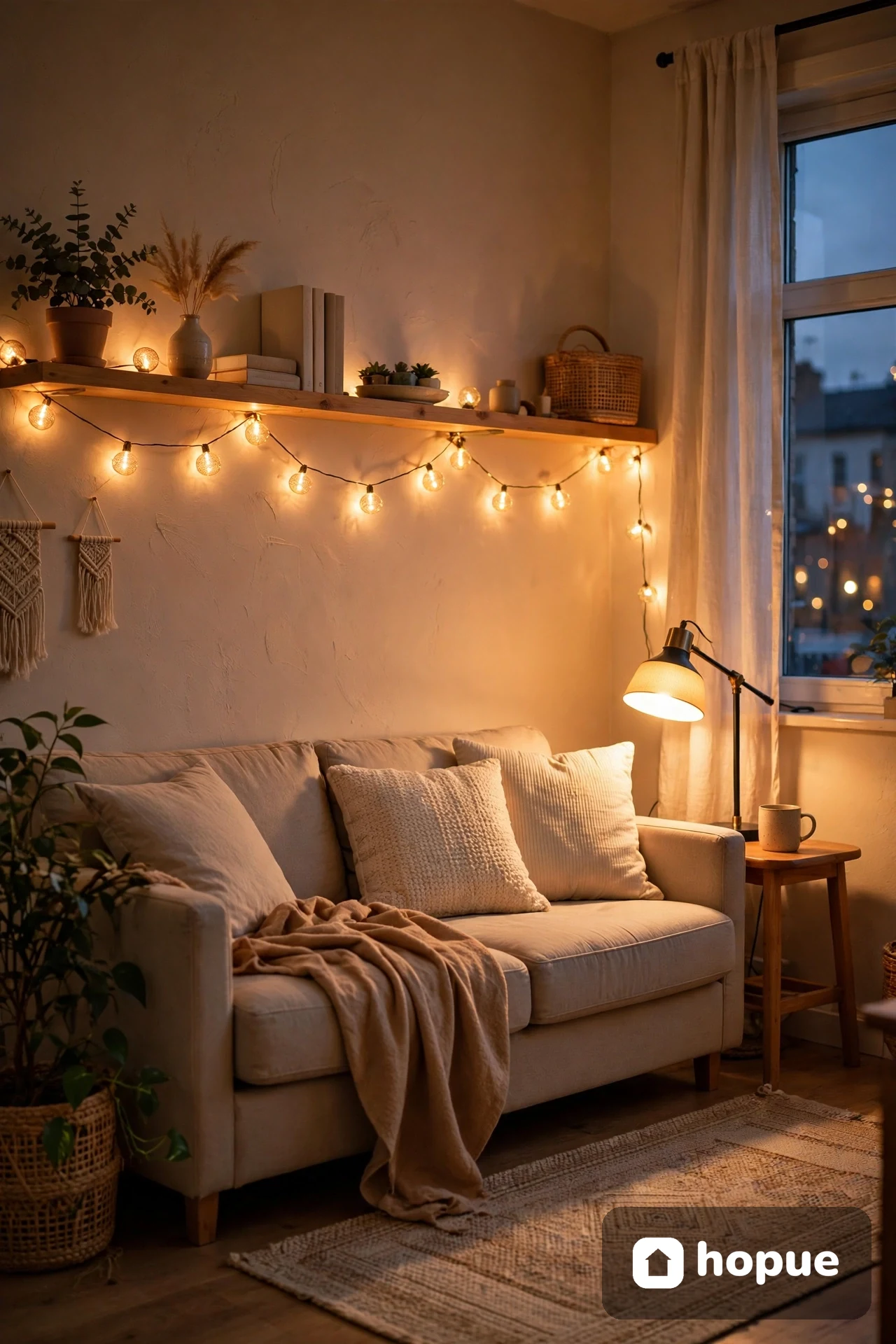
Run a short strand along the front edge of a living room shelf, tucked just under the lip. Books, plants, and framed photos catch the light from above, and the shelf itself looks deeper than it is. This is subtle. Guests often notice that the room feels warmer without spotting the lights right away.
Battery-operated strands shine here, because many shelves sit far from an outlet. Tuck the battery pack behind a book or a basket where you can still reach it. That detail matters. A pack buried behind heavy books is a pack you will ignore until the lights fade mid-evening. Keep spare batteries nearby, or choose a rechargeable pack and build charging it into your weekly routine.
5. A Mirror Framed in Light
Wrap a strand around a large mirror, or run it along the top and sides. The mirror doubles the light, which helps in a small living room or entryway that only gets one window. It also makes getting ready in the morning a little easier, since the light bounces back toward you instead of disappearing into a dark corner.
Use small clear clips or adhesive hooks on the mirror frame, not on the glass itself. Adhesive on glass can be a pain to remove, and renters do not need that fight at move-out. If your mirror leans against the wall rather than hanging, wrap the strand around the frame and let the cord drop behind it to the floor. Step back and check for glare before you call it done. A strand that looks lovely head-on can throw spots of light straight into your eyes from the sofa.
6. A Soft Backlight Behind the TV
A strand tucked behind the television gives the wall a gentle halo and takes the edge off a bright screen in a dark room. It is not about seeing the lights. It is about easing the contrast between the screen and the wall around it.
Stick with LED strands made for this kind of use, follow the instructions for heat and placement, and keep the cord clear of vents on the back of the TV. A timer or smart plug helps here more than anywhere else. You will forget to switch it off after a late show, and waking to a glowing wall at three in the morning gets old fast. Set it to follow your usual viewing hours and leave it alone.
7. A Swagged Focal Wall Without a Mantel
Most small apartments do not have a fireplace, so there is no natural mantel to decorate. Make one out of light instead. Hang a strand in loose swags across one living room wall, dipping in the middle of each section and rising at each hook. Hang a few framed prints or a small shelf below it, and suddenly that blank wall has a center.
The trick is loose, not saggy. Pull the strand just taut enough that the swags hold their shape, and space your hooks evenly before you start. Uneven hooks are what make a swag look accidental. I once eyeballed it and ended up with one deep dip and one flat stretch, and I could see it every time I walked in. Measure by eye from across the room, not up close. Stand back. That is where you will actually live with it.
8. String Lights Wrapped Around a Balcony Railing
Wrap a strand around a balcony railing and an ordinary outdoor corner turns into the place you actually want to sit after work. Start at one end, wrap with even spacing, and keep the cord away from any gate latch or moving part. Check your lease and building rules first. Some buildings restrict what can hang on a railing, and it is better to ask than to take it all down a week later.
Outdoor strands need to be rated for outdoor use. Indoor strands left outside do not last, and rain makes the whole setup risky. If your balcony is covered, you have more options, but the rating still matters. Look for a strand that says it is made for outdoor or damp conditions, and plug it into a protected outlet. When storms are forecast, unplug it. It takes thirty seconds, and it is the kind of habit that keeps a simple decoration from becoming a problem.
9. An Overhead Canopy on the Balcony
If wrapping the railing feels too visible from the street, go overhead instead. String one or two strands across the balcony ceiling or between the top of the railing and the wall, so the light hangs above you like a café awning. You sit under the glow rather than looking straight at it, which feels calmer on a small balcony.
Tension and support matter here. Wind moves a balcony strand more than an indoor one, so use sturdy hooks and check them after the first windy night. Solar strands can work well for this spot if your balcony gets direct sun during the day, but do not assume they will stay bright all evening. Check the product guidance on charging time, and have a plug-in or battery backup in mind for cloudy stretches if the balcony is where you unwind at night.
10. A Welcome Glow in the Entryway
The entryway is the smallest room most renters ignore, and it is the first thing you see when you come home. A short strand along a console table, a mirror, or the top of a coat rack makes coming in feel intentional instead of rushed. It also helps when you are fumbling for keys in winter, when it gets dark before dinner.
Keep this one short and high. Cords at ankle height in an entryway are a trip hazard, and coats and bags will snag anything that hangs low. Run the strand above the console or along the top of the door frame, and route the cord down a corner where it will not be stepped on. A timer that switches on around the time you usually get home means you walk into light instead of hunting for a switch with full hands.
11. A Desk Corner That Does Not Glare
A desk in a small apartment often sits in a corner with one overhead light that is either too bright or too dim. A strand along the back edge of the desk or the shelf above it adds a low layer of light that is easier on the eyes during evening work. It fills the shadows without competing with your screen.
Place the strand behind the monitor or along the wall side, not in front of you. Light aimed at your face while you work gets tiring. Light washing the wall behind the desk feels steady and calm. If you use a plug-in strand, keep the outlet strip accessible and do not overload it with a heater, a charger, and a lamp all at once. A single power strip doing too much work is a common small-apartment hazard, and it is easy to avoid by spreading things across outlets.
12. A Reading Nook With Draped Light
Pick the chair, add a strand, and you have a reading nook. Drape the lights from a high hook down to a shelf or a side table beside the chair, so the glow falls to one side rather than straight overhead. A floor lamp still does the heavy lifting for reading. The string lights do the mood.
This is where color temperature earns its keep. A warm strand beside a reading chair feels like evening. A cool one can make the same chair feel like an office. If you already own a cool white strand, try bouncing it off a wall or draping it behind a plant so the direct light softens. Small change, big difference. Keep a book basket or a small table nearby for the battery pack or plug, so you are not reaching behind furniture every night.
13. A Photo Strand With Clips
Clip strands, the kind with small clips already attached, are made for photos, ticket stubs, postcards, and small prints. Hang one across a wall, a window frame, or the side of a bookshelf, and clip memories along it. Swap them when the season changes or when you print new photos. Nothing is permanent, which suits a rental perfectly.
Do not overload it. A clip strand holding too many heavy prints will sag in the middle, and the clips will start to slip. Use light prints, and leave space between them so each one gets noticed. If the strand came with clips that feel flimsy, replace a few with small wooden clips from a craft store. And keep the photos away from direct sun if they matter to you. Light fades prints faster than most people expect, even indoors.
14. Jars and Bottles on the Table
Drop a short fairy strand into a large glass jar, a clear bottle, or a cluster of small vases, and you have a centerpiece that needs no flowers. The glass catches the light and spreads it across the table. It works for a dinner with friends, a quiet night in, or a small dining table that never quite feels finished.
Use LED strands for this, and make sure the jar or bottle is stable before you add the lights. A tall, narrow bottle on a wobbly table is a spill waiting to happen. Battery packs tuck neatly behind the jar, but again, keep them reachable. If the jar gets hot, if the strand smells odd, or if any wire looks damaged, take it out and do not use it. A centerpiece is not worth a damaged strand. For a steadier look, use two or three small jars instead of one large one, and vary their heights.
15. Lights Woven Through Plants
Trailing plants and string lights were made for each other in a small apartment. Weave a strand loosely through a pothos on a high shelf, or wrap it once around a plant stand, and the leaves catch little points of light as they trail down. The plant hides the wire. The light shows off the plant.
Be gentle. Do not pull the strand tight around stems, and do not wrap so many loops that the plant cannot breathe or grow. One loose pass is plenty. Water carefully, too. Unplug or move the strand before you water a hanging plant, and never let a plug or battery pack sit in a saucer where water collects. If you have a plant that sheds leaves often, check the strand now and then for dead leaves caught in the wire. It takes a minute, and it keeps the whole thing looking cared for.
16. Globe Lights Over a Small Dining Table
Fairy lights twinkle. Globe lights glow. Over a small dining table, that difference matters. A single strand of globe lights hung in a shallow swag above the table gives you a pendant feeling without installing anything, which is exactly what renters need. The round bulbs read as intentional, almost like a fixture, even though you can take them down in minutes.
Hang them high enough that no one bumps them standing up, and center them over the table rather than the room. A strand centered on the room but off-center over the table always looks slightly wrong, and you will notice it at every meal. Use a warm globe strand and a dimmer-compatible setup if you want to soften it for dinner and brighten it for homework or bills. Check the dimmer and strand are compatible before you buy. Not every LED strand dims well, and flicker is miserable to live with.
17. Curtain Lights as a Studio Divider
In a studio, one room has to do everything. A curtain strand hung from the ceiling can mark the line between sleeping and living without building anything or buying a bulky screen. It does not block sound or give real privacy, but it gives your eye a boundary, and that is often enough to make a studio feel like it has rooms.
Hang the strand from ceiling hooks or a tension rod, depending on what your lease allows, and let it fall straight. Keep the walkway clear. A divider that you have to duck under or push aside every time you cross the room will annoy you within a week. If you need to pass through often, hang the divider slightly to one side of the main path, or use a shorter panel that marks the zone without closing it off. Pair it with a rug on one side to strengthen the divide.
18. Open Kitchen Shelves With a Soft Edge
Open kitchen shelves look lovely in photos and a little stark in real life. A strand along the underside of the top shelf softens the whole wall and makes it easier to see what is on the lower shelves in the evening. It turns storage into display without adding a single new object.
Kitchens need extra care. Keep strands away from the stove, the oven, and any steam from a kettle. Heat and moisture shorten the life of a strand and can make it unsafe, so check the manufacturer guidance for kitchen use. Battery strands are often the simplest choice here, since kitchen outlets are usually busy. Wipe the strand now and then. Kitchen air leaves a thin film on everything, and a quick wipe keeps the bulbs bright.
19. Battery Light Inside a Closet or Wardrobe
Closets in rentals are often dark, deep, and missing a light altogether. A battery strand along the top edge of a closet or inside a wardrobe door frame fixes that without an electrician. You open the door, the clothes are visible, and getting dressed stops being a guessing game in dim morning light.
Choose a strand with a simple on-off switch or a remote you will actually keep nearby. A strand you have to climb to reach will stay off. Mount it with adhesive clips inside the frame, away from hanging clothes that could snag it. And remember the battery lesson from the start of this article. If the closet light fades, change the batteries right away, or you will be back to dressing by phone light. Rechargeable packs help if you use the closet every day.
20. A Careful Glow at the Bathroom Vanity
String lights in a bathroom need more caution than anywhere else indoors. Water and electricity do not mix, and a damp room is not the place for a casual strand draped over a towel rail. That said, a short battery strand along a high shelf, well away from the shower and sink, can soften a bathroom that otherwise has one harsh overhead bulb.
Keep it high, keep it dry, and keep it away from water sources. Do not hang lights over a bath or a shower, and do not use a plug-in strand where it could be splashed. If your bathroom stays steamy, this idea may not suit your space at all, and that is fine. A safer swap is a strand in the hallway just outside the bathroom door, where it still softens the light spilling in without sitting in the damp air. When in doubt, skip the bathroom and use the strand in the next room.
21. Lanterns and Baskets You Can Move
Not every strand needs to hang. Coil one inside a wire lantern, a woven basket, or a large glass hurricane on the floor beside the sofa, and you have a portable light you can move from the living room to the bedroom to the balcony. It is the easiest idea on this list to try, and the easiest to undo if you hate it.
A strand you already own but have not found a home for? Try it here first. Coil it loosely, not tightly, so air can move around it and the bulbs are not pressed hard against each other. Do not cover it with fabric or place it where bedding or curtains could fall onto it. Battery strands work best for this, since there is no cord trailing across the floor. Move it when you need it, and put it back when you do not. Small apartments reward furniture and light that can shift with the day.
22. A Gallery Wall With Light Woven In
If you already have a gallery wall, a strand can tie it together. Weave a single strand behind and between frames, letting small sections show in the gaps. The light draws your eye across the whole wall instead of letting each frame sit alone. It works best on a wall with some breathing room between frames. A wall packed edge to edge has no gaps for the light to show through.
Plan the route before you hang anything. Lay the frames on the floor, decide where the strand will run, and mark your hook spots. Hanging frames around a strand that is already up is fiddly and often ends with a crooked frame. Keep the strand behind the frames, not across the front of the art, and use hooks that will not damage the wall. Step back often. A gallery wall is judged from the sofa, not from six inches away.
23. One Strand, Four Seasons
You do not need a different strand for every holiday. Keep one neutral warm white strand up year-round, and change what hangs from it. Small paper stars in winter, dried flowers in spring, tiny flags in summer, pressed leaves in autumn. The strand stays. The decorations rotate.
This saves money and storage space, which matters when a closet is already full. It also keeps you from re-hanging lights four times a year and patching hook marks each time. Use lightweight clips and paper decorations, and do not hang anything heavy or flammable near the bulbs. Store the seasonal bits in one labeled bag so you can find them next year. I once lost a whole set of paper stars because I tossed them in a box with old cables. One bag, one label, no mystery next December.
24. Warm Light Here, Cool Light There
Color temperature is not a detail. It changes how a room feels. Warm white, the yellowish glow most people picture, suits bedrooms, reading corners, and dining tables. Cool white, which leans bluer, suits a desk or a kitchen shelf where you want to see clearly. Mixing them without a plan makes a small apartment feel disjointed, like two different homes sharing a hallway.
Decide room by room. If your living room and bedroom open onto each other, keep them in the same warm family so the eye moves smoothly between them. Use cool light only where you do a task, and keep it contained to that corner. Before you buy a second strand, look at the one you have in the evening, not in the store. Store lighting lies. Evening light in your own room tells the truth.
25. Battery, Plug-In, or Solar: Pick by Spot, Not by Habit
Renters often buy one type of strand and try to use it everywhere. It rarely works. Plug-in strands suit spots near an outlet that stay put, like a curtain wall or a TV wall. Battery strands suit shelves, jars, and closets where no outlet exists. Solar strands suit a sunny balcony and nowhere else indoors.
Think about the chore each type creates. Plug-in strands need cord management. Battery strands need fresh or charged batteries. Solar strands need sun and a backup plan for grey weeks. My own rule is simple. If I will touch the strand every day, plug-in wins. If I will forget it for weeks, battery with a timer wins, because a timer stretches battery life. If it lives outside, solar earns its place only if the spot truly gets sun. Choose the power source after you choose the spot, not before.
26. Timers and Smart Plugs That Do the Remembering
A timer is the least glamorous string light accessory and the most useful. Set a strand to come on at dusk and off at bedtime, and you stop thinking about it. You also stop leaving it on all night, which saves energy and gives the bulbs a rest. Many plug-in strands now include a timer, and a basic smart plug adds the same habit to any older strand.
Start with one timer on the strand you use most, usually the living room or bedroom. See if the schedule fits your life for a week before you automate the whole apartment. A timer set to someone else’s routine will annoy you. Yours should match when you actually come home, cook, read, and sleep. If you travel, a timer also makes the apartment look lived in, which is a quiet bonus. Just make sure the smart plug and strand are compatible, and do not plug a timer into an overloaded strip.
27. Bouncing Light to Beat Glare in a Tiny Room
Small rooms punish direct light. A strand aimed straight at the sofa or the bed can feel glaring, even when the bulbs are small. The fix is to bounce the light. Face the strand toward a wall, a ceiling, or the back of a shelf, and let the surface soften it before it reaches you. You get the glow without the spots.
This matters most in rooms where you sit close to the walls, which is most small apartments. Before you settle on a placement, sit where you normally sit and look toward the lights. If you can see individual bulbs glaring, move the strand, angle it, or add a sheer fabric layer in front of it. A strand that looks perfect standing in the doorway can be uncomfortable from the armchair. Judge it from where you live, not where you hang it.
28. Pets, Cords, and Chew-Proof Routing
Pets and string lights can share a small apartment, but only with a plan. Cats bat at dangling cords. Dogs chew what sits at floor level. Rabbits and other small pets will find a cord you thought was hidden. Route cords high, along walls, and behind furniture, and use cord covers where a cord must cross a floor or a low shelf.
Check the strand regularly for bite marks, fraying, or exposed wire, and unplug any strand that looks damaged. Do not leave a low-hanging strand unsupervised with a curious pet, and keep battery packs out of reach. A pack on the floor is a chew toy. A pack on a high shelf is out of the way. If your pet is determined, choose a high placement like a curtain wall or a top shelf, and skip floor-level lanterns and jar displays until you know how your pet reacts. It is better to have fewer lights than a vet visit.
29. Taking Them Down Clean and Storing Them Untangled
The last idea is the one renters thank themselves for later. Removal and storage decide whether your deposit survives and whether next year’s strand works at all. Pull adhesive hooks slowly, following the removal instructions, instead of yanking them off the wall. Heat from a hair dryer on a low setting can help with stubborn adhesive, but test a small spot first and stop if the paint looks stressed. Patch nothing until you have removed everything and can see the wall clearly in daylight.
For storage, wind the strand around a piece of cardboard, a spool, or your hand and elbow in loose loops, and secure it with a twist tie. Never shove a strand into a bag in a knot. That knot is how strands break, and untangling one on a cold evening is the fastest way to hate string lights. Label the bundle with where it hung and whether it is battery or plug-in. Future you, standing on a chair with hooks in one hand, will be grateful. Keep the bundle somewhere dry, away from heavy boxes that could crush the bulbs.
String lights will not fix a small apartment on their own. They will not add square footage, and they will not make a noisy neighbor quieter. What they do, when they are hung with care and powered sensibly, is make the rooms you already have feel warmer, calmer, and more like yours. Start with one strand in the room where you spend your evenings. Live with it for a week. Then decide where the next one belongs. That slow pace suits a rental. It also suits a budget. And it means every strand you keep is one you actually love coming home to.
Frequently Asked Questions
How can I hang string lights in a rental without damaging the walls?
Use adhesive hooks and clips rated for the weight of your strand, and follow the removal instructions exactly. Press hooks firmly and let the adhesive bond before you hang the lights. Tension rods, draping over furniture, and wrapping around a plant stand or shelf avoid wall holes altogether. Avoid nails and screws unless your lease clearly allows them, and ask your landlord before you hang anything heavy or permanent. When you move out, remove hooks slowly and check the walls in daylight.
Are string lights safe to leave on, and should I choose LED, plug-in, or battery strands?
LED and low-heat strands are the safer choice for a small apartment, and they stay cooler than older bulb types. Never leave a damaged strand plugged in, do not overload an outlet or power strip, and keep strands away from bedding and curtains where the manufacturer warns against contact. Do not leave any lights on unattended for long stretches if you are unsure about the strand. A timer or smart plug helps you switch them off at bedtime. Plug-in strands suit fixed spots near outlets, battery strands suit shelves and closets, and solar suits a sunny balcony. Always follow the manufacturer instructions for your specific product.
Can I use string lights on a balcony or outdoors?
Yes, if the strand is rated for outdoor use. Indoor-only strands should stay inside, even on a covered balcony. Check the rating for outdoor or damp conditions, plug into a protected outlet, and keep connections out of puddles and standing water. Check your lease and building rules before you wrap a railing or hang lights overhead, and unplug outdoor strands during storms. Solar strands need direct sun to charge, so check the charging guidance and do not rely on them alone for evening light during cloudy weeks.
How do I use string lights in a bedroom without ruining my sleep?
Keep bedroom strands warm in color, dim or indirect where possible, and on a timer that switches them off at bedtime. Light facing the wall or ceiling feels softer than bulbs aimed at the bed. Avoid a bright or cool strand right above your pillow, and do not use string lights as your only light for reading if you need brighter, focused light. If you are sensitive to light while sleeping, switch the strand off completely rather than leaving it on low. A timer makes that habit automatic, so you are not getting up to unplug it every night.