29 Everyday Dining Table Centerpiece Ideas for a Small Apartment
Most centerpiece photos look lovely until you try to live with them. You set down a grocery bag, and something wobbles. You open a laptop, and the vase is in the way. You sit down to eat, and you have to move half the table first. A small apartment table has to do too much for that. It is where you eat, work, sort mail, and talk with whoever stops by.
What you need is an everyday dining table centerpiece small apartment living can handle — something pretty enough to enjoy at breakfast and practical enough to push aside at dinner. The ideas below are built for that kind of table. They are low, easy to move, easy to clean, and cheap to change. Pick one that fits how you actually use your table, not how a photo shoot uses it.
1. A Low Bowl of Fruit You Actually Eat
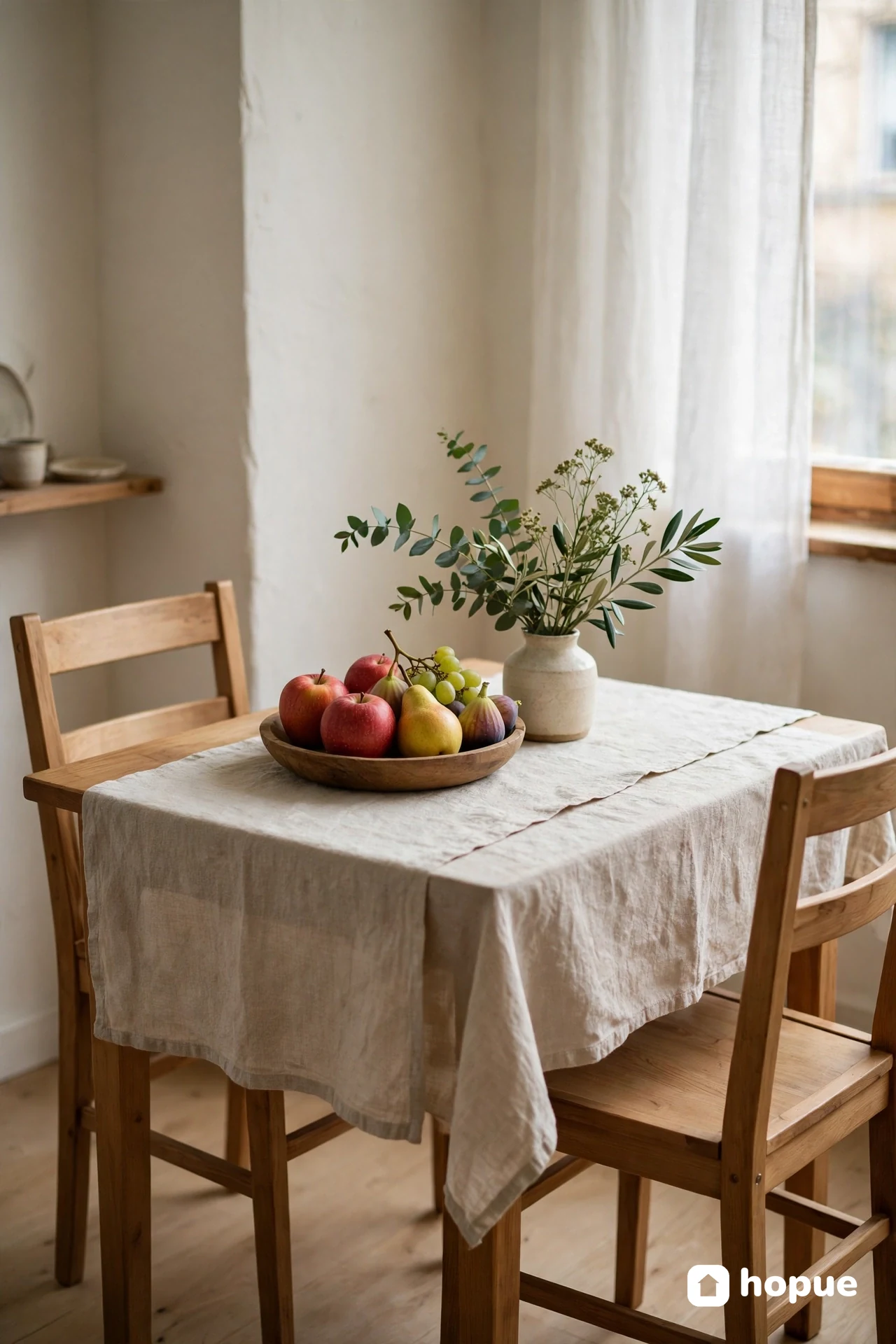
Start with fruit you like, in a bowl low enough to talk across. Apples, lemons, or a few oranges look good for days and get eaten before they go soft. I kept a tall fruit stand once. It looked great in a photo and drove me mad at every meal. I could not see the person across from me, and reaching past it for the salt felt like a negotiation. A low wooden bowl fixed that. Refill it when you shop. Wipe it out now and then. Nothing here is just for show.
2. One Stem in a Small Vase
One stem can do more than a big bunch on a small table. A single tulip, a rose, or a stem snipped from a neighbour’s garden fills a little vase without crowding the plates. The trick is the size of the vase. Keep it short and a bit heavy at the bottom so it does not tip when someone bumps the table. When dinner starts, you pick it up with one hand and set it on the counter. When dinner ends, it comes right back. Same chipped vase, for years.
3. Just a Linen Runner, Nothing Else
Some days the best centerpiece is not an object at all. A linen runner down the middle softens a plain table and gives it a finished look, even when the surface is otherwise bare. It hides small scratches. It catches crumbs. It comes off in seconds for a wash. Choose a colour close to your table or a soft contrast you like, and let the edges hang just a little. If you work at the table, the runner marks the middle and keeps your laptop and papers from sliding all over. Simple. Calm. Done.
4. A Tray That Catches Real Life
A tray is the honest answer for a table that collects stuff. Keys, mail, sunglasses, a lip balm, the charger you keep losing — they all land in the tray instead of spreading across the whole table. Pick a woven or wooden tray with low sides. It should be big enough to hold the daily clutter and small enough to lift in one go. At mealtimes, lift the whole tray and set it on a chair or a shelf. Put it back after. No sorting. No hunting. It has saved my keys more than once.
5. Candles on a Plate, Kept Low
Candles work every day if you keep them low and simple. Two or three short pillar candles on a plain plate look warm at night and quiet in the morning. Use unscented ones if you eat at the same table, so the smell does not fight with your food. The plate catches drips and makes the whole group easy to move. Light them when you sit down. Blow them out when you clear up. Keep matches in a small jar nearby, and keep the candles well away from curtains, paper, and curious paws.
6. Two Cookbooks and Something Small on Top
A stack of cookbooks is a centerpiece that tells the truth about your kitchen. Pick two you actually open, not the prettiest ones you never touch. Stack them with the spines facing out, slightly off centre, and put one small thing on top — a tiny plant, a candle, or a smooth stone you picked up on a walk. It gives the table height without blocking anyone’s view. When you need a recipe, the book is right there. When friends come over, it starts a conversation. Dust the top book when you dust the table.
7. A Pot of Basil You Snip From
A small pot of basil earns its spot in a way most decor never does. It smells good when you brush past it. It looks alive. And you can snip leaves straight into pasta, eggs, or a tomato salad. Keep it in a plain pot with a saucer underneath, near the light if you can. Water it when the top of the soil feels dry. Pinch the tops back so it stays bushy instead of tall and leggy. If it starts to look tired, move it to the windowsill for a few days. Mine did, all summer.
8. A Pitcher That Earns Its Place
A ceramic pitcher can hold flowers in the morning and water at dinner. That double job matters when storage is tight. Fill it with a few fresh stems and set it in the middle of the table. At mealtimes, take the stems out, rinse the pitcher, and fill it with water for the table. It sounds fussy. In practice it takes a minute, and the pitcher never feels like clutter because you use it. Choose a shape you like holding. A chipped pitcher you love beats a perfect one you are afraid to touch.
9. A Shallow Basket for Bread and Napkins
A shallow basket keeps the middle of the table useful instead of decorative. Line it with a clean cloth napkin and use it for bread, rolls, or a stack of napkins. Between meals, leave a folded cloth in it or leave it empty. It adds warmth and texture, and it is easy to shake out over the sink. Woven baskets do get crumbs in the weave, so pick one you can brush out quickly. I like a low, wide basket best. Tall baskets block faces and tip more easily when someone reaches across.
10. Branches in a Tall, Narrow Vase
If fresh flowers feel like too much upkeep, try branches. A few stems of eucalyptus, dried grasses, or bare branches from the yard last for weeks with no water changes and no drooping petals on the table. A tall, narrow vase keeps them upright and takes up very little room. Trim the stems so the arrangement sits a bit above eye level when you are seated, or keep it lower if you prefer. Shake the branches outside now and then. Swap them when they start to look dusty or dull. No fuss, no waste.
11. An Empty Thrifted Bowl, Left Empty on Purpose
An empty bowl can be the whole idea. A thrifted stoneware bowl with a good shape and a glaze you love does not need filling to look finished. Set it in the centre and let it be. It catches light. It holds nothing, and that is the point — on a busy table, one calm, empty shape gives your eye somewhere to rest. Look for bowls with a bit of weight to them. Wash it like any other dish when it gets dusty. If you get tired of it empty, add fruit later. It will still work.
12. A Wooden Board as the Anchor
A wooden board gives a centerpiece clear edges. Put a cutting board or serving board in the middle of the table, then set a small bowl and a candle on top of it. Everything stays in one zone. Nothing drifts toward the plates. When you need the whole table, you lift the board and everything on it moves at once. Use the board at dinner, too. Slice bread on it. Set down a hot dish on a trivet beside it. The scratches and marks it picks up only make it look more at home over time.
13. Three Tiny Bud Vases in a Row
Three little bud vases in a row feel thoughtful without feeling fussy. Each one holds a single stem, and the stems do not have to match. One rose, one sprig of greenery, one wildflower from a walk — that mix looks better than three identical flowers, and it costs less. Line them up down the centre of a rectangular table, or cluster them close on a round one. If one stem fades, replace just that one. If a vase chips, the other two still carry the look. It is a forgiving arrangement.
14. A Trailing Pothos in a Plain Pot
A pothos is hard to kill, and that is high praise in a rental with uneven light. Set a small one in a plain pot in the middle of the table and let a vine trail toward one edge. It softens a hard tabletop and makes the whole corner feel lived in. Wipe the leaves with a damp cloth when they get dusty. Trim a vine if it starts reaching for your plate. If the plant outgrows the table, move it to a shelf and start a cutting in water in the same pot.
15. Placemats That Stay Out
Leaving woven placemats out all the time can be the centerpiece itself. They protect the table from hot mugs and wet glasses. They mark where people sit. And they add colour and texture without adding one more thing to move at dinner. Choose placemats that wipe clean or shake out easily, and keep the pattern simple so the table does not feel busy. At dinner, you eat right on them. After, you shake them over the sink. I switched to this in a rental with a scratched table, and the scratches stopped bothering me.
16. A Little Dish for Keys, Rings, and Coins
Every small table needs one spot for the small things that vanish. A shallow ceramic dish near one end of the table holds keys, rings, coins, and hair ties. It keeps them off the eating surface and in one place you will actually check before you leave. Pick a dish with a slightly raised edge so coins do not slide off. Empty it once a week or it becomes a junk pile, which defeats the purpose. A thrift find works just as well.
17. A Lazy Susan for a Round Table
A lazy Susan turns a small round table into a much easier table. Set condiments, salt, napkins, and a small plant on it in the morning. At dinner, spin what you need toward you instead of reaching across someone. Pick a low, flat one in wood or bamboo that does not wobble. Keep the load light and balanced, and leave a clear ring of table around it for plates. If it squeaks or sticks, a quick wipe underneath usually helps. For two people sharing a tiny round table, this one change makes every meal less awkward.
18. Dried Grasses in a Mug or a Jar
Dried grasses in an old mug or a clean jam jar look relaxed in a way fresh flowers sometimes do not. There is no water to spill, no petals to sweep up, and nothing to throw away at the end of the week. Gather a small handful, trim the stems to fit, and let them lean a little. If you have a cat, this is often the safer choice — no vase of water to knock over, and nothing tempting to chew. Dust the grasses gently or replace them when they fade. Use what you have.
19. Two Tapers You Only Light at Dinner
Save a pair of taper candles for dinner and they stay special. Keep them in simple holders in the middle of the table all day, unlit. They look neat and take up very little room. At dinner, light them. The table feels different at once, even if dinner is leftovers eaten straight from the pan. I did this through a long winter in a studio, and those ten minutes of candlelight made an ordinary Tuesday feel like I had made an effort. Blow them out before you leave the table.
20. A Small Leaning Print Behind the Bowl
If your table sits against a wall, use the wall. Lean a small framed print or a postcard against the wall behind a low bowl or a vase. The print adds colour and height without taking up table space at all. Change it when you get bored — a photo from a trip, a market find, a child’s drawing in a cheap frame. Keep the frame light and stable so it does not slide. Tape a small felt pad on the back if it marks the wall. Renters, take note: nothing here needs a nail or a hook.
21. All White, Different Shapes
An all-white grouping can look calm instead of cold if the shapes are different. Try a white pitcher, a white bowl, and a white candle holder, each with its own shape and finish — one matte, one glossy, one rough. The sameness of colour holds them together. The difference in shape keeps them interesting. This works well if your table and chairs are dark wood or if your walls are busy. Dust shows on white, so give the pieces a quick wipe when you clear the table. A broken piece is easy to replace.
22. Mix Wood, Linen, and Wicker
Texture does the work when colour stays quiet. A wooden bowl, a linen runner, and a small wicker basket together feel warm and layered, even in shades of brown and cream. Nothing matches exactly, and that is what makes it look collected rather than bought as a set. Run your hand over each piece before you buy it, if you can. Rough, smooth, and soft side by side is what your eye notices. Keep the group low and loose. If it starts to look like a display, take one piece away. Less, here, usually reads as more settled.
23. A Narrow Tray for a Drop-Leaf Table
A drop-leaf table needs a centerpiece that fits when the leaf is down. A long, narrow tray is made for this. It sits along the centre, holds a small vase and a candle, and leaves both sides clear for plates when the table is open. When you fold a leaf down, the tray stays put and the table still looks dressed. Measure the folded width with your hand, roughly, before you buy — the tray should sit well inside it. I wish I had known this in my first flat.
24. Push It to One Side on a Rectangular Table
Centrepieces do not have to sit in the centre. On a rectangular table you use for work, push the whole grouping to one end or one side. Leave the rest of the surface clear for a laptop, notebooks, or a jigsaw puzzle in progress. The table still looks styled from the doorway, and you are not shoving a vase aside every time you sit down. Try the grouping at the end nearest the wall first. If it crowds the chair there, slide it to a side instead.
25. One Round Mat in the Middle of a Round Table
A single round mat under a bowl does for a round table what a runner does for a long one. It marks the centre, protects the wood, and stops a bowl from sliding when the table gets bumped. Choose a woven or cork mat close to the size of your bowl, with a little edge showing all round. Set the bowl in the middle and leave the rest of the table bare. Plates fit around it without a fight. When the mat gets stained, soak it or replace it.
26. The Same Bowl, Swapped With the Months
You do not need a new centerpiece every month. You need one good bowl and a habit of swapping what is in it. Lemons in spring. Green apples in summer. A few bare twigs when the light turns. A small bunch of greenery when you want the table to feel fresh. The bowl stays. The table stays familiar. Only the contents change, and only when you feel like it. This keeps costs down and stops the cupboard filling with decor you use once. If a swap does not work, put the fruit back.
27. A Thrifted Vase You Paint or Leave Chipped
A thrift store vase is a low-risk way to find your taste. Spend a little, bring it home, and live with it for a week before you decide. Paint it a colour you love, or leave the chip on the rim that made it cheap. A painted vase in a soft sage or warm white can pull a whole table together. An unpainted one with a crackle glaze can do the same. Put one stem in it and see how it feels at breakfast. If you hate it, donate it back.
28. The Heavy, Washable, Pet-Proof Setup
Kids and pets change the rules, and the centerpiece has to change with them. Go heavy at the base, washable on top, and nothing dangling over the edge. A thick ceramic bowl, a wooden tray, and a short candle in a sturdy holder will survive a bump from a dog’s tail or a toddler reaching for a grape. Skip long runners a child can pull and tall vases a cat can topple. Wipe everything down after meals. If something breaks, it should be cheap to replace. Sturdy wins here.
29. A Centerpiece That Becomes Dinner
The most practical centerpiece of all is one you eat from. Set out a low bowl of salad, a board with bread and cheese, or a dish of fruit that becomes dessert. The table looks generous before anyone sits down, and nothing needs moving when the meal starts. You just add plates and sit. This works best for casual meals with people you know well — family dinners, a friend dropping by, a Saturday lunch that stretches on. Clear the board when you clear the plates. Wash it. Put it back in the middle, empty, ready for tomorrow.
A table you live at does not need a perfect centerpiece. It needs one that fits your meals, your work, your people, and your mess, and still makes you glad to sit down. Start with one idea from this list. Live with it for a week. Move it, swap it, or take a piece away until it feels like yours. That lived-in fit is what makes a small table feel like home, not a display.
Frequently Asked Questions
How do I keep a centerpiece on a table I also work at?
Keep the grouping small, low, and in one movable unit — a tray or a board you can lift with one hand. Push it to one end while you work, and bring it back to the middle for meals. Avoid tall vases and loose small objects that migrate into your laptop space. If a piece keeps getting in your way for more than a few days, it is the wrong piece for a work table, no matter how good it looks.
What if my table only seats two and feels tiny?
Use less, and use it well. One low bowl or one small vase is enough. A narrow tray or a single round mat marks the centre without eating up plate space. Keep everything short so you can see each other and reach the salt. Test it with two plates, two glasses, and a serving dish out before you decide it works. If you have to move the centerpiece to fit dinner, make it one lift, not three.
How do I stop a centerpiece getting dusty, crumby, or sticky?
Choose pieces you can wipe, shake out, or wash. Wipe ceramic and glass when you clear the table. Shake runners and placemats over the sink. Empty a tray or a key dish once a week before it turns into clutter. Avoid dried flowers and fussy fabric in the direct eating zone if crumbs bother you. A quick wipe as part of clearing up keeps the whole thing from becoming a weekend chore.
Can I have candles and plants on the table with kids or pets?
Yes, with a few changes. Keep candles short, sturdy, and well away from table edges, and never leave them lit when you leave the room. Use a heavy pot for plants so a bump does not tip it, and skip trailing vines a child or cat can grab. Dried grasses in a jar and a heavy bowl of fruit are often the easiest choices in a busy house. If a setup keeps getting knocked over, swap it for something heavier and lower rather than giving up on the table altogether.