29 Empty Corner Decor Ideas for a Small Apartment
Every small apartment has one. The corner by the sofa that stays bare no matter what you move around. The corner in the bedroom where the wall meets the wall and nothing quite fits. The corner by the window that gets good light in the morning and then looks forgotten for the rest of the day. You walk past it, you notice it, and you leave it alone because a full piece of furniture feels like too much and a small object looks lost on its own.
If you searched for empty corner decor small apartment ideas, you probably want that corner to look finished without drilling holes, buying built-ins, or blocking the way to the door. Good news: most corners only need one clear job and one or two pieces that do the job well. A plant, a lamp, a chair, or a piece of art leaned against the wall can be enough. The ideas below are all removable and renter-safe, and most of them cost little if you shop secondhand, borrow from another room, or start with what you already own.
1. Put a Tall Plant Right in the Corner
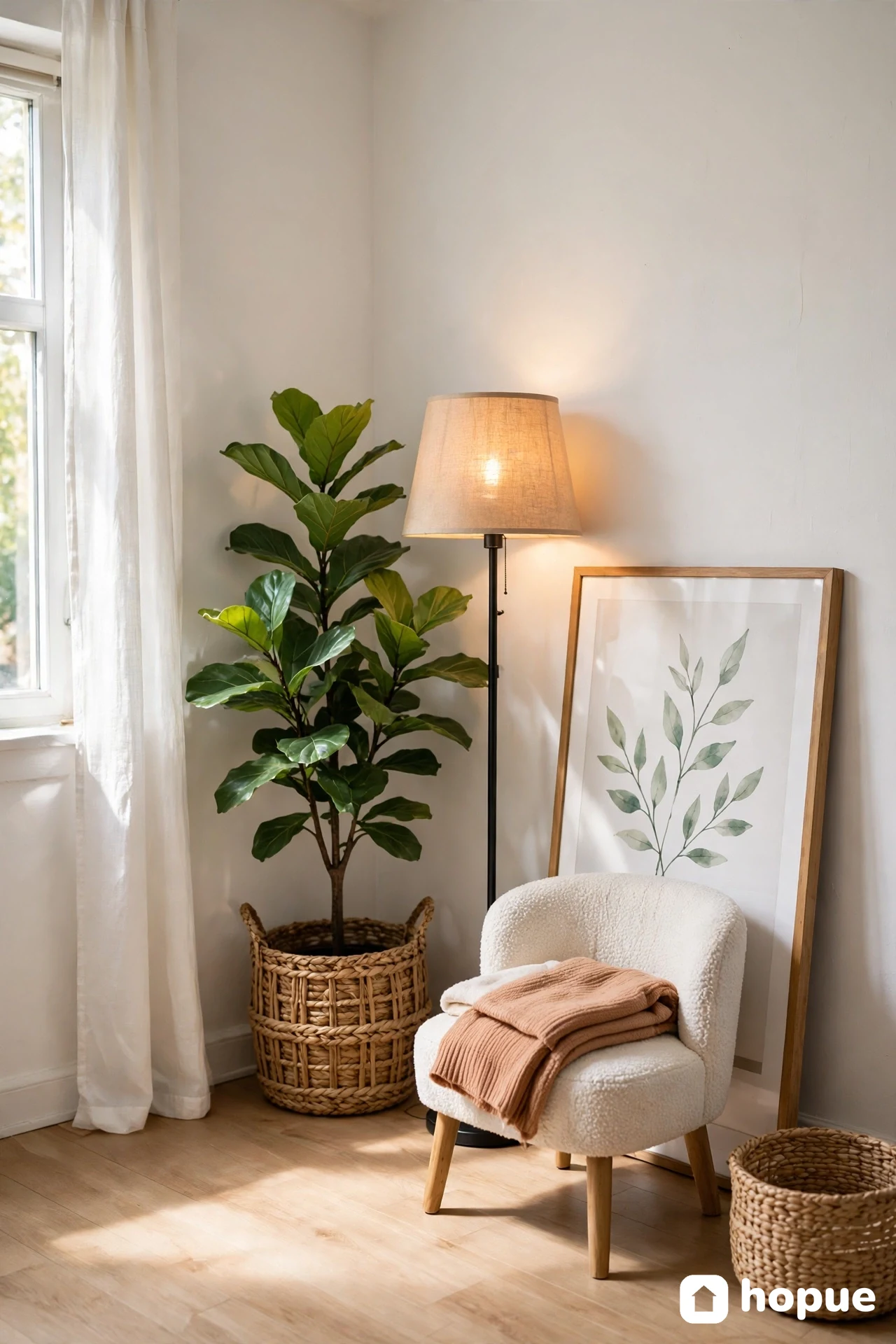
A tall plant is the easiest fix for a corner that feels empty from floor to ceiling. It fills the height, softens two walls at once, and gives your eye somewhere to land when you walk in. Pick a plant that likes the light you actually have, not the light you wish you had. A snake plant or a pothos on a tall stand can live with less light. A fiddle-leaf fig wants a bright spot and will sulk in a dark corner, dropping leaves until you move it.
I learned this the hard way in a rental with one north-facing window. I put a sun-loving plant in the far corner because it looked right in photos, then spent weeks moving it closer to the window a little at a time. Now I check the light first and buy the plant second. Set the pot in a woven basket so the plastic pot disappears, and put a saucer underneath. Water will find the floor if you skip that part.
2. Let an Arc Floor Lamp Do the Work
An arc lamp reaches over a corner and brings light down into it, which makes the whole side of the room feel used. It works well next to a reading chair, and it works on its own too, with nothing under it but a rug. Look for a heavy base. In a small place, people brush past lamps, cats rub against them, and a light base tips.
Choose a warm bulb. Cool white light in a corner at night can make a living room feel like an office hallway. Warm light makes the same corner feel like a place to sit. If your lease is strict about wall marks, an arc lamp is a gift: no holes, no hooks, and you can move it to the bedroom in five minutes when you rearrange.
3. Lean One Oversized Frame Against the Wall
One large frame, leaned and not hung, changes a corner fast. No nails, no level, no patching when you move out. Lean it so the top rests lightly on the wall and the bottom sits flat on the floor, and leave a little breathing room on each side so it does not crowd the furniture next to it.
A botanical print, a black-and-white photo, or a simple abstract in soft colors all work. Scale is what makes it or breaks it. A small frame in a big corner looks like it got lost. A frame that reaches about chair height holds its own. If you have kids or a dog that bumps into things, slide a small felt pad behind the top edge and keep the frame on a rug so it does not slide on bare floors.
4. Tuck a Small Accent Chair Into the Corner
A corner chair gives you a spot that is not the sofa and not the bed. It is where you read, answer a text, or sit with coffee while something cooks. In a small apartment, the chair has to earn its footprint. Pick one with slim arms or no arms at all, in a fabric you can spot-clean, and skip the wide wingback unless your corner is truly generous.
Angle it slightly toward the room instead of pushing it flat into the corner. That small turn makes it look invited in rather than parked. Add one cushion and a folded throw over one arm. Two cushions and a throw and a pillow and a blanket is too much for one small chair. Leave room for a person.
5. Group Baskets Instead of Hiding Them
Baskets are decor here, not storage bins in disguise. A group of two or three woven baskets in different heights, set right in the corner, adds texture and warmth without adding furniture. Roll a throw in one. Leave one empty. Put a small plant in the third if you like the look.
Baskets spread along the wall start to look like clutter waiting for a closet. Baskets clustered in the corner read as a choice. Mix materials a little — seagrass with a darker rattan, for example — but keep the colors in the same warm family so the group holds together.
6. Stand a Folding Screen in the Corner
A folding screen turns a bare corner into a backdrop. It hides a scuffed wall, a tangle of cords, or the side of a bookcase you do not love, and it adds pattern and height without a single screw. Open it just enough to stand steady. A screen pulled too wide eats floor space. A screen left nearly flat looks like a door leaning on the wall.
Paper screens are light and cheap, but they dent. Wood and fabric screens cost more and survive moves better. If your corner gets sun, check that the fabric will not fade unevenly in a season. And if you rent a place with uneven floors, test the screen where you plan to put it. Some screens wobble on old wood floors and need a felt pad under one foot.
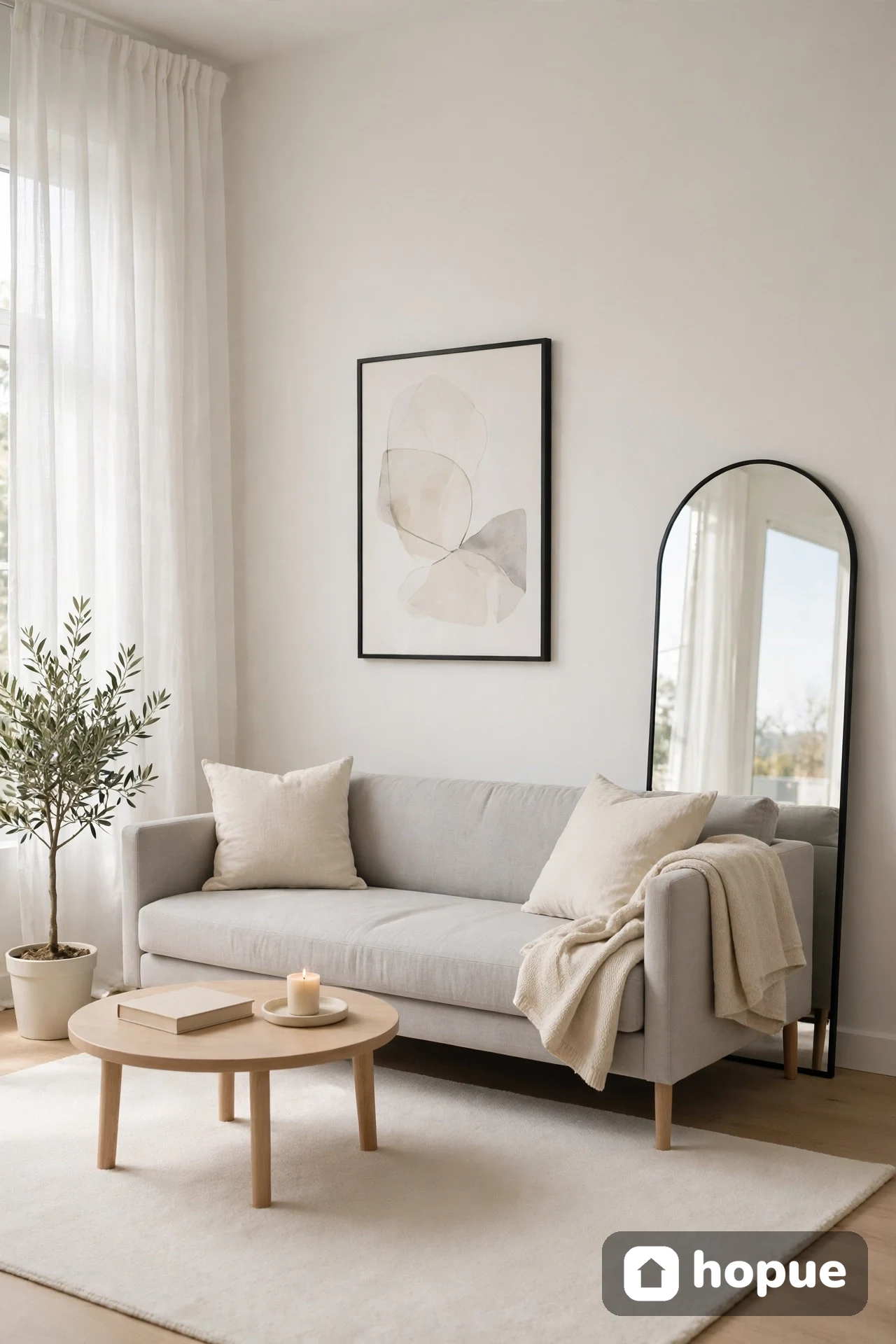
7. Lean a Full-Length Mirror in the Corner
A leaning mirror does two jobs at once. It bounces light into a corner that would otherwise stay dim, and it makes a small room feel less boxed in. Angle it so it reflects a window or a plant, not a blank wall or the back of the sofa. A mirror that reflects nothing interesting just doubles the dullness.
Safety comes first with a tall mirror. Pick one with a solid frame and a wide enough base to stand on its own, and keep it out of the main walkway. In homes with small children, a mirror that leans should sit where it cannot be pulled forward. A strip of museum putty behind the top edge, or a furniture strap made for renters that sticks and removes cleanly, adds peace of mind without drilling.
8. Build a Small Corner Gallery Wall
A gallery wall in a corner sounds fussy, but it can be the most personal corner in the apartment. The corner itself does the framing. Put the largest piece at eye level on one wall, then build out and around the corner onto the second wall. That wrap is what makes it feel intentional instead of random.
Use adhesive picture strips rated for the weight of each frame, and follow the weight limits on the pack. I have watched a frame slide down a wall at two in the morning because I guessed at the weight. Weigh the frame on a kitchen scale if you are unsure. Mix photos, a postcard, and one small piece of art. Leave uneven gaps. Perfect rows in a corner look stiff, and a corner is already full of straight lines.
9. Make a Floor Nook With a Pouf and a Tray
Not every corner needs furniture with legs. A large floor pouf, a low tray, and a cushion against the wall make a reading nook that takes up almost no visual space. Sit, stretch your legs out, and the corner becomes a place instead of a gap. This suits bedrooms, studio corners, and living rooms where a chair would block the path to the balcony door.
The tray needs to sit low and steady, with hot drinks on a coaster on the tray, not balanced on the pouf. A pouf with a removable cover is worth the extra money. Floor seating collects dust and pet hair fast, and being able to wash the cover saves the whole idea.
10. Set a Round Pedestal Table in the Corner
A small round table softens a corner in a way a square table never does. There are no sharp corners sticking out into the walkway, and the round top invites one object to sit in the middle: a vase, a candle, a small stack of books. That is all it needs. A table crowded with five small objects reads as a junk pile in miniature.
Pedestal bases help in tight corners because there are no legs to trip over at the edges. Look for a table you can lift with one hand. If you cannot move it to vacuum behind it, dust will collect and the corner will look neglected again within a month.
11. Fill a Tall Vase With Branches
Branches are the low-effort cousin of fresh flowers. A tall vase with a few long branches — eucalyptus, dried pampas, or branches cut from a yard with permission — fills the height of a corner without needing water changes every few days or good light. Dried branches last for months, which matters when you are renting on a budget and do not want a weekly flower bill.
A heavy-bottomed vase is the safer pick. Tall, narrow vases tip easily, and branches act like a sail when someone walks past fast. Set the vase on the floor in the corner itself, not on a table, so a fall is short. Trim the branches so they stay clear of the ceiling and do not poke into the walkway.
12. Soften the Corner With a Sheer Curtain Panel
A single sheer panel hung in the corner, from a tension rod or adhesive hooks, softens hard edges and catches light in a way nothing else does. It works best in corners near windows, where the fabric can glow in the morning, but it also works in a bedroom corner where you want the wall to feel less bare without adding art.
Do not use heavy blackout fabric for this. Heavy fabric in a corner looks like you are hiding something. Sheer or light linen lets the wall show through and keeps the corner feeling open. Let the panel just touch the floor or hover just above it. Fabric pooling on the floor in a small apartment collects dust and gets stepped on.
13. Run String Lights Down the Corner
String lights are not just for holidays. A single strand run down the corner, from near the ceiling to the floor, or draped in a loose swag across the corner, gives a dark corner a warm glow after sunset. Use warm white lights, not colored ones, unless colored lights match the rest of your room.
Plug-in strands with a small adhesive clip set are the renter-safe route. Check your lease rules about adhesive hooks on painted walls, and test one hook in a hidden spot first. Some paints peel. Battery lights avoid cords altogether, but you will change batteries often if you leave them on all evening. A timer plug solves that without much thought.
14. Use a Tiered Plant Stand for Several Small Plants
One tall plant can feel lonely in a wide corner. A tiered plant stand lets you group several small plants at different heights, which fills the corner without one large pot dominating the floor. It also helps renters who love plants but do not trust themselves with one big, expensive plant yet. If one small plant struggles, the group still looks full.
Water over a tray or take each plant to the sink. Watering plants in place on a tiered stand sends water down through the levels and onto the floor. I keep a folded towel under my stand on watering day. It looks silly for an hour and saves the floor for years.
15. Place a Ceramic Garden Stool as a Sculpture
A ceramic garden stool in a corner is a quiet piece of decor. On its own, its shape and glaze catch the eye. Topped with a small plant or a candle, it becomes a pedestal. Either way, it adds color and a solid shape to a corner that otherwise holds only soft things like plants and fabric.
Pick a color that repeats somewhere else in the room — the blue in a cushion, the green in a plant pot — so the stool feels connected. A random bright stool in a neutral room can look like it wandered in from another apartment. Garden stools are heavy, which is a plus in a corner near a walkway. They do not slide when brushed.
16. Style a Low Floor Vignette on a Small Stool
A low stool or a sturdy wooden crate, set right on the floor in the corner, holds a small scene: a stack of books, a candle in a safe holder, and a small dish for keys or coins. It sits below knee height, so it fills the bottom of the corner without blocking sight lines across the room. Corners in front of a window suit it best, where tall pieces would block light.
Keep the candle in a holder with a wide base, and never leave it burning unattended. In a rental, a candle mishap is not just a mess. It is a deposit and a safety issue. A battery candle gives the same glow on a low stool and lets you stop worrying about it.
17. Slide a Narrow Bench Into the Corner
A narrow bench turns a corner into a landing spot. Shoes come off there. Bags get set down there. A guest sits there while you finish getting ready. In a bedroom corner, a bench holds folded clothes and a book at night. The key word is narrow. A deep bench in a small corner blocks the room. A slim bench leaves room to walk past.
Add a thin cushion if the bench is hard, and one folded throw at one end. Skip the row of pillows along the back. Pillows on a bench in a corner slide down behind it and end up on the floor. One cushion, used often, beats four cushions that live on the floor.
18. Hang One Planter From the Ceiling in the Corner
A hanging planter pulls the eye up and uses air space that is otherwise wasted. One trailing plant in the corner — a pothos or a spider plant with leaves spilling down — softens the top of the corner and leaves the floor free. That matters in corners where floor space is already tight.
Hanging needs a safe anchor, and this is one corner idea where guessing is not worth it. Many rentals already have a ceiling hook from a previous tenant. If yours does not, do not trust a stick-on hook with a watered plant overhead — use a tall plant stand instead, or ask your landlord about a proper hook before you hang anything heavy. A plant that falls from the ceiling makes a mess and can crack a pot. Water it over the sink, and let it drain fully before you hang it back up.
19. Roll a Bar Cart Into the Corner
A bar cart in the corner is not only for drinks. Use it for coffee in the morning, tea in the afternoon, and a small vase in between. The wheels are the point. You can roll it out when friends come over and roll it back when you need the floor. In a studio, that flexibility is worth more than a fixed piece of furniture.
A carafe, two mugs, and a small plant is plenty on top. A cart loaded on every shelf looks busy from across the room. Wipe up spills right away. Coffee rings on a cart shelf show fast, and sticky shelves make the whole corner feel unkempt.
20. Hang a Woven Wall Hanging in the Corner
A woven wall hanging adds texture to a corner without the hard edges of a frame. The soft fibers break up two flat walls, and the piece moves slightly with the air, which makes a still corner feel alive. Hang it from a single adhesive hook or a small nail-free hanging strip, centered on one wall of the corner, and let it hang free.
Choose a size that leaves wall showing around it. A wall hanging that fills the wall edge to edge looks like wallpaper. A piece with breathing room looks like art. Keep it away from cooking steam and bathroom damp. Natural fibers hold smells and moisture, and a wall hanging in a damp corner will not stay fresh.
21. Carve Out a Tiny Desk Nook in the Corner
A corner desk does not have to mean a full home office. A small wall-mounted fold-down desk, or a narrow table pushed into the corner with one chair, makes a spot for paying bills, writing notes, or charging a laptop. When the desk is small, the corner stops being dead space and starts being useful for an hour a day.
Most fold-down desks need screws, so check your lease before you drill anything. A freestanding narrow table avoids the question entirely. Leave the surface clear except for a lamp and a notebook. A desk that collects mail and chargers and mugs stops being a nook and becomes the corner junk drawer.
22. Style a Corner Just for Your Pet
A pet corner can look styled instead of improvised. A neat pet bed in a washable cover, a small framed photo or print above it at a safe height, and a woven basket for toys turns the spot where your cat or dog already sleeps into part of the room. Pets pick corners anyway. Work with the corner they chose.
Put the bed on a washable mat so fur stays contained. Keep food and water bowls out of the styled corner if you can. Water spills and kibble scatter undo the look fast. A corner bed near a drafty door or a heating vent is not kind, no matter how good it looks. Comfort first, styling second.
23. Build a Listening Corner Around a Record Player
A record player on a small stand, a few records leaning against the wall, and a chair nearby make a corner with a clear purpose. It is a listening corner, not a storage corner, so keep the focus on the player and the music. Records leaning in a neat row, spines facing out, add color and pattern without needing wall art.
Level the player and keep it away from direct sun. Heat warps records, and a wobbly stand makes the needle skip. If you do not own records, the same corner works with a small speaker and a stack of books. The idea is a corner built around sitting and listening, not a corner filled for the sake of filling it.
24. Cluster Lanterns on the Floor for Evening Glow
A cluster of lanterns on the floor gives a corner a soft glow in the evening without a lamp or a cord. Group three lanterns in different heights, with battery candles inside, close together in the corner. The cluster reads as one object from across the room, which is why it works in a corner that would swallow a single small lantern.
Battery candles matter here. Real candles on the floor in a corner near curtains, throws, and foot traffic are a risk. Keep lanterns off rugs with long fibers if they get warm, and keep the glass clean. Dusty lantern glass dims the glow and makes the corner look gray instead of warm.
25. Add Peel-and-Stick Wallpaper to One Corner
Peel-and-stick wallpaper on the two walls of a corner turns the corner itself into the feature. A soft pattern — small leaves, a subtle stripe, a pale textured print — makes the corner feel designed even before you add anything else. Then add just one piece: a plant or a chair. The wallpaper does the rest.
Test a small piece first, in a spot behind furniture, and leave it for a few days. Some rental paints grip the paper too well and peel paint when removed. Some walls are too textured for the paper to stick at all. Read the removal instructions before you buy, and keep the backing paper until move-out day in case you need the product name for a touch-up.
26. Face Two Small Chairs Toward Each Other
Two small chairs angled toward each other in a corner make a conversation spot, even if the conversation is usually with yourself and a book. It suits a living room corner near a window and a bedroom corner with enough floor space to pull a chair out. The pair signals that the corner is for sitting together, not for passing through.
Chairs must be small. Two full-size armchairs in a small corner will block the room and leave no space to walk around them. Look for armless slipper chairs or compact accent chairs, and leave a gap between them wide enough for knees and a small table or tray in the middle. If you cannot walk past without turning sideways, the chairs are too big for the corner.
27. Style the Corner by the Door as an Entry Corner
The corner by the front door deserves its own treatment. A slim coat stand, a small tray for keys on a narrow console or a wall-mounted adhesive shelf, and a doormat that actually fits the space make arrivals and departures smoother. The corner stops being the place where coats pile on a chair and becomes the place where coats belong.
A coat stand with a heavy base will not tip when loaded with winter coats. A light stand will. Keep the number of hooks in use realistic. Six coats on a stand built for three will lean, and the whole corner will look overloaded. Hang what you wear this week. Store the rest in the closet.
28. Hang a Cluster of Woven Wall Baskets
Flat woven baskets hung on the wall fill a corner with texture and shape without taking any floor space. Hang three to five baskets in a loose cluster that wraps around the corner, mixing sizes but keeping the weave and color family close. The cluster works on one wall, or split across both walls of the corner for a wraparound effect.
Adhesive hooks made for the weight of each basket keep this renter-safe. Baskets are light, which helps. Hang the largest basket first, at the center of the cluster, then place the smaller ones around it. Step back and look from the doorway. A cluster that looks good up close but lopsided from the door needs one basket moved, not five more added.
29. Let the Corner Change With the Seasons
One corner that changes with the seasons stays fresh all year without a full redecorate. Swap the throw on the chair, change the branches in the vase, trade a bright print for a moodier one, and put away the string lights when the days get long. Small swaps keep the corner feeling current, and they cost little when you reuse pieces from other rooms.
Keep a small box for corner swaps — a throw, a vase filler, a print, a candle holder — so the change takes ten minutes, not a weekend. When a seasonal swap starts to feel like a chore, skip it. A corner that looks good in every season with no changes is better than a corner that looks half-finished because you ran out of energy in February.
A corner does not need to be perfect to feel finished. It needs one clear idea, pieces that fit the space you have, and nothing that makes your lease, your walkway, or your daily routine harder. Start with the corner that bothers you most, try one idea from this list, and live with it for a week before you add anything else. The best corner in a small apartment is usually the simplest one — the one you actually use.
Frequently Asked Questions
What if my corner blocks a walkway, a vent, or a door swing?
Leave the walkway clear first and style what is left. Walk the path yourself, with a laundry basket in your hands, before you place anything. If you brush a piece, move it. Keep furniture and plants clear of heating and cooling vents so air can move and leaves do not dry out or scorch. For a door swing, mark the arc of the door on the floor with painter’s tape, then keep every piece outside that arc. A corner that forces you to sidestep every day will annoy you long after the novelty wears off.
How do I style a dark corner with almost no natural light?
Use light, not plants, as the starting point. A floor lamp with a warm bulb, a leaning mirror angled to catch light from a window across the room, and pale art or a light-colored wall hanging will brighten the corner more than a plant struggling in the dark. Choose faux greenery if you want green without light, and pick a realistic stem rather than a shiny plastic plant. Keep the palette light in that corner — a dark chair and a dark frame in a dark corner disappear into shadow.
How can I keep tall pieces from tipping without drilling into the wall?
Choose pieces with heavy, wide bases, and keep the heaviest part low. A tall plant in a heavy pot, a lamp with a solid base, and a mirror with a wide frame are steadier than tall, light pieces. Museum putty behind the top edge of a leaning frame or mirror, adhesive furniture straps made for renters, and felt pads under feet to stop sliding all help without holes. Keep tall pieces out of the main traffic path, and do not let a tall piece lean on a wall at a steep angle. If a piece still wobbles, move it to a wider spot or swap it for a shorter piece. A lease-safe fix that still tips is not a fix.
Can I style an empty corner on a very small budget?
Yes, and thrift stores are your best starting point. A secondhand frame, a basket, a plant cutting from a friend, and a lamp found at a yard sale can fill a corner for less than one new piece of furniture. Borrow first: move a chair, a plant, or a piece of art from another room and see if the corner works before you buy anything. Shop your own home, then shop secondhand, then buy new only for the one piece the corner truly needs. A corner styled slowly, one good piece at a time, looks better than a corner filled in one shopping trip with pieces you do not love.