29 TV Wall Decor Ideas for a Small Living Room
The TV wall is the wall most renters stare at and the one they feel least allowed to touch. The screen is big and black, the cords hang down like an afterthought, and the lease says no holes. So the wall stays blank, and the whole room feels a bit unfinished, even when the sofa and rug are right.
You do not need to drill to fix that. Every idea below works with the TV sitting on furniture, with art that leans, plants that stand on the floor, and hooks and strips that come off clean when you move. Start with one or two changes, live with them for a week, and add more only if the wall still feels bare. A small room forgives a lot, as long as you do not crowd it all at once.
1. Lean One Big Frame Next to the TV
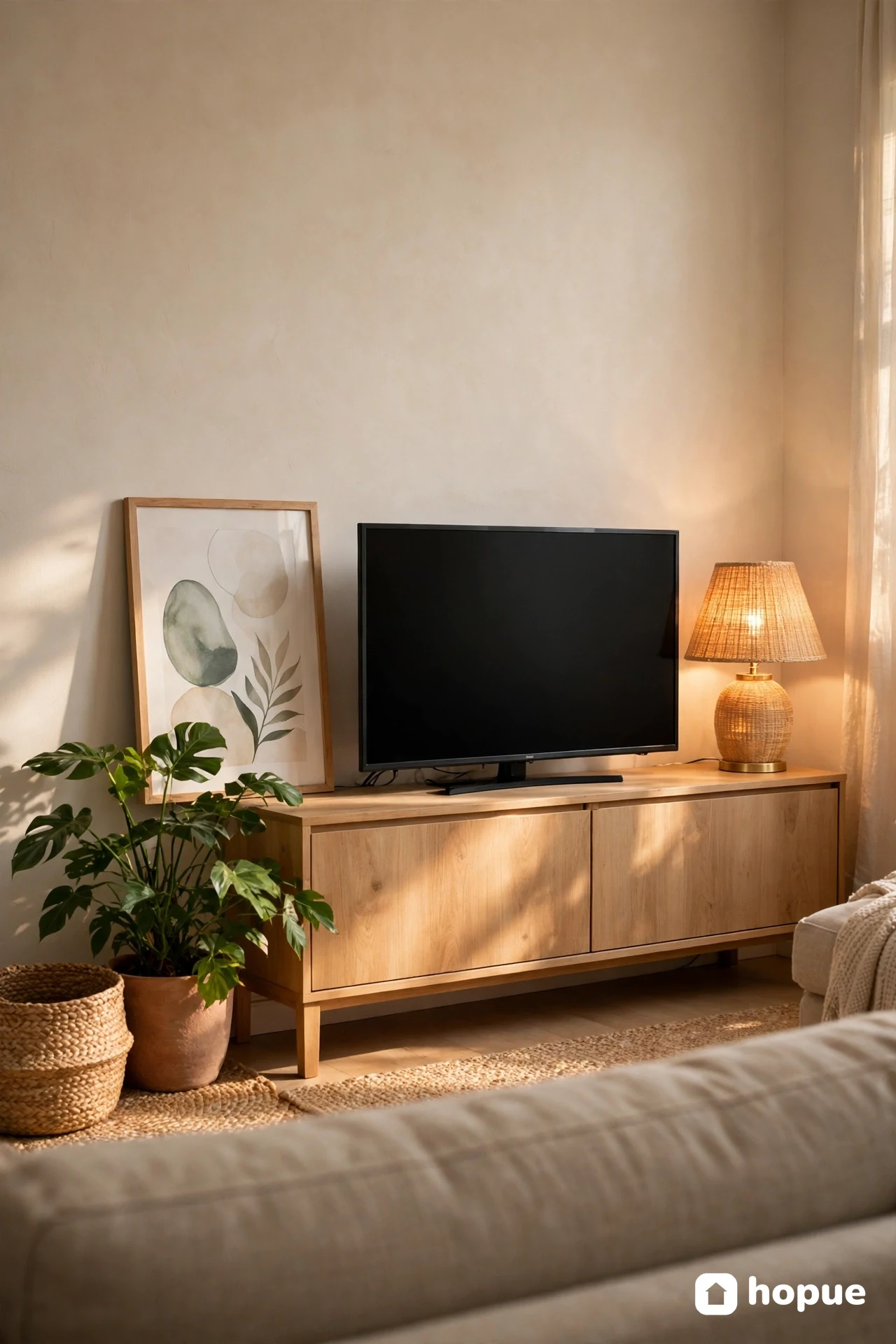
A single large frame, leaned against the wall on top of the console or on the floor beside it, does more than a row of small pictures ever will. It gives your eye somewhere to land besides the screen. Pick art with soft colors and plenty of empty space in it. A busy print next to a bright show just adds noise.
I leaned a framed botanical print beside my TV in my last apartment because I was tired of looking at a black rectangle every time I walked in. The frame was taller than the TV, which worried me at first. In the room, it worked. It made the TV look like part of a setup instead of a box someone had parked there. Keep the bottom of the frame steady on the console, and nudge it until the top tilts back just enough to feel settled, not like it might slide.
2. Pick a Console That Is Wider Than the Screen
This is the least exciting idea on the list, and the one that changes the wall the most. A console that runs wider than the TV leaves room on both sides for a lamp, a plant, or nothing at all. That extra surface is what stops the TV from looking squeezed in.
If your console is barely as wide as the screen, the TV takes over. You end up stacking things in front of it or shoving them to the floor. A wider piece, even a secondhand one, gives you breathing room and closed storage for the stuff you do not want to see. Measure the wall you have, not the TV box, and leave space to walk past without bumping a corner. In a tight living room, that walkway matters more than a perfect fit.
3. Put a Tall Plant on Just One Side
One tall plant, on one side only, softens the hard edges of the screen without turning the corner into a jungle. A leafy plant in a plain pot pulls the eye down and out, which helps in a room where everything else is square and flat.
Put it on the floor if the console is low, or on the console if the plant is small and the pot is heavy enough not to tip. Real plants are lovely, but a good fake one is fine here too, especially if that corner gets almost no light. I killed two real plants in a dark rental corner before I stopped feeling guilty about it. Water it, or dust it, and wipe the leaves now and then. A drooping plant next to a TV reads as clutter faster than no plant at all.
4. Add a Lamp That Stays On After the TV Goes Off
When the TV turns off, the wall goes dark and flat. A small warm lamp on the console fixes that in seconds. It keeps the corner feeling lived in during the evening, and it takes the hard edge off the black screen.
Choose a lamp with a warm-toned bulb and a shade that throws light up and out, not straight into your eyes while you watch. A rattan or linen shade is forgiving in a small room. I leave mine on a low setting most evenings, even when I am not watching anything. The room feels calmer for it. Set the lamp to one side so it does not sit directly beside the screen and compete with it.
5. Line Up Small Frames on the Console Itself
Not every piece of art has to hang. Small frames stood right on the console, leaned against the wall, make a low gallery that you can rearrange without touching the wall at all. Three small frames in a loose line look settled. Six look like a shop display.
Mix a photo, a small print, and something with texture, like a woven or wood frame. Keep them low and to the sides, well clear of the screen. The point is not to build a second focal point. It is to fill the flat stretch of console top so the TV does not float alone. If a frame keeps sliding, a small strip of museum putty under the back edge holds it without marking the furniture.
6. Try Peel-and-Stick Wallpaper Behind the Console
Peel-and-stick wallpaper sounds like a big commitment, but behind a console it is one of the easiest renter moves there is. You only need the stretch of wall the TV sits against, and the console hides the bottom edge where most people struggle to get a straight cut.
Pick a quiet pattern. Grasscloth looks, soft stripes, or a faint plaster texture all work. Loud patterns fight the TV for attention, and in a small room that fight never really ends. Read the removal instructions before you buy, and test a small piece in a hidden spot first. Some brands peel off cleanly and some leave a sticky edge that needs a warm, damp cloth. Check your lease too. Most landlords are fine with removable wallpaper, but a quick note to yours now saves an argument over the deposit later.
7. Hang a Fabric Panel From Removable Hooks
A length of fabric hung behind the TV area adds softness that paint and wallpaper cannot. It moves a little when the air moves, which sounds small, but it stops the wall from feeling like a hard slab. Use a light cotton, linen, or a thrifted curtain panel, and hang it from removable hooks rated for the weight.
Let the fabric fall behind the console so the top edge is hidden and the bottom is not a trip hazard. A panel in a warm white or a muted sage will sit quietly behind the screen. A bold pattern will demand attention every time the TV is off, which is not always what you want. Take it down and wash it now and then. Fabric collects dust fast near a TV, and a quick wash keeps it from looking tired.
8. Let a Ladder Shelf Do the Wall’s Work
A leaning ladder shelf gives you height and storage without a single screw. It leans, it stands on the floor, and it holds books, a plant, and a basket without asking the wall for anything. Put it to one side of the TV, not right against it, so the two pieces read as neighbors instead of one crowded unit.
Keep the top shelves light. A heavy book up high on a leaning shelf in a small room feels risky, and it is. Books low, a small plant in the middle, and one framed photo near the top is plenty. Anchor it if it comes with a strap and your lease allows a small removable anchor, or simply keep it away from walkways and curious pets. I once watched a cat launch off a ladder shelf. The shelf stayed up. The plant did not.
9. Use a Folding Screen as a Backdrop
A folding screen behind or beside the console is a cheat code for a wall you cannot paint. It adds pattern, height, and a finished edge, and it folds flat when you move. In a rental, that last part counts for a lot.
Choose a screen that is taller than the console but not so tall it looms over the TV. A woven, rattan, or simple wood-and-fabric screen keeps the look light. A dark, heavy screen can make a small room feel smaller, especially if it blocks a window. Angle one panel slightly so the screen does not sit dead flat against the wall. That small angle is what makes it look placed on purpose instead of parked there while you decide what to do with it.
10. Hide the Cords in a Slim Cord Cover
Cords are the fastest way to make a styled TV wall look unfinished. A slim cord cover that sticks to the wall with removable adhesive, or simply runs down the back of the console leg, gathers the power cord, the streaming stick cable, and the game console cord into one neat line.
Paint the cover the same color as your wall if you can, or buy one close to it. White on a cream wall still stands out less than a tangle of black cords. Run the cover straight down, not diagonally, and keep it behind the console as much as possible so you see as little of it as you can. It will not disappear completely. It does not need to. It just needs to stop looking like a knot.
11. Bundle Cords Behind the Console With Reusable Ties
If a cord cover feels like too much, start behind the console where nobody looks. Gather the cords with reusable hook-and-loop ties, label the plugs with a bit of tape if you have more than one device, and push the bundle back against the wall.
Leave a little slack. Cords pulled tight tug at plugs and make the next time you need to move the TV a fight. I learned that after yanking a console out to dust and pulling the whole power strip with it. A loose bundle, tied in two places, stays tidy and still lets you pull one cord free without undoing everything. Check the bundle every few months. New devices creep in, old chargers stay plugged in, and the tidy bundle quietly becomes a nest again.
12. Corral Remotes and Chargers in One Basket
Remotes, chargers, and game controllers have a way of spreading across a console until there is no clear surface left. One shallow basket or tray on the console gives them a home. When the basket is full, you know it is time to put something away instead of adding to the pile.
Pick a basket that fits the console and leaves the middle clear. A woven tray looks softer than a plastic bin, and it is easier to carry to the sofa and back. Keep only what you actually use in it. The remote for a device you sold last year does not earn a spot. This is a small habit, not a decor project, but it is the one guests notice first because a clear console reads as calm, even if the rest of the room is mid-laundry.
13. Style the Console Top Low and Off to the Sides
Leave everything on the console top low, and leave the middle clear. A short stack of books, a small bowl, a candle in a sturdy holder. Nothing tall in the center, nothing that blocks the bottom edge of the screen when you sit down to watch.
Sit on your sofa and look. That is the test. If a vase or a stack of books cuts across the picture from where you actually sit, move it to the side or swap it for something flatter. I styled a console once standing up, loved it, then sat down and found a tall vase sitting right over the subtitles. It lasted one evening. Low and to the sides keeps the screen clear and the styling visible at the same time, which is the whole trick.
14. Fill Open Shelves With Baskets, Not Gadgets
Open console shelves show everything, which is a problem when everything is a black box with a blinking light. Slide woven baskets or fabric boxes into those openings instead. They hide the game console, the extra controllers, and the stack of DVDs you still own, and they add texture the TV wall badly needs.
Leave one opening partly open if you want to show a book or a small plant, but do not fill every shelf. A shelf packed edge to edge reads as storage, not styling. Baskets also help with dust. It is easier to pull a basket out and wipe a shelf than to dust around five separate devices. Just make sure any device that gets warm has air around it and is not sealed inside a closed basket while it runs.
15. Set a Trailing Plant on the Console Corner
A trailing plant on the corner of the console softens the sharp top edge and pulls the eye sideways, away from the screen. It is different from the tall floor plant in idea 3. That one grounds the side of the wall. This one drapes and breaks up the straight line of the console top.
A pothos is the usual pick because it forgives low light and missed waterings. Put it in a pot with a saucer, or the water will find the console finish sooner or later. Let the vines fall down the side, not across the front of the TV, and trim them before they reach the floor or tangle in the cords. If you have pets, check that the plant is safe for them before it trails anywhere they can reach it.
16. Lean a Tall Mirror to Bounce the Light
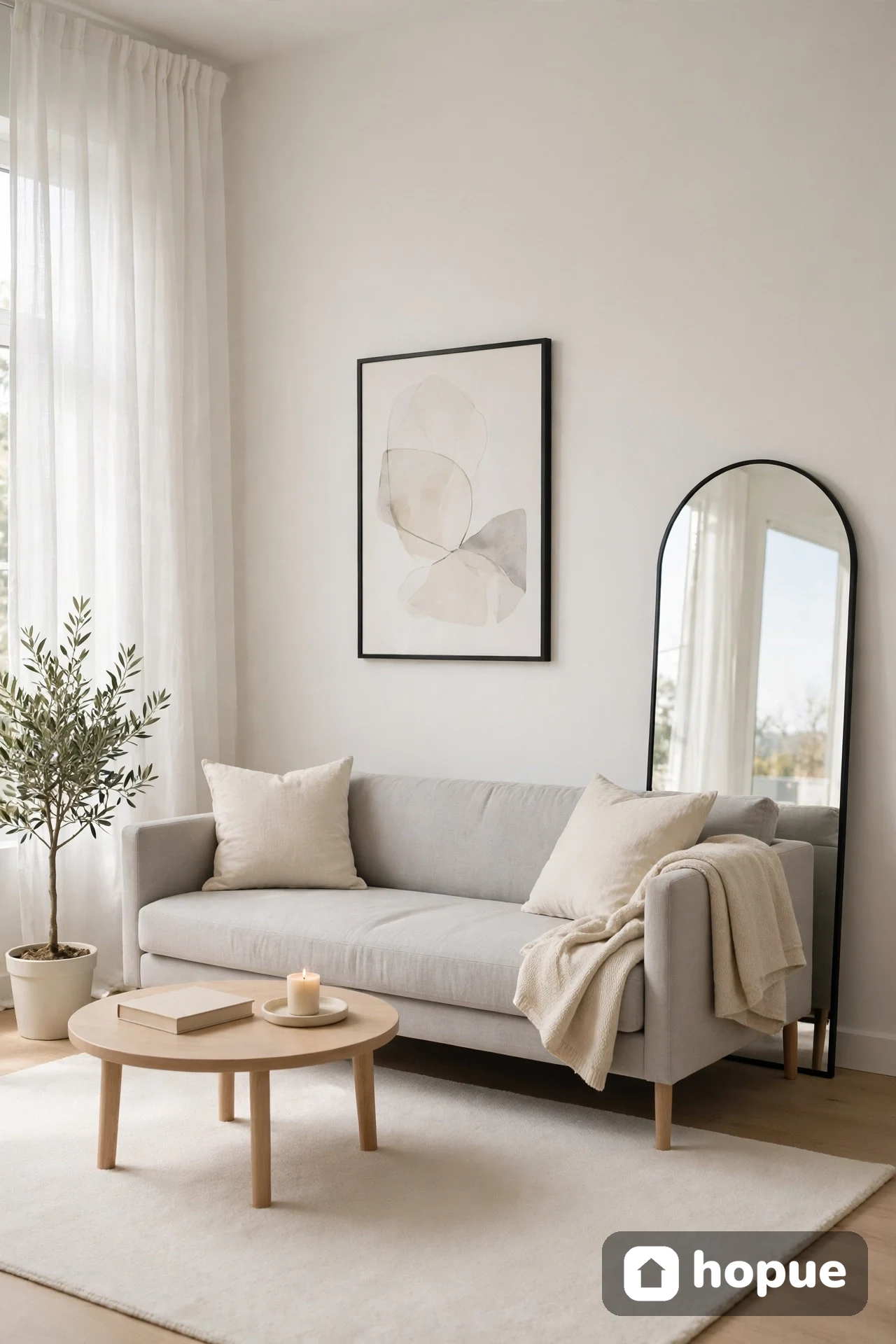
A tall mirror leaned beside the TV can make a small living room feel brighter, especially if it catches light from a window across the room. It is not about checking your reflection. It is about borrowing light the room already has and sending it back toward the TV wall.
Angle the mirror slightly so it reflects a plant or a light wall, not the TV screen itself. A mirror that reflects the screen doubles the black rectangle and adds glare, which is the opposite of what you want. Keep it on the side away from the main walkway, with its base flat on the floor and its top resting steady against the wall. In a rental with kids or pets, a mirror that leans needs a steady base and a spot where it will not get bumped every day.
17. Hang a Woven Hanging From One Removable Hook
A woven wall hanging adds texture without adding color or pattern overload. One removable hook, rated for the weight, is usually enough, and the whole thing comes down in seconds when you move. Hang it to one side of the TV, not centered above it, where it would fight the screen for the middle of the wall.
Macrame, woven cotton, and simple tassel hangings all work here. The handmade look suits a small rental because it feels personal without feeling precious. Dust it with a quick shake outside now and then. Wall hangings near a TV collect dust the way shelves do, and a gray fringe stops looking soft and starts looking tired. If your lease bans even removable hooks, lean a smaller woven piece against the wall on the console instead.
18. Stick On a Removable Arch Decal
A single arch decal behind the TV creates the look of a painted accent without paint, a brush, or a landlord conversation. It frames the screen the way an arch frames a doorway, and it peels off when you leave. That is the whole appeal.
Center the arch on the console, not on the whole wall, so the TV sits inside the shape. Choose a warm, muted color that sits close to your wall color, just a step deeper. A sharp contrast in a small room can make the arch look like a sticker, which, to be fair, it is. Smooth it on slowly, press out air bubbles as you go, and follow the maker’s removal steps. Pulling fast and at a sharp angle is how paint comes off with the decal.
19. Add a Soft Glow Behind the Console
A plug-in light strip tucked behind the console, or a small plug-in puck light set on the floor behind it, throws a soft glow up the wall. The TV stops being a black slab floating on a blank wall, and the whole corner looks finished after dark. Use warm light. Cool white behind a TV looks like office lighting, and it makes the room feel colder than it is.
Stick the strip to the back of the console, not to the wall, so removal is simple and you do not risk pulling paint. Keep the cord with the other cords in your bundle, and plug it into a strip you can switch off easily. If the glow is too bright, most strips dim. If yours does not, tuck it a little further back. You want a halo, not a spotlight.
20. Turn the Black Screen Into Art When It Is Off
Most smart TVs let you show photos, art, or a calm screensaver when the TV is idle. Use it. A rotating set of landscape photos or soft abstract art turns the biggest black shape in the room into something that belongs with the rest of the decor.
Pick images that match the room, not a random slideshow of bright vacation photos. Muted landscapes, botanical prints, and simple color fields sit quietly. Bright, busy images will pull the eye even when the TV is off, which defeats the purpose. Set the screen to go dim after a while, and check the TV settings so the display does not stay bright all night. It is a free styling trick, and it costs nothing but ten minutes of setup.
21. Prop One Print on a Small Tabletop Easel
A small easel on the console turns one print into a feature instead of just another frame in a row. It lifts the art a little, angles it toward the sofa, and makes it easy to swap the print when you get bored of it. That swap is the point. A print you can change in a minute stays fresh. One taped to the wall for two years starts to disappear.
Use a sturdy little easel, not a flimsy craft-store one that wobbles when someone walks past. A wood easel with a lip holds a framed print or a backed photo without slipping. Put it on the side away from the lamp so the print does not sit in a hot spot of light. One easel is enough. Two easels next to a TV start to look like a market stall.
22. Give the Soundbar Its Own Low Spot
A soundbar shoved in front of the TV, half-blocking the screen, is a small-room classic. Give it a proper low spot instead. Set it on the console in front of the TV, centered, with a little space around it, or on a low shelf under the console if the sound still reaches you clearly from there.
Do not stack decor on top of the soundbar. It blocks the sound and it looks like you ran out of surface. Keep the top clear, run its cord with the rest of the bundle, and test the sound from the sofa before you call it done. A soundbar tucked behind a stack of books sounds muffled and looks like an accident. Front and center, low and clear, is the whole job.
23. Tuck the Router and Boxes Inside, With Air to Breathe
Routers, streaming boxes, and game consoles do not need to sit in a row on top of the console. Tuck them inside a cabinet or behind a basket front, as long as they can breathe and the remote signal still reaches them. Heat is the real limit here, not looks.
Leave the cabinet door open a crack while a console runs, or simply use a basket that lets air through. I once shut a streaming box inside a solid cabinet and spent a week blaming my internet before I felt how hot the shelf was. If a device runs warm, it needs open air. Keep the cords bundled behind it, and write down which plug belongs to which box before you hide them. You will thank yourself the first time something needs a restart.
24. Anchor the Wall With a Rug That Reaches the Console
A rug that stops well short of the console leaves the TV wall floating, disconnected from the seating area. A rug that reaches the front legs of the console, or slides just under them, ties the wall and the sofa together. It makes the TV area feel like part of the room instead of a separate zone.
You do not need a huge rug. You need one that covers the space between the sofa and the console and extends a little past the console on each side. A flat, low-pile rug works best in a small room because doors and console legs clear it easily. Pick a color pulled from your art or cushions, not a brand-new color that fights everything else. The rug is the base. Let it be quiet.
25. Drape a Throw Over the Console End
This sounds too simple to count, and that is why it works. A folded throw draped over one end of the console adds softness and color right where the TV wall is hardest and flattest. It is also useful. On a cold evening, it is right there.
Fold it neatly, don’t just toss it. A tossed throw looks like laundry. A folded one, with the edge hanging just over the front, looks placed. Choose a texture that contrasts with the console, like a chunky knit on smooth wood or a soft linen on a dark finish. Keep it on the end away from the lamp and any candle. Fabric and heat do not mix, and a throw that slides into a lamp base is a nuisance you do not need.
26. Keep a Swap Tray for the Season
A small tray on the console, with two or three seasonal pieces on it, lets the TV wall change through the year without a full restyle. A tiny pumpkin in fall, a small vase of fresh stems in spring, a bowl of pinecones in winter. Swap the tray contents, not the whole wall.
The tray should stay shallow and the pieces low, so nothing blocks the screen. The tray itself is what keeps it tidy. Without a tray, seasonal bits spread across the console and start to look like clutter by the second week. With one, you have a clear edge. Put the out-of-season pieces in one box in a closet. If the box is easy to reach, you will actually swap things. If it is buried, the same tired pieces will sit there until next year.
27. Use a Freestanding Photo Rail for Family Pictures
A freestanding photo rail, the kind that stands on a console or a shelf, holds photos and small prints without any wall fixings. It is a narrow ledge with a lip, and it stands on its own feet. Line up three or four photos, lean them back, and you have a personal gallery that moves with you.
Mix photo sizes a little, but keep the frames similar. Too many different frames on a small rail looks restless. Keep the rail to one side of the console, and leave a gap between it and the TV so the photos do not crowd the screen. Photos near a TV fade faster than you expect if the sun hits that wall, so check the light at midday. A rail makes it easy to turn a fading print around or swap it before it is ruined.
28. Move the Glare, Don’t Fight It
Glare on a TV in a small room usually comes from one window, and the fix is usually moving something, not buying something. Shift the console a little to the side, angle the TV a touch on its stand, or close a sheer curtain during the brightest part of the day. Small moves make a big difference when the room is small.
A matte frame on nearby art helps too, because glossy glass throws light back at the sofa. If you lean art near the TV, choose matte or non-glare glass if you can. And watch the lamp. A lamp placed directly opposite the screen can throw a bright spot onto it at night. Move the lamp to the side, dim it, or angle the shade down a little. I chased a glare problem for weeks once before I realized it was my own floor lamp, not the window.
29. Leave Breathing Room on Purpose
The last idea is to stop. Not every stretch of console needs something on it, and not every inch of wall needs a frame. An empty patch beside the TV gives the styled parts room to be seen. In a small room, that empty patch is what keeps the wall from feeling stuffed.
Step back to the doorway and look. If your eye does not know where to rest, take one thing away. Put it in another room for a week. If you miss it, bring it back. If you do not, it never belonged on the TV wall in the first place. Renters tend to overfill the one wall they are allowed to style, because it feels like the only chance to make the place feel like home. Home is not every object you own on one console. It is the few things you like, with space around them.
A TV wall in a rental does not have to stay blank, and it does not have to look like a showroom either. Pick the ideas that fit your lease, your light, and the way you actually watch TV, and let the rest go. The best version of this wall is the one you can take down in an afternoon, get your deposit back, and set up again in the next place without buying it all over again.
Frequently Asked Questions
Can I decorate around my TV without drilling any holes?
Yes. Lean art on the console, use a freestanding shelf or folding screen, hang light pieces from removable hooks rated for the weight, and use peel-and-stick wallpaper or decals that are made to come off clean. Check the weight limit on any hook or strip before you hang something heavy, and follow the removal steps exactly when you move out. If a piece is heavy, a mirror or a large frame, lean it on the floor with a steady base instead of trusting a strip to hold it.
What if my lease says I can mount the TV?
Only mount if your lease clearly allows it in writing, or your landlord gives you written permission for that specific wall. Ask what fixings they expect, whether you need to fill and repaint when you leave, and get the answer in an email or a message you can keep. If the permission is vague, or only verbal, treat it as a no. A mounted TV is the exception in a rental, not the default, and a repair bill at move-out can cost far more than a good console setup.
How do I hide TV cables in a rental without damaging the wall?
Start behind the console with reusable ties to bundle the cords, then run a slim cord cover down the back of a console leg or along the wall with removable adhesive. Keep the power strip behind the console where it is out of sight but still easy to reach, and leave a little slack so you can pull one cord free later. Never run cords under a rug where feet press on them, and never seal a warm device inside a closed basket or cabinet while it is running.
How do I stop the TV from dominating a small living room?
Balance the black screen with warm light, soft texture, and something at a different height on one side, like a plant, a leaning frame, or a lamp. Use the TV’s art or photo mode when it is off, keep the console top low and clear in the middle, and leave some empty space on the wall. A rug that reaches the console and cushions that pick up the wall colors also help the TV feel like part of the room instead of the whole room.
What should I do about glare on the TV?
Find the source first, usually one window or one lamp, and move or soften that source before you buy anything. Angle the TV slightly on its stand, use a sheer curtain during the brightest hours, and move lamps to the side instead of opposite the screen. Matte glass on nearby frames throws back less light than glossy glass. If the glare only happens at one time of day, a simple curtain adjustment is often the whole fix.