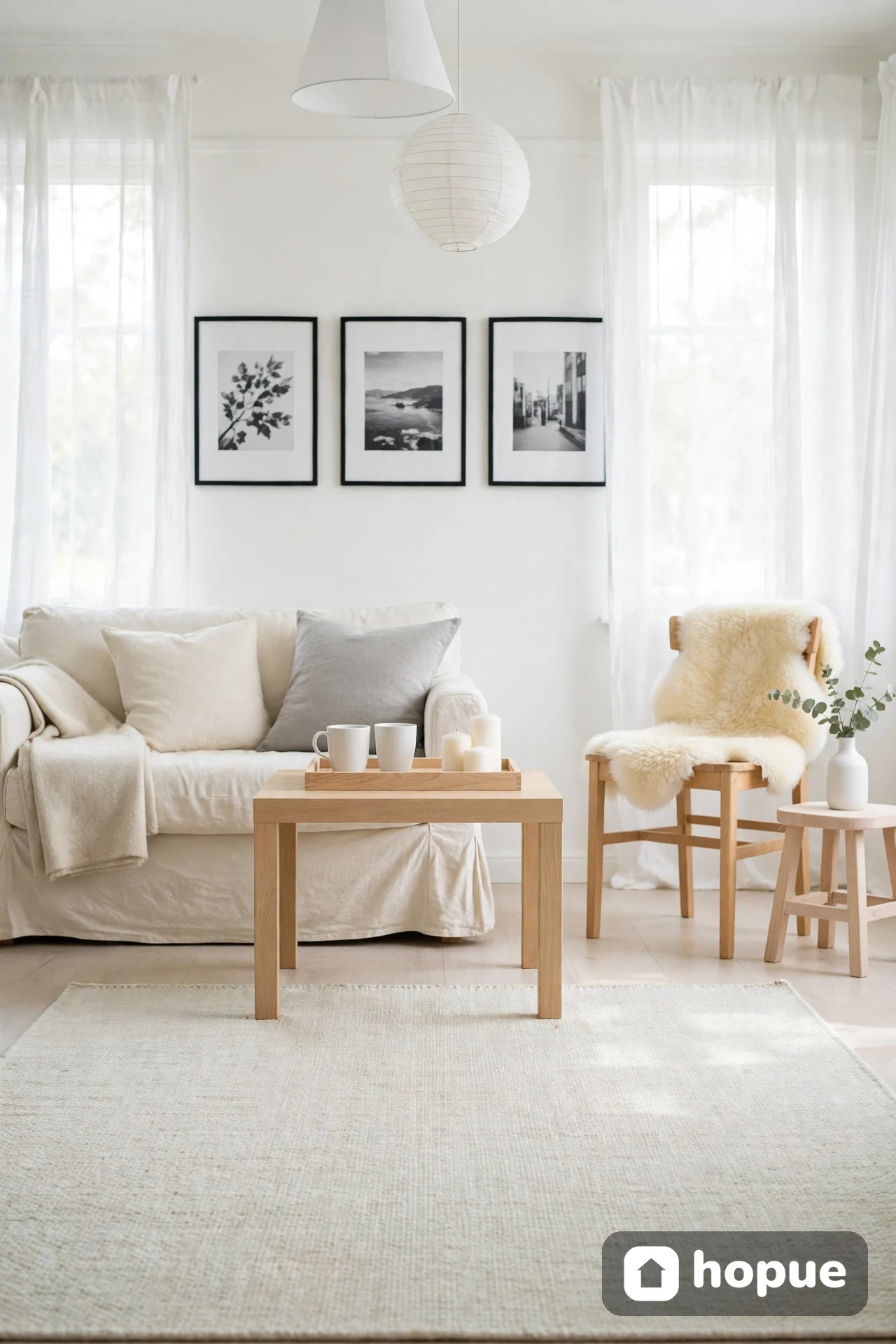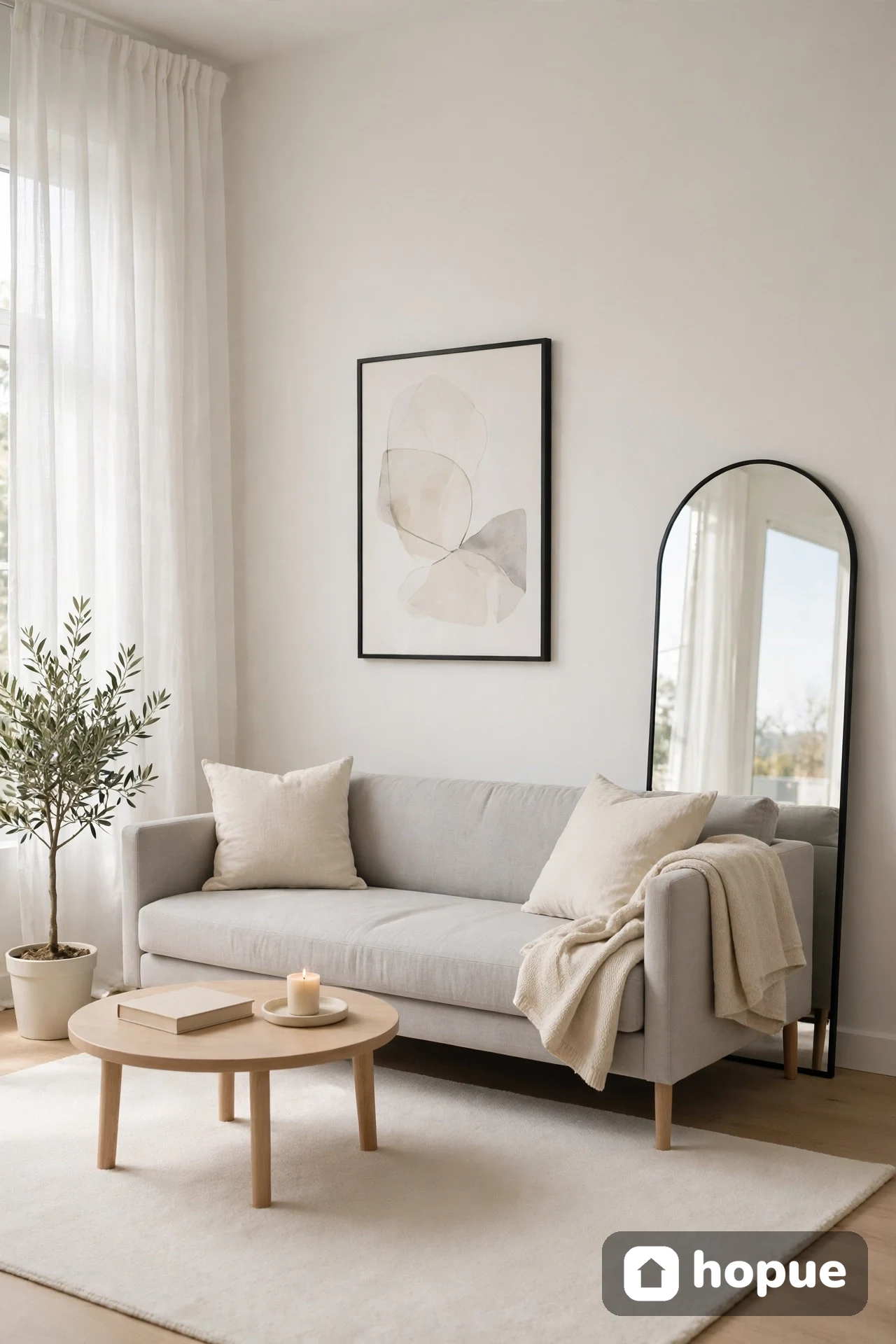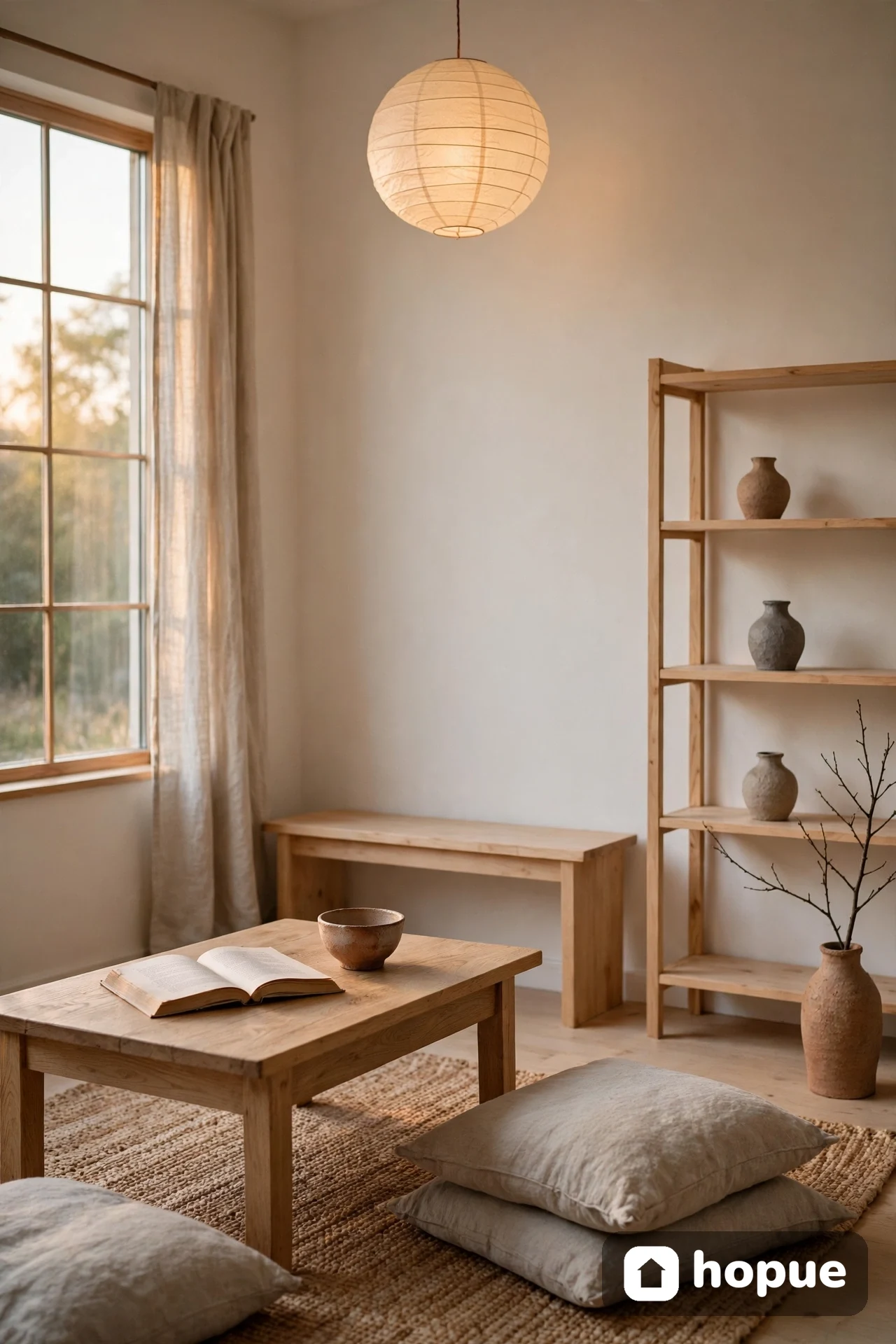
29 Japandi Decor Ideas for a Small Apartment
Japandi is just a shorthand word for what happens when Japanese design and Scandinavian design meet in the middle. From Japan it takes low furniture, natural materials, and an appreciation for things that are a little imperfect. From Scandinavia it takes pale wood, soft textiles, and rooms that feel lived in rather than staged. Put together, you get clean lines, earthy colours, and a lot of empty space on purpose.
That empty space is why it works so well in a small apartment. You are not trying to fill every corner. A low bed, one good lamp, and a rug you actually like will do more than five extra pieces of furniture ever will. Everything below keeps your deposit in mind. No built-ins, no paint you have to undo, and most of it can come secondhand.
1. Drop Your Bed Down Low
A low platform bed changes a small bedroom faster than almost anything else. The ceiling feels higher. The room feels wider. And you stop bumping your shins on a tall frame in the dark.
You do not need to buy a new bed to test it. Take the box spring out if you have one, or set the mattress on a low slatted base you find used. I slept on a mattress on a low frame for a year in a studio, and the first week felt strange. By the second, getting into bed felt calmer, like the whole room had slowed down. Keep the bedding simple and let the low line do the work.
2. Choose a Coffee Table That Sits Near the Floor
Japandi living rooms sit low. A coffee table at knee height or lower, in light oak or walnut-toned wood, anchors the room without blocking the view across it. In a small apartment that matters. You can see over it to the window, and the room reads as one open space instead of two chopped-up halves.
Look for a plain rectangular top with no shelf crammed underneath. That empty space under the table is part of the look. Put one thing on top, maybe a book and a small bowl, and leave the rest bare. Thrift stores are full of these tables, usually with a scratch or two. A scratch is fine here. It fits.
3. Add Floor Cushions Instead of Another Chair
An extra chair eats floor space all week for the sake of one guest on a Saturday. Floor cushions do the same job and stack in a closet when you are done. Large, flat cushions in linen or cotton, in oatmeal or soft grey, are the Japandi version of extra seating.
Keep them firm. A cushion that goes flat the minute someone sits on it just feels cheap. The thicker ones, the kind sold as meditation cushions or floor poufs, hold up better. I keep two stacked by the balcony door. Most days they are a footrest. When a friend stays for tea, they become seats, and nobody has to drag a dining chair across the rug.
4. Lay Down One Woven Mat and Stop There
A tatami-style mat, a flat jute rug, or a woven seagrass mat gives a Japandi room its ground. One layer is enough. The mistake in small rooms is stacking a rug on a rug on a rug until the floor feels busy and the door will not close properly.
Pick a mat in a natural straw or beige tone and let the weave show. It will shed a bit at first, and the edges may curl until it settles. That is normal. Give it a week flat on the floor before you decide you hate it. Under a low table or under the bed, a single woven mat makes the wood and linen around it look intentional instead of random.
5. Swap Harsh Overhead Light for a Paper Lantern
That one bare ceiling bulb most rentals come with makes everything look flat and tired. A paper lantern shade, the round kind that folds flat, softens it in about five minutes. No electrician. You just swap the shade and keep the same bulb, ideally a warm one.
The light comes out diffused, with no hard shadows on the wall. It is not bright enough to read fine print by, so keep a small lamp for that and let the lantern do the evening work. Paper shades tear if you grab them roughly, so hang it once and leave it alone. They are cheap new, and far less secondhand, which makes this the cheapest mood change in this whole list.
6. Pair Pale Wood With One Dark Accent
Japandi rooms are mostly light wood and warm white, with a little bit of black or very dark brown to keep them from washing out. A black picture frame. A dark ceramic vase. The legs of a stool. One dark thing is enough to give the pale colours something to sit against.
I learned this the hard way. My first attempt at this style was all pale wood and cream, and the room looked like it had been left out in the sun. One black metal floor lamp fixed it. Do not buy a whole set of black furniture. Just let one or two dark pieces hold the edges of the room, and keep everything else light.
7. Show Three Handmade Ceramics, Not Thirty
A shelf with three uneven, handmade-looking bowls tells the Japandi story better than a shelf packed edge to edge. Look for pieces where you can see the maker’s thumbprint, a slightly wobbly rim, or a glaze that did not quite cover the whole pot. That unevenness is the point. It is sometimes called wabi-sabi, which is really just a way of saying worn and imperfect things can be beautiful.
Put the three pieces on an open shelf with space around each one. Space matters as much as the bowls do. If you find them at a pottery sale or a thrift shop, even better. A chipped bowl you love beats a perfect set you feel nothing about, and you can use the good ones for fruit or keys instead of hiding them away.
8. Put a Single Branch in a Tall Vase
You do not need a big bouquet. One branch, eucalyptus, dried willow, or whatever branch you pruned from a tree outside, standing in a tall, plain vase, is a classic Japandi move. It brings height into the room without bringing clutter, and it draws your eye up instead of sideways across a crowded shelf.
Change the water if it is fresh greenery, and do not fuss over arranging it. Lean it at a slight angle and leave it. Dried branches last for months and cost nothing if you find them on a walk. Just check with your building about picking anything from shared landscaping first. A branch from your own plant, or a stem bought loose at the grocery store, does the same job.
9. Dress the Bed in Rumpled Linen Colours
Crisp white hotel bedding looks sharp in a photo and cold in a small bedroom at night. Japandi bedding is linen or washed cotton in warm white, stone, clay, or soft sage. It wrinkles. That is the whole appeal. You make the bed by roughly pulling the duvet up, and it still looks right.
Do not iron it. Seriously. Washed linen softens with every wash, and after a few months it feels completely different from the stiff set you started with. If real linen is out of budget, washed cotton in the same colours gets you most of the way there. One set, washed often, is better than three sets competing in a closet you do not have room for.
10. Leave Gaps on Your Shelves on Purpose
Scandinavian rooms often fill shelves neatly. Japandi rooms leave gaps. A shelf that is two-thirds full, with a clear stretch of empty wood between groups of books or bowls, feels calm in a way a packed shelf never does. In a small apartment, those gaps also make the wall feel less heavy.
Try this: take everything off one shelf, then put back only about half of it, in small groups of two or three. Stand back. If your first instinct is to fill the empty bit, wait a day. Most people find the gap starts to feel like breathing room rather than missing storage. What you took off can go in a basket in the closet, which brings us to the next idea.
11. Hide the Mess in Woven Baskets
Every small apartment has stuff that has to live out in the open because there is nowhere else for it. Chargers, spare blankets, dog toys, winter hats. A woven basket with a lid, in seagrass or rattan, hides all of it and still looks like part of the room.
Keep the baskets the same kind of material, even if the sizes differ. Two or three matching baskets stacked by the sofa or under a bench read as furniture. Ten different baskets in ten different colours read as a storage problem. Lids matter. An open basket fills up until it overflows, and then you are back where you started. With a lid, you close it and the room goes quiet again.
12. Fake a Limewash Wall Without Painting
You probably cannot paint your rental, and you definitely do not want to sand limewash off before you move out. A removable wallpaper panel in a soft plaster or limewash look gives you the same chalky, uneven texture on one wall, and it peels off when your lease ends.
Do one wall only, behind the bed or behind the sofa. A whole room in textured wallpaper gets busy fast, and it costs more than it needs to. Order a sample first. The colour on a phone screen and the colour on your wall in afternoon light are two different things, especially with warm whites that can turn pink or yellow. Test it for a week before you commit to a full roll.
13. Build the Whole Palette From Earth Tones
Japandi colour is not white on white. It is warm white walls, light wood floors or furniture, clay or terracotta, sage or olive, sand, and charcoal. Muted versions, not bright ones. Think of colours after rain, not colours in a paint advert.
Start with what you already own. A beige sofa, a brown wooden table, a grey rug. Then add one clay cushion or one sage throw, not five new things at once. If a colour shouts when you bring it home, it is probably too saturated for this style. Take it back. The room should feel like late afternoon light, not like a showroom trying to get your attention.
14. Use a Wooden Stool as a Side Table
A small wooden stool next to the sofa or bed does three jobs. It holds a cup. It holds a book. And when you need an extra seat, it is one. A round-topped stool in light wood, the kind you see in workshops and kitchens, fits Japandi rooms because it is plain and useful and a little worn around the edges.
Do not dress it up. No tablecloth, no tray piled with candles, no doily. One cup, one book, and the bare wood showing. If the stool wobbles, fix the leg or pass it on. A wobbly stool you have to steady every time you put a mug down will annoy you out of loving it within a week.
15. Divide a Room With a Shoji-Style Screen
A folding screen with pale wood frames and translucent panels can split a studio into a sleeping corner and a living corner without a single screw in the wall. Light still gets through, which is the whole point. A solid bookshelf divider blocks light and makes both sides feel smaller.
Shoji-style screens are not hard to find secondhand, and a plain folding screen with fabric panels does the same job if the frames are light wood. Keep it partly open. A screen pulled fully shut makes a studio feel like two cupboards. Leave a gap at one end so you can walk through without folding the whole thing every time.
16. Hang a Rattan or Bamboo Pendant
A woven pendant shade over a dining table or a reading corner adds texture at eye level, which is where Japandi rooms need it most. Rattan, bamboo, or woven cane shades throw patterned shadows in the evening and look like nothing at all during the day, in a good way. They just sit there, quiet and natural.
Renters can hang one from a ceiling hook with a plug-in cord kit, no wiring needed. Make sure the cord is long enough that the shade hangs above head height, and keep it away from anything that gets hot. A shade that is too big for the table below it will dominate the room. Smaller is safer here. One modest pendant beats a giant one that makes you duck.
17. Eat From the Good Bowls Every Day
Japandi is not about saving handmade pottery for guests. It is about using it. Eating breakfast from a slightly uneven ceramic bowl, drinking tea from a thick-walled cup with a rough glaze, makes an ordinary Tuesday feel considered without adding anything new to the room.
If you only have two or three handmade pieces, rotate them into daily use instead of keeping them on a shelf. Yes, one might chip. That chip becomes part of the bowl’s story, and it is far better than a perfect bowl that lives in a cupboard. Keep the rest of your dishes plain and stackable. The contrast between everyday white plates and one handmade bowl is what makes the bowl stand out.
18. Make a Quiet Landing Spot by the Door
The entry in a small apartment is often just a door and a pile of shoes. A low wooden bench, one hook on the wall, and a shallow stone or ceramic tray for keys gives you a landing spot that stays calm. You walk in, you put things in their one place, and the rest of the apartment stays clear.
A tray with a few pebbles in it sounds odd until you try it. Keys go on the pebbles, they do not slide around, and the tray catches the dirt from them. Empty the tray once a week. If shoes pile up, add one basket under the bench and set a rule: two pairs out, the rest in the closet. The bench is not a shoe rack. The minute it becomes one, the entry stops feeling calm.
19. Keep Books Low and in Small Stacks
Instead of a tall bookcase crammed full, try a low, wide shelf or a stack of books directly on the floor beside the sofa. Three or four books laid flat, with the largest at the bottom, topped with nothing or with one small object. The low line suits Japandi rooms, and the horizontal stacks break up all the vertical furniture in a small space.
Be honest about how many books you actually reread. Keep those. The rest can go to a little free library or a friend. A small stack you love is better than a full shelf you dust around and never open. And a book lying flat does not fall over when the neighbour slams a door, which is a small mercy in an old building.
20. Let Linen Curtains Just Touch the Floor
Heavy blackout curtains in a dark colour close a small room in. Sheer or light linen curtains, in warm white or pale oatmeal, filter the light and move a little when the window is open. Hang them high, close to the ceiling, and let them just brush the floor. That long, plain drop makes the window look taller and the room feel calmer.
You can hang them on a tension rod inside the window frame if your lease says no drilling. No tie-backs, no valance, no pattern fighting for attention. If privacy is a problem at night, add a plain roller shade behind the linen for after dark, and pull it up in the morning. The linen stays. The shade does the practical work.
21. Let One Repaired Object Show Its Fix
In Japan, broken pottery is sometimes repaired with gold, a practice called kintsugi. You do not need gold, and you do not need to fake it. The idea is simpler: keep one thing that was broken and fixed, and do not hide the fix. A bowl with a visible glue line. A wooden chair with a new leg that does not quite match. A plate with a staple repair from a previous owner.
That one object gives a room history, which new furniture cannot fake. Do not fill the room with broken things, or it just looks neglected. One repaired piece, used daily, is enough. If you repair something yourself, use food-safe glue for anything that touches food, and do not use a cracked bowl for hot soup if the crack goes all the way through.
22. Give One Sculptural Plant Room to Breathe
Japandi rooms do not need a jungle. One plant with a clear shape, an olive tree, a small pine in a pot, a fiddle-leaf fig if you have the light for it, standing in a plain clay or stone pot with empty floor around it, does more than six small plants crowded on a windowsill.
Pick a plant you can actually keep alive in your light. A plant that drops leaves all over the rug is not calm, it is a chore. Check the light in the exact spot, not the light in the room in general. A corner that looks bright at noon can be dark by three. If the plant struggles there for a month, move it. The empty space around it is part of the display, so do not fill it with three more pots.
23. Turn the Bathroom Into a Wood-and-Stone Corner
A Japandi bathroom is not a spa renovation. It is a wooden stool or small bench, a stone soap dish, a plain wooden bath mat, and towels in one muted colour folded in a stack. That is it. The wood and stone against white tile is what makes it feel warm instead of clinical.
Swap the plastic bottles for one or two plain pump bottles if you like, but do not decant everything into matching jars you then have to wash. Keep the products you use daily within reach and the rest in a basket under the sink. A wooden bath mat needs to dry fully between showers or it will go soft underneath. Stand it up against the tub after you shower and it will last far longer.
24. Let the Kitchen Show Wood and Ceramic, Nothing Else
Open kitchen shelves in a rental often turn into a display of every mug, box, and gadget you own. For a Japandi kitchen, keep the open shelf to wooden boards, ceramic bowls, wooden utensils in one jar, and a couple of glass jars with dry goods. Everything else goes behind a cupboard door.
Wooden spoons, a plain cutting board leaning against the wall, and a ceramic bowl for fruit are working tools, not decoration, which is why they fit. They get used, washed, and put back, and the shelf never looks staged. If your shelves are already full, take half of it down first and live with the emptier shelf for a week. You will know quickly what you actually reach for and what was just filling space.
25. Try a Low Table for Weekend Meals
A low dining table with floor cushions or a low bench is the most Japanese part of Japandi, and it suits a small apartment because the table takes up less visual space than a standard-height set. You do not have to eat this way every day. Try it on weekends, or for tea and a snack in the evening, and see if it suits your knees and your back.
If floor seating is not comfortable for you, a low bench at a low table is a good middle ground. Keep the table surface almost clear between meals. A low table that collects mail, keys, and chargers stops being a dining table and becomes a dumping ground, and because it is low, the mess is right at eye level when you sit on the sofa. Clear it after you eat. It takes thirty seconds.
26. Pick Throws With a Visible, Uneven Weave
A throw in a flat, perfect knit can look fine and still feel wrong in a Japandi room. What works better is a throw where you can see the weave: slub cotton, waffle weave, a loosely woven linen throw with a slightly irregular edge. It looks handmade even when it is not, and it softens a plain sofa without adding pattern.
Fold it once over the arm of the sofa or drape it over the back, and leave it there. Refolding it into a perfect rectangle every time you stand up turns a comfort object into a chore. Wash it the way the label says, because loosely woven throws can shrink if you blast them in a hot dryer. One good throw, used daily and washed often, is worth more than three decorative ones you are afraid to touch.
27. Leave One Large Print Alone on the Wall
A single large print, an ink brushstroke, a simple mountain line, an abstract shape in clay and charcoal, hung on a mostly empty wall, is very Japandi. The empty space around the image is doing half the work. It gives your eye somewhere to rest, which is exactly what a small room full of furniture needs.
Go big on one wall and leave the other walls alone. A cluster of ten small frames has its place, but it is not this style, and in a small apartment it can make the wall feel busy from across the room. Use removable hanging strips if you cannot drill, and check the weight limit before you hang anything large. One frame, hung straight, with nothing competing next to it, will hold the whole room.
28. Give the Bedroom a Low Bench at the Foot of the Bed
A low wooden bench at the foot of the bed is useful in a way a bedroom chair rarely is. You sit on it to put shoes on. You lay tomorrow’s clothes on it at night. You fold the extra blanket over it instead of on the floor. In a small bedroom, it also marks where the bed ends and the rest of the room begins, without a rug or a divider.
Keep the top of the bench clear during the day. If it becomes a pile for clean laundry, it stops being furniture and starts being a chore you walk past. A bench in light wood, plain, with no cushion or with a thin flat cushion, fits the low line of the bed. Measure the width of your bed first, in your head if you have to: the bench should be a little narrower than the bed, not sticking out on either side.
29. Set a Small Tea Corner on a Low Tray
You do not need a tea ceremony set. A low wooden tray on a side table or a low shelf, with a teapot, two cups, and a small tin of tea, makes a quiet corner that invites you to slow down. It is the Japandi version of a coffee station, smaller and calmer, and it takes up almost no space.
Keep it to what you actually use. If you drink tea once a month, this corner will just gather dust and you should skip it. If you drink it most evenings, the tray earns its place. Put the kettle nearby, not on the tray, and wipe the tray after use. Tea rings on bare wood stain fast, and a stained tray stops looking calm and starts looking neglected. When the tray is empty and clean, the corner does its job even when no one is drinking tea.
A Japandi apartment does not happen in one shopping trip, and it should not. Start with the low line and the empty space, add one natural texture at a time, and let the room teach you what it still needs. The calmest small apartments I have seen were built slowly, one secondhand stool or one good bowl at a time, by people who were willing to live with a gap on a shelf for a while before they filled it. Leave the gap. The room will be better for it.
Frequently Asked Questions
Is Japandi too plain for a small apartment that already feels bare?
Not if you build it on texture instead of objects. A bare room feels empty because everything in it is smooth, flat, and the same colour. Japandi fixes that with rough linen, woven baskets, pale wood grain, and one handmade bowl, not with more furniture. If your apartment feels bare now, add one woven mat and one textured throw before you buy anything else. Those two changes usually make the room feel finished without making it feel full.
Can I do Japandi in a rental if I cannot paint or change the floors?
Yes, and most of the ideas in this guide assume exactly that. Removable wallpaper on one wall, a woven mat over the existing floor, linen curtains on a tension rod, and a paper lantern shade over the existing light all come off when you move out. The low furniture, baskets, and ceramics move with you to the next place. Avoid anything that needs drilling or sanding. If a landlord question comes up, the test is simple: can you take it down in an afternoon and leave no mark? If yes, it belongs in a rental version of this style.
How is Japandi different from minimalist or Scandinavian decor?
Minimalist decor is mainly about owning less and keeping surfaces clear, whatever the materials are. Scandinavian decor leans bright, cosy, and often quite patterned, with chunky knits and lots of white. Japandi sits between them: it keeps the Scandinavian warmth and pale wood, but it adds the Japanese love of low furniture, natural imperfection, and empty space as a feature rather than a gap to fill. If a room is all white and tidy, it could be any of the three. If it is warm, low, a little rough around the edges, and calm on purpose, it is probably Japandi.
Where should I start with Japandi on a tight budget?
Start with what costs nothing: take things off the shelves until there are gaps, move the furniture lower if you can, and put the extra chairs and clutter out of sight. Then spend on one thing you touch every day, usually bedding or a rug, in a muted earth tone. Thrift stores, secondhand marketplaces, and pottery sales are where most Japandi rooms in this guide came from, because worn wood and uneven ceramics look better with age anyway. Buy one piece, live with it for a couple of weeks, and only then decide what the room still needs.