29 Bedding Layering Ideas for a Small Bedroom
In a small bedroom, the bed is not just where you sleep. It is most of the room. That is why bedding layering in a small bedroom matters more than any other decor choice you make. Get the layers right and the whole room looks pulled together, even if the rest of the space is a rental with beige walls, one small window, and barely enough floor for a nightstand.
The trick is not buying more bedding. It is learning how a few pieces work together. A sheet, a quilt or duvet, and one throw can look completely different depending on what you fold back, what you leave untucked, and which texture sits on top. These 29 ideas are built for real rented rooms: beds pushed against walls, shared laundry down the hall, no linen closet, and two people who never agree on how warm the bed should be.
1. Start With a Sheet and a Duvet, Folded Back
This is the base most small bedrooms need, and it works because it is simple to make in the morning. Put on a fitted sheet, then a flat sheet, then your duvet. Pull the duvet and the flat sheet down together about a third of the way and fold them back as one piece.
You get a clean band of sheet showing at the top, and the bed looks finished without a lot of fussing. In a tight room, that folded edge also gives your eye somewhere to rest. Choose a sheet in a slightly different shade from the duvet cover so the fold actually shows up. White on white can disappear in dim light.
2. Skip the Duvet and Use a Quilt Instead
A quilt alone can carry the bedding layering in a small bedroom for a lot of renters, especially if your apartment runs warm or your duvet always ends up kicked to the foot of the bed. A quilt lies flatter, so a small bed looks less bulky, and you can still fold the top down to show the sheet underneath. It also washes easier than a thick duvet in a shared machine, which matters when you are carrying bedding down two flights of stairs. Pick a quilt with a little weight to it, not a paper-thin summer one, so it stays put overnight. If you get cold, add a throw later instead of swapping the whole setup.
3. Add a Coverlet Over Your Duvet
A coverlet is that in-between layer, lighter than a quilt and more structured than a throw. Lay it over the lower two-thirds of your duvet, leaving the pillows and the top fold clear. The point is contrast.
A solid coverlet over a patterned duvet cover calms things down. A patterned coverlet over a plain duvet adds interest without forcing you to buy new sheets. Because a coverlet does not need to cover the whole bed, it works well when your duvet is a little short or your bed sits against a wall. Just straighten the side you can see.
4. Put a Throw Across the Foot, Not the Middle
A throw tossed in the middle of the bed tends to slide off and end up on the floor by morning. Fold it in thirds lengthwise and lay it straight across the foot instead. It stays there, it adds a clear horizontal line, and it is right where you reach for it on a cold night. That strip is your excuse for a bolder color or a heavier knit, while the rest of the bedding stays calm. In a small room, that one band of color can carry the whole palette. And when guests sit on the edge of the bed, the throw takes the wear.
5. Mix Linen Sheets With a Cotton Duvet Cover
Linen and cotton do not have to match in feel to look good together. In fact, the mix is the point. Linen sheets have a soft, slightly rumpled look that makes a bed feel lived in right away. A smooth cotton duvet cover keeps the top layer from looking messy.
You do not need a full linen set to get the effect. Start with linen pillowcases or a linen flat sheet and keep everything else cotton. The sheets will soften with washing, and the rumple is part of the charm. Do not iron them. A small bedroom forgives wrinkles faster than a showroom does.
6. Pair a Waffle Blanket With Smooth Percale Sheets
Texture shows up more than color in a small, dim bedroom. A waffle-weave blanket has little squares that catch light, while percale sheets feel crisp and flat. Put the waffle layer where hands and eyes land first, folded over the top of the duvet or across the foot, and let the smooth sheets show at the pillow end. The contrast reads as intentional even if both pieces are plain white or cream. For people who overheat under a solid cotton blanket, the open waffle weave breathes better. If yours is thrifted, wash it twice before judging how soft it really is.
7. Build a Flannel Stack for Winter
Winter layering is not about one very thick blanket. It is about three thinner ones you can peel off. Start with flannel sheets, which feel warm the second you climb in, then add your usual duvet, then a folded blanket or throw at the foot for your feet.
On the coldest nights you pull that foot layer up. On milder nights you leave it folded. Flannel sheets do shed a little at first, so wash them on their own before the first use. Keep the colors warm and close together, rust with cream, or soft brown with oatmeal, so the stack looks cozy instead of cluttered when it is unmade.
8. Let the Top Sheet Be the Cover in Summer
When the apartment is warm and the duvet feels like too much, skip it for a few months. Sleep under just the flat sheet, with a light throw folded at the foot in case the night cools down. The bed still looks layered because you can fold the sheet back at the top and let the throw add a second color. Laundry gets easier too: a sheet and a throw fit in one load in a shared laundry room. Choose a sheet with a little pattern or a colored border if the rest is plain. Otherwise the bed can look unfinished, like you forgot the blanket.
9. Go All White, But Change the Texture in Every Layer
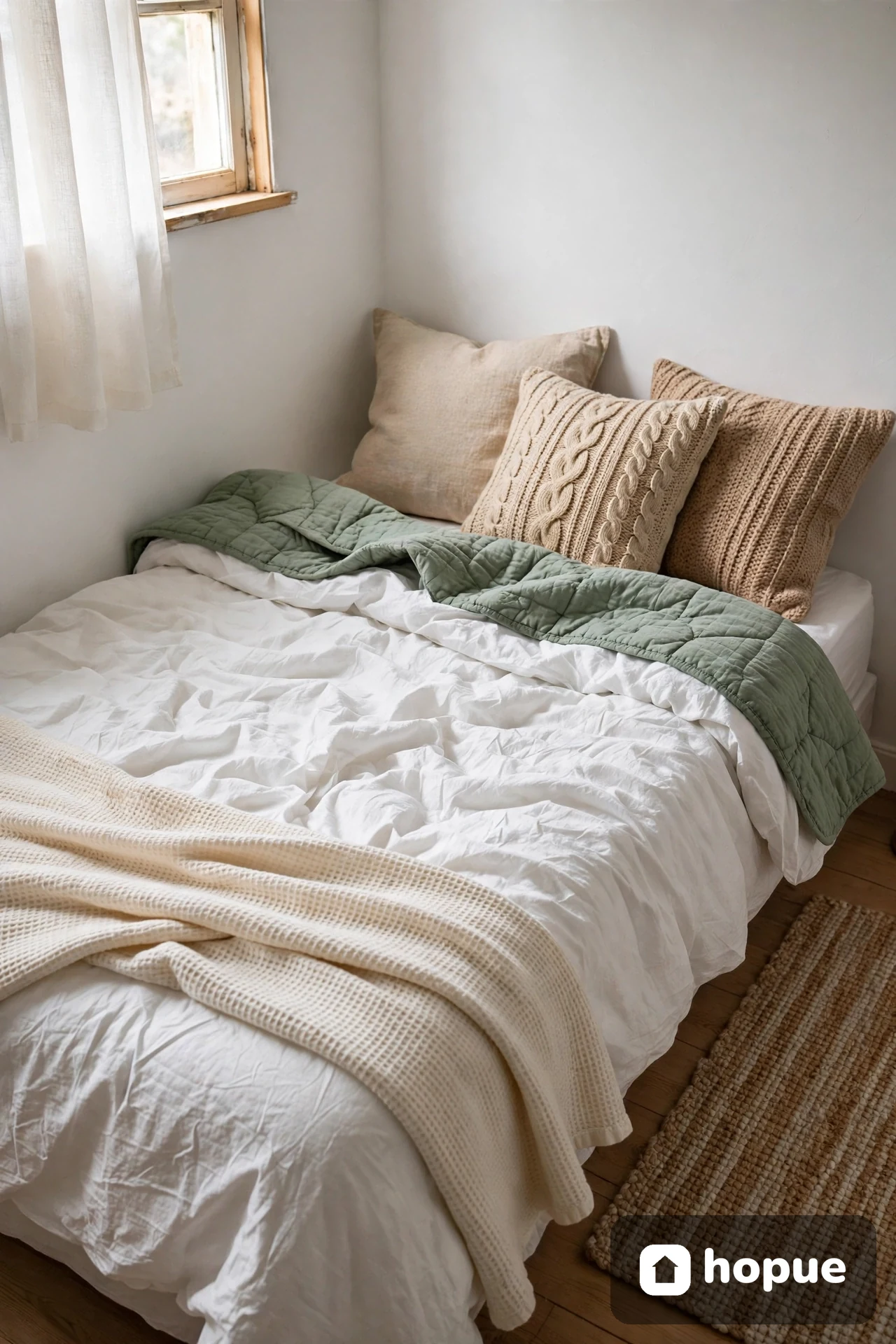
All-white bedding can look flat if every layer is the same smooth cotton. It comes alive when the textures differ. Try crinkled cotton sheets, a smooth duvet cover, a waffle throw, and a knit pillow. They are all white, but light hits each one differently, so the bed has depth without any color at all.
This works especially well in a small rental with white walls, because the bed blends in and the room feels bigger. The catch is upkeep. White shows every coffee spill and pet paw. Keep a washable top layer you can pull off fast, and do not put your whitest pillow where the dog sleeps.
10. Stay in Warm Neutrals From Pillow to Foot
Cream, oatmeal, tan, and soft brown sit well together because none of them fights for attention. Layer them from lightest at the pillow end to slightly darker at the foot, or mix them in any order and let the throw tie them together. They hide the mismatched look that happens when you buy bedding a piece at a time, which is how most renters actually build a set. A tan quilt from one store and cream sheets from another will still read as a set if the tones are warm. Add one wood-toned nightstand or a woven basket and the palette feels deliberate.
11. Use One Strong Accent Layer and Keep the Rest Quiet
If you love a color, give it one job. Let a rust quilt, a deep green coverlet, or a mustard throw be the only loud piece, and keep sheets, pillowcases, and the duvet cover in white, cream, or light gray. The accent layer gets noticed because nothing else competes with it.
This is a good way to use a bold thrift-store find without committing the whole bed to it. It is also easy to change later. Swap just that one layer in spring and the room feels new. Keep the accent at the foot or in the middle of the bed, not on every pillow, or it stops being an accent.
12. Put Dark Layers Underneath and Light Layers on Top
A dark fitted sheet or dark duvet cover with a light quilt or coverlet on top creates a frame around the bed. The dark edge peeks out at the sides and at the folded-back top, while the light layer does most of the visual work. In a small room this can make the bed look grounded instead of floating in white. It also hides scuffs and pet hair on the lower layers better than all-light bedding does. Try charcoal or deep navy underneath, with cream or soft sage on top. If the dark layer is a sheet, make sure it does not show too much at the pillow end or the bed can look heavy.
13. Mix Patterns, But Keep Them Small and Few
Pattern mixing in a small bedroom works when you limit yourself. Pick two patterns at most, and make one of them quiet. A small floral or tiny check on the duvet cover plus a solid throw and solid pillowcases is plenty. Or stripes on the sheet border with a solid quilt on top. The patterns should share at least one color so they feel related. If everything is patterned, the bed looks busy from the doorway, and a small room has no distance to soften it. Step back to the door after you make the bed. That is the view you actually live with.
14. Layer Crinkled Gauze for a Soft, Unmade Look
Gauze and crinkled cotton have a loose, airy drape that never looks stiff. A gauze blanket over smooth sheets gives the bed a relaxed feel without looking messy, as long as you smooth the top third and let the bottom stay loose. This layer is light, so it suits warm sleepers and small beds where a heavy quilt feels like too much.
It folds down small, which helps if you store off-season bedding in a single bin under the bed. Choose a muted color, sage, dusty blue, or warm white, because bright gauze can look washed out in a north-facing room. Two thin gauze layers beat one thick one here.
15. Use a Knit Blanket as the Middle Layer
A knit blanket between the sheet and the duvet sounds odd until you try it on a cool night. It adds warmth without the weight of a second duvet, and the knit texture shows at the folded-back edge. Put the knit layer on top of the flat sheet, then the duvet over both, and fold all three back together. The knit peeks out in a soft band. Chunky knits look best folded, not spread flat, because they bunch up under a duvet. A finer knit lies smoother. If you knit or someone in your family does, this is where a handmade blanket earns its place without taking over the whole bed.
16. Keep Velvet to the Pillows, Not the Whole Bed
A velvet duvet cover can be hot, heavy, and hard to wash in a shared machine. Velvet pillow covers give you the same rich look with none of that trouble. Add one or two velvet pillows in front of your sleeping pillows, in a deep tone like forest green, plum, or rust, and keep the rest of the bedding in cotton or linen.
The velvet catches lamplight in the evening and makes the bed look dressed up. During the day, toss those pillows to a chair if you need the bed for folding laundry. They hold their shape better than a full velvet cover, and you can wash the covers alone.
17. Stack Euro Pillows Behind Standard Pillows
Euro pillows, the big square ones, sit against the wall or headboard and give a small bed a finished back row. Put two Euros behind your standard sleeping pillows, then add one smaller decorative pillow in front if you have room. The trick is not to overfill the bed. On a twin or a full, one Euro plus your sleeping pillows may be all that fits, and that is fine. Choose Euro covers in a solid color that matches the quilt, so the back row reads as part of the bedding rather than a separate pile. Fluff them by hand each morning. Flat Euros make the whole stack look tired.
18. Finish With a Lumbar Pillow and a Bolster
A long lumbar pillow laid across the front of the pillow stack pulls the arrangement together. It hides the gap between sleeping pillows and gives you something to lean on when you read in bed. A bolster does similar work at a different angle, rolled and placed in front or along the side where the bed meets the wall.
Pick a lumbar in a pattern or texture that echoes the throw at the foot, so the top and bottom of the bed talk to each other. One lumbar is enough. Two long pillows on a small bed crowd the space you actually sleep in, and you will end up moving them to the floor every night.
19. Skip Decorative Pillows Entirely
Some small beds look best with just the pillows you sleep on. If your bed is a twin, if you share a full, or if you hate moving pillows every night, this is permission to stop. Use two good sleeping pillows, in cases that match the sheets, and let the folded layers do the styling. The bed will look clean and honest, and making it takes under a minute. You can still add interest with a folded throw or a patterned flat sheet. Fewer pillows means fewer things to wash, fewer things on the floor at night, and one less battle if a pet claims a pillow or allergies flare up.
20. Show a Wide Band of Flat Sheet at the Top
Folding the flat sheet back over the duvet is a small move with a big payoff. Pull the sheet and duvet down together, then fold just the sheet back over the top of the duvet by a generous amount, so you see a clear strip of sheet. That strip frames the pillows and breaks up a solid duvet cover.
It works best when the sheet is a different color or pattern from the duvet, even a soft stripe or a pale contrast. In the morning, you only need to smooth that band and plump the pillows. The rest of the bed can stay a little rumpled and still look like you meant it.
21. Drape a Throw From One Corner
Instead of laying a throw straight across the foot, drape it diagonally from one corner. Fold it loosely, let one end hang a little lower, and leave the opposite corner of the bed clear. The diagonal line breaks up the rectangle of a small bed and makes the layering look less stiff. This works well with a throw that has fringe or a bold pattern, since the drape shows it off. Handy, too, when the bed is against a wall and you can only reach one side easily. Style the side you see from the door, and let the wall side stay simple. A corner drape should look tossed, not arranged for a photo.
22. Half-Tuck the Top Layer on One Side Only
A full tuck all the way around can make a small bed look stiff and hospital-like. Try tucking the duvet or quilt under the mattress on one side only, usually the side away from the wall, and leave the other side loose. The tucked side looks neat from the doorway, while the loose side is easy to climb into at night.
This also keeps the bedding from sliding off the open side while you sleep. It is a practical fix for a bed with no room to walk around it. Smooth the tucked side in the morning and leave the loose side alone. The contrast is the style, not a mistake.
23. Style for a Bed Pushed Against the Wall
When one long side of the bed touches the wall, bedding layering in a small bedroom has to work from one side only. Put your best fold, your throw, and your decorative pillow on the open side, where they can be seen. On the wall side, keep layers flat and tucked so they do not bunch up against the baseboard. A lumbar pillow placed across the pillows also helps, because it looks good from the foot of the bed even when the wall side is hidden. Use a fitted sheet that stays put, since you cannot easily remake the wall side. And keep a small basket or stool at the foot for the throw at night, so it does not end up wedged behind the bed.
24. Give Two Sleepers Two Different Top Layers
If one of you sleeps hot and the other is always cold, one shared duvet will never suit you both. Use a shared fitted sheet, then give each person their own top layer, a lighter quilt on one side and a duvet plus a throw on the other. Overlap them slightly in the middle so there is no cold gap.
From the foot of the bed, the two layers can still match in color, so the bed looks like one bed, not two singles pushed together. Each person can fold, kick off, or add a layer without waking the other. It is not romantic in the old-fashioned sense. It is how people actually sleep well together in a small room.
25. Swap Only the Top Layer When the Season Changes
You do not need a whole new bedding set for each season. Keep the same sheets and the same neutral duvet cover all year, and swap just the top layer. A light coverlet in spring, a quilt in fall, a knit throw added in winter, a gauze layer in summer. The swap takes five minutes and fits in one storage bin. One good duvet cover can carry you through the year, so the swap saves money as well as closet space. Mark the change by washing everything at once, so the bed smells fresh for the new season. If you live somewhere with only two real seasons, hot and less hot, swap between a quilt and a sheet-only setup and be done.
26. Mix Thrifted Layers and Make Them Match on Purpose
Secondhand bedding can look collected instead of random if you pick a thread to tie it together. That thread can be color, like all warm tones, or texture, like all cotton, or pattern scale, like all small prints. A thrifted quilt, a vintage flat sheet, and a new throw can sit happily together if they share one of those links.
Wash everything hot before the first use, and check seams and elastic before you commit. Thrifted pillow covers are the easiest win, since they are cheap and easy to swap. Do not buy a stained duvet cover hoping it will wash out. Some marks do not, and you will see them every morning.
27. Choose Layers You Can Actually Wash in Shared Machines
Shared laundry changes what bedding is practical. A king-size duvet that needs a commercial machine is a bad fit if your building has two small washers. Choose a quilt or a duvet cover that fits in a standard machine, and wash the cover often instead of the whole insert. Keep a spare set of sheets so you are not stuck waiting for a dryer. Layers that dry fast, cotton percale, waffle cotton, and thin quilts, beat thick blankets that stay damp. If you have to carry bedding up and down stairs, lighter layers are not just nicer. They are the difference between washing bedding regularly and putting it off for weeks.
28. Add a Washable Top Layer If a Pet Sleeps on the Bed
Pets do not care about your layering plan. A dog or cat will claim the foot of the bed, or the pillow, and leave hair and the odd muddy paw. Put a washable coverlet or a dedicated pet blanket over the top layer where the animal actually lies, in a color close to your bedding so it blends in.
Shake it out daily and wash it weekly, and the layers underneath stay cleaner much longer. Avoid loose weaves that claws snag, and skip very light colors on the top layer if your pet sheds dark fur. The pet layer is not an extra. It is what protects the rest of your bedding from becoming a pet bed entirely.
29. Let the Layers Work With Your Headboard, Rug, and Lamp
In a rental you usually cannot replace the bed frame, and many small bedrooms have no headboard at all. Layers can do that job. A tall stack of Euro pillows against the wall reads as a soft headboard. A folded quilt hung over a simple wooden headboard adds color without any tools. Match the throw to the rug, not to the wall, so the floor and the bed feel connected. And think about lamplight. Warm light makes cream and rust glow, while cool daylight can wash out pale blue. Stand in the doorway at night, with just the lamp on, and check whether the layers still look like themselves. That evening view is the one you live with most.
A good small-bedroom bed does not need every layer you own piled on at once. Pick two or three pieces that work hard, fold one back, add one throw you actually reach for, and leave the rest in the bin. The best bedding layering for a small bedroom is the setup you can make in two minutes, wash without a fuss, and still like looking at from the doorway at the end of a long day.
Frequently Asked Questions
How do I wash all these layers if I share laundry machines?
Wash the pieces that touch skin most often, sheets and pillowcases, every week, and wash the top layers less often unless a pet or a spill says otherwise. Use a duvet cover so you wash the cover, not the insert, and pick quilts and throws that fit in a standard machine. Keep a spare sheet set so a busy laundry room does not leave you with a bare mattress overnight.
Where do I keep off-season layers with no linen closet?
One flat bin under the bed or on top of a wardrobe holds a folded quilt and two throws if you fold them tight and skip bulky vacuum bags that never reseal well. Wash and fully dry everything before you store it, and slip in a scented sachet if the bin will sit closed for months. Keep the current season’s throw where you can grab it, not buried at the bottom of the bin.
I sleep hot and my partner sleeps cold. How do we layer one small bed?
Share the fitted sheet, then split the top layers down the middle. The hot sleeper gets a light quilt or just a sheet, and the cold sleeper gets a duvet plus a throw at the foot. Overlap the two top layers a few inches in the center so no cold air gets in. Matching colors keep the split from looking like two separate beds, and each of you can adjust without waking the other.
Will extra layers fit on a twin or full bed pushed against a wall?
Yes, if you keep the stack low and the styling on the open side. A sheet, one quilt or duvet, and one throw is plenty on a twin, and a full can take one more pillow layer without crowding sleepers. Avoid tall piles of decorative pillows that eat sleeping space. Style the side you can reach, tuck the wall side flat, and test it by actually getting in and out of bed before you call it done.
What if my dog or cat sleeps on the bed?
Give the pet its own washable top layer placed where it actually settles, usually the foot or one corner, and wash that piece weekly. Choose a tight weave that claws will not snag, and a color close to your bedding so hair shows less between washes. Keep the good quilt underneath protected, shake the pet layer out each morning, and do not let the pet claim a decorative pillow you cannot wash easily.