29 Cozy Texture Layering Ideas for a Small Apartment
Small apartments rarely need more stuff. They need more feeling. When the walls are plain, the floors are all one surface, and the furniture has to do three jobs, texture is what stops a room from looking flat. A smooth sofa next to a smooth rug next to smooth curtains can be perfectly tidy and still feel cold. Change one of those surfaces, and the whole corner reads differently.
Cozy texture layering in a small apartment is not about piling blankets until you cannot find the sofa. It is about putting different materials next to each other on purpose: something soft against something rough, something matte against something with a slight shine, something woven against something smooth. You can do most of it without drilling, painting, or buying new furniture. Start with what you already own, add one layer at a time, and live with it for a few days before you add the next.
1. Put Washed Linen on the Sofa First
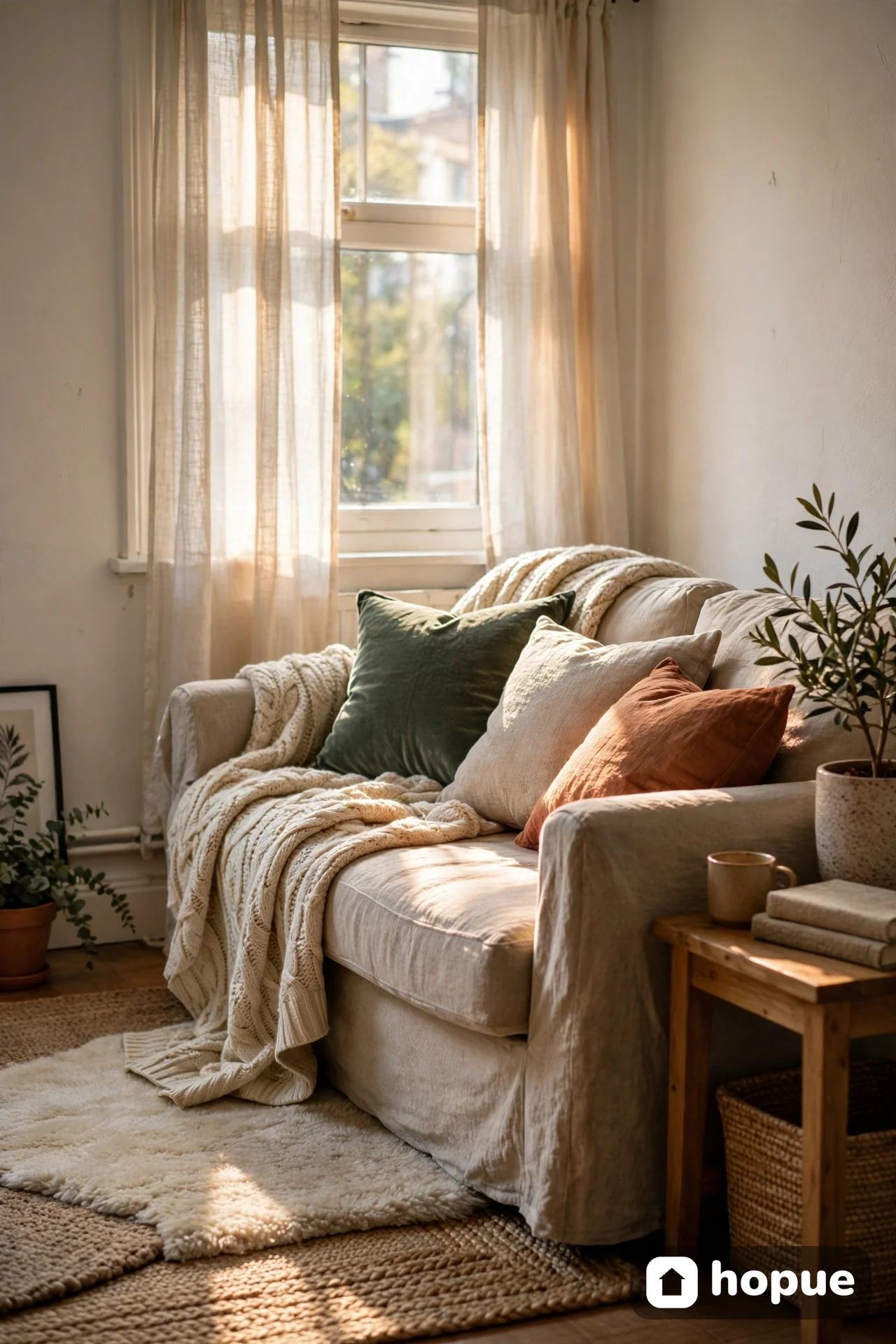
If your sofa is leather, faux leather, or a tight, smooth fabric, it will always look sleek and feel a bit hard, no matter how many cushions you add. A washed linen slipcover or a large linen throw tucked over the back and arms changes the base itself. Linen wrinkles. That is the point. The creases catch light differently through the day, so the sofa stops looking like one solid block.
Choose a color close to the sofa, or one step lighter, so the change reads as texture first and color second. In a rental, a loose cover also protects the sofa underneath, which matters if you will lose part of your deposit over a stain. Wash it before you judge it. Linen softens a lot after the first wash, and the slightly rumpled look it gets then is exactly what makes it work next to smoother pieces in the room.
2. Drape One Chunky Knit Throw, Not Three
Three throws on one sofa usually means none of them gets used. One chunky knit throw, folded in half and laid over a single arm or across the back corner, does more. The thick stitches stand out against a flat sofa fabric, and the weight of it makes the seat look lived in rather than staged.
Fold it so the edge hangs just past the arm. Leave the rest of the sofa clear. That empty space is part of the idea. Your eye needs somewhere smooth to rest, or the knit stops standing out. When the evenings get cold, that one throw is also the one you will actually reach for, which is a better test than how it photographs. If it ends up on the floor every night, it is too bulky for the space. Swap it for a lighter knit in the same color.
3. Pair Velvet Cushions With Rough Linen Ones
Velvet on its own can look formal. Linen on its own can look a little plain. On the same sofa, each one makes the other clearer — velvet catching light as you move past, linen staying matte and holding its shape. Not a matching set. Better than one.
Try two linen cushions and one velvet cushion, all in colors that already live in the room. A rust velvet cushion next to oatmeal linen works in a warm room. A deep green velvet cushion next to natural linen works if your rug or curtains already carry green. Keep the sizes different. Two squares and one slightly smaller rectangle will sit more naturally than three identical squares lined up like soldiers. Plump them, then leave one slightly squashed. A sofa that looks sat in is more welcoming than one that looks untouched.
4. Lay a Small Rug Over a Larger Natural-Fiber Rug
Most rentals come with hard floors or one stretch of plain carpet, and a single rug can still leave a living area feeling bare. A large jute or sisal-style rug underneath defines the seating area. A smaller, softer rug on top, placed under the front legs of the sofa and the coffee table, gives your feet somewhere soft to land.
Two rugs only work as a pair when they are clearly different. If both are flat and beige, they blur into one. Let the bottom rug be rough and woven. Let the top one be thicker, with a low pile or a simple pattern. Leave a border of the bottom rug showing all the way around. That border is what makes the layering visible. In a studio, keep the top rug small enough that you can still walk around it without stepping half on and half off. A rug that trips you every time you cross the room will not feel cozy for long.
5. Hang Sheers Behind Heavier Linen Curtains
Bare windows make a small room feel hard, especially at night when the glass turns dark and reflective. Sheers alone can look thin. Heavy curtains alone can make a small room feel shut in during the day. Layered together on one tension rod or a double rod, if your lease allows it, they solve both problems.
Keep the sheers closed during the day for privacy without losing light. Pull the linen panels to the sides. At night, draw the linen across. The sheer layer softens the edge of the glass even when the heavier curtain is open, and the linen adds weight and folds that a sheer can never give you. If you cannot drill, use a tension rod inside the window frame for the sheer and command-style hooks or a tension rod above for the linen. The fold of the fabric matters more than the hardware. Let the linen puddle just slightly at the floor, or hem it to skim the floor if the puddle will collect dust and pet hair.
6. Build the Bed in Visible Bands
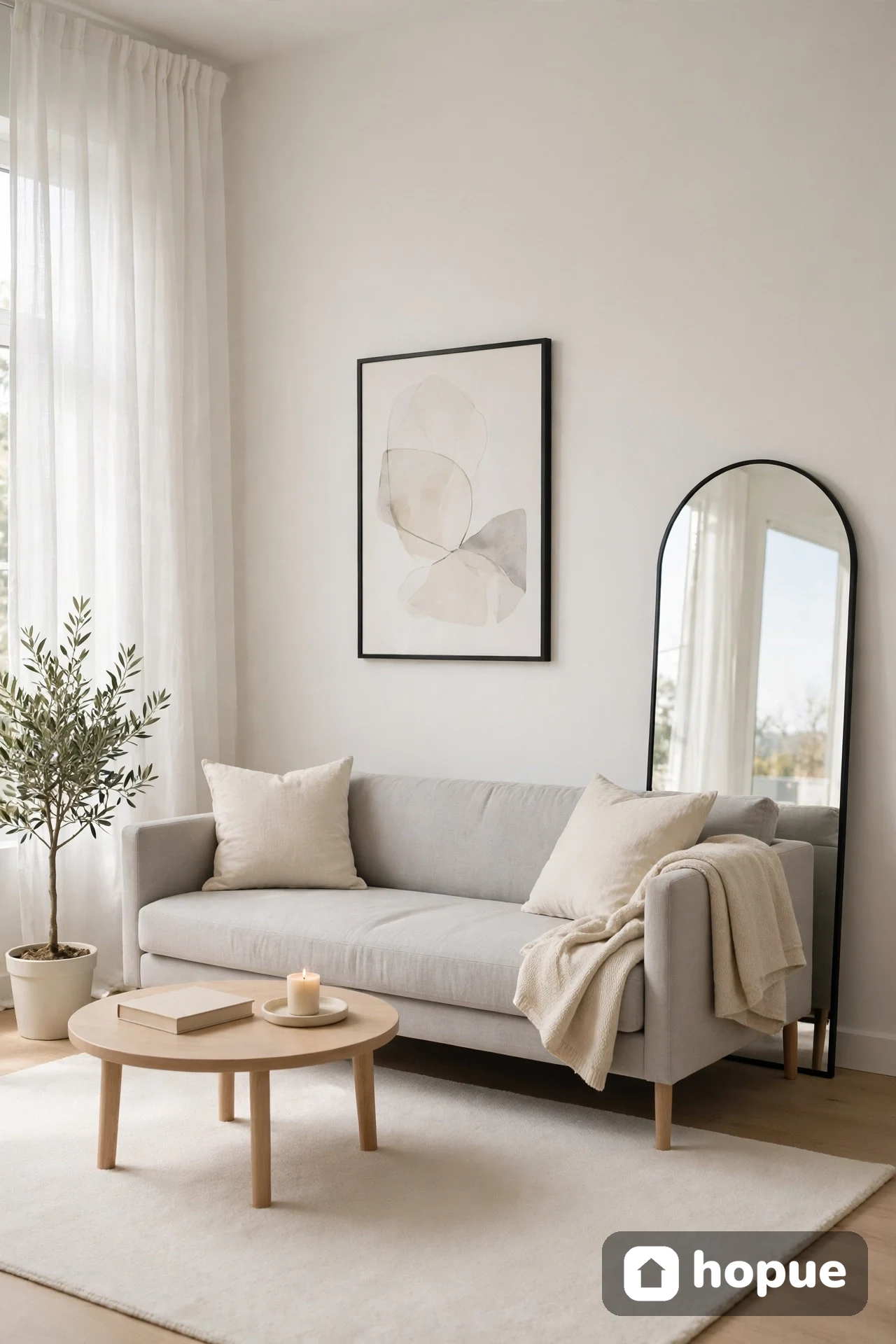
A bed made with one flat duvet in one color can look neat and still feel unfinished. The fix is not more bedding. It is showing the layers. Fold the top sheet back over the duvet so a band of it shows. Fold the duvet back a second time, lower down, so a band of the quilt or coverlet underneath shows. Each band should be a different texture: smooth cotton sheet, slightly textured quilt, soft throw at the foot.
You do not need new bedding to try this. Use the sheet you have, the duvet you have, and one extra blanket from the closet. Make the bed, then pull each layer back a little less than you think you should. Stand at the foot of the bed and look. If you can see three distinct surfaces, it is working. If it all blends into one color, change one layer to a different material rather than a different shade. A white waffle blanket over a white cotton duvet reads as layering. A white duvet over a slightly different white duvet does not.
7. Fold a Waffle Coverlet Back Over the Duvet
Waffle weave is one of the most useful textures in a small bedroom because it adds pattern without adding color or print. A waffle coverlet folded across the middle of the bed breaks up a smooth duvet and gives the bed a handmade, touchable quality. It also helps in a room where you cannot add a headboard or wall art and the bed has to carry the whole look.
Lay the coverlet flat, then fold the top third down toward the foot. Smooth it with your hands, but do not press out every wrinkle. The small squares of the weave do the work. In summer, you can sleep under just the coverlet and fold the duvet away. In winter, it becomes the middle layer. That kind of double duty matters in a small apartment, where closet space is short and every blanket has to earn its shelf.
8. Add a Knit Blanket Just at the Foot of the Bed
A knit blanket thrown over the whole bed can swallow a small bed and make the room look smaller. The same blanket folded into a long rectangle and laid across the foot of the bed does the opposite. It anchors the end of the bed, adds weight where the duvet is thinnest, and gives you something warm to pull up without remaking the whole bed.
Choose a knit that is different from your duvet cover. A chunky or ribbed knit will show up against smooth cotton. A finer knit works better if the duvet is already textured, so the two do not fight. Drape it straight across, or fold it on a slight angle if the bed sits against a wall. Keep it to the bottom third of the bed — a clear band at the foot, not a second duvet.
9. Let a Woven Basket Do Double Duty
In a small apartment, storage is always showing. A woven seagrass or rattan-style basket holding extra throws, magazines, or dog toys adds texture at the same time as it hides clutter. Put one beside the sofa for throws, one beside the bed for extra blankets, or one by the door for scarves and gloves.
The weave matters. A tight, smooth basket reads as a box. An open, chunky weave reads as texture, and you can see the soft things inside it, which adds another layer. Line it with a linen napkin or an old pillowcase if the weave snags knit throws. Do not buy five matching baskets. One or two, in different sizes, look collected over time. Five identical ones look like a storage unit. If a basket starts to shed or smell musty, it has done its job and it is time to replace it, not to keep working around it.
10. Set a Wood Tray on a Soft Ottoman
An ottoman covered in fabric is comfortable and almost useless as a surface. A wood tray on top solves that without giving up the softness. The tray gives you a flat, hard place for a mug or a book. The fabric around it stays soft. The contrast between hard wood and soft upholstery is texture layering, even though neither piece is a blanket.
Pick a tray with a rim, so a mug does not slide off when someone bumps the ottoman. Leave part of the ottoman uncovered. If the tray covers the whole top, you have just made a hard table and lost the soft layer. A round tray on a square ottoman, or a rectangular tray set to one side, leaves fabric showing and looks less stiff. When guests come, lift the tray off and the ottoman goes back to being extra seating. That flexibility is worth more in a small living room than a permanent coffee table.
11. Bring In One Bouclé Piece and Stop There
Bouclé, the nubby, looped fabric you see on many accent chairs and cushions, adds a lot of texture in a small area. That is why one piece is usually enough. One bouclé cushion on a smooth sofa, or one bouclé throw pillow on a bed with cotton bedding, gives the eye something to land on. A bouclé sofa, bouclé chair, and bouclé cushions together can feel overwhelming and hard to keep clean.
A bouclé cushion cover is the renter-friendly way in. Cheaper than a chair, easier to wash, easy to move if it does not work where you first put it. Cream or warm gray lets the loops do the talking. A loud color fights with the texture. Brush it with your hand now and then where people lean, or the loops flatten.
12. Ground Soft Seating With a Leather or Faux-Leather Pouf
Too many soft surfaces together can make a room feel shapeless, like sitting in a pile of pillows. A leather or faux-leather pouf next to a fabric sofa and a soft rug adds structure. The surface is smooth and firm, so it holds its shape, and it reflects a little light, which keeps the corner from going dull.
Use it as a footrest, an extra seat, or a side table with a tray on top. In a studio, a pouf that can be pushed under a console table or into a corner when you need floor space earns its keep. Wipe it down when it gets dusty. Real leather will age and darken where hands rest on it, which many renters like. Faux leather will stay more even. Either is fine. The idea is the contrast: firm and smooth against soft and yielding, in the same small grouping.
13. Mix Matte Ceramics With a Little Shine on Open Shelves
Open shelves in a kitchen or living room show every material at once, which is useful if you mix them on purpose. Matte ceramic mugs and bowls, a rough wood board, and one or two pieces of glass or glazed pottery give the shelf depth. If everything is matte, the shelf looks dusty. If everything is shiny, it looks slippery and hard to keep clean.
Group by use, not by color alone. Put the mugs you reach for every morning together, with a small plant or a linen towel folded beside them. Let a glazed vase sit next to a matte bowl. The difference in how they catch light is the layering. Leave some empty space on each shelf. A shelf packed edge to edge has no room for texture to show, and it is harder to take things down without knocking something over. In a rental kitchen with limited cabinet space, this kind of shelf is often the only display you have, so let it work a little harder.
14. Dress the Table With Woven, Linen, and Wood Together
A small dining table used for meals, work, and everything in between can still feel dressed without a full tablecloth. Start with woven placemats. Add linen napkins, even if they are the only linen you own. Finish with a wood serving board or a wood bowl in the middle when the table is not in use. Each material does a different job, and together they keep a plain tabletop from looking bare.
You do not need a matching set. Woven placemats in natural straw tones work with white, gray, or patterned napkins. A dark wood board works with a light table, and a light wood board works with a dark one. When you sit down to eat, the placemat protects the table, the napkin softens the place setting, and the board can hold bread or fruit. When you clear up, leave the board and one placemat out. A table that is completely bare between meals can make a studio feel like an empty room.
15. Layer Two Kinds of Towels in the Bathroom
Bathrooms in rentals are often all tile and glass, which is easy to clean and hard to make feel warm. Towels are the main soft surface you get. Hang a plush towel for drying, and fold a waffle-weave hand towel over the rail in front of it. The two textures sit side by side every time you walk in, and the waffle towel dries faster between uses.
Roll a third towel, in a different texture again, and set it on a stool or a shelf if you have room. A ribbed towel rolled tightly looks intentional. A pile of identical folded towels looks like a linen closet spilled over. Keep the colors in the same family so the difference reads as texture, not as a clash. White and cream together work. White, navy, and bright orange together will fight, no matter how soft they are. Swap the hand towel often. A waffle towel that stays damp will lose the crispness that makes it useful here.
16. Make the Entryway Feel Finished With a Runner and a Woven Catch-All
The entry in a small apartment is often just a door and a patch of floor. A low, woven runner gives that patch a texture underfoot and catches grit before it reaches the living room. A small woven basket or tray on a console, a stool, or even a wall hook rail gives keys, mail, and sunglasses a place to land. Together they tell you, and anyone who walks in, that this corner has a job.
Choose a runner you can shake out or wash easily. Entry rugs take more dirt than any other rug in the home. A flat weave is easier to clean than a thick pile, and it will not catch the bottom of the door. If there is no room for a console table, a single woven basket on the floor by the door does the same work. Hang a knit or woven bag on a hook for the things that always end up on the floor. The entry does not need to be pretty in a magazine sense. It needs to hold the mess and still look calm when you come home.
17. Hang One Woven Wall Piece Instead of Another Print
Small apartments often end up with framed prints on every wall because prints are easy to hang and easy to move. One woven wall hanging, a macramé piece, or a small textile panel changes the wall itself. Fabric absorbs sound a little, softens the edge of the wall, and adds texture at eye level, where you notice it most.
Hang it where a print would go: above the sofa, above the bed, or on the wall you face when you sit down to eat. Keep it to one per room. Two or three woven pieces together can look like a craft fair, and they collect dust. If your lease bans nails, use removable hooks rated for the weight, and test one hook first. A textile is lighter than a framed print, which helps. Let it hang straight, with space around it. A woven piece crowded against a shelf or a curtain loses its shape and just looks like clutter on the wall.
18. Swap a Plain Lampshade for Linen
A lamp with a smooth, glossy shade throws light, but it does not add anything to the room when it is off. A linen shade, even in the same color, adds a woven texture you can see from across the room. The weave shows when the lamp is on, too, because light passes through the fabric unevenly and gives the glow a softer edge.
The lamp came with a shade. That does not mean the shade is finished. Unscrew the finial, lift it off, and try a linen one in the same size. A simple drum shape suits most small rooms — it does not flare out and eat visual space. Check there is room around the bulb, and use the bulb type the lamp calls for, or the fabric can scorch. Start with the lamp you use most. One is enough to know if you like it.
19. Keep the Textures in One Color Family So the Room Stays Calm
I have seen this go wrong in one shopping trip: a mustard knit, a teal velvet cushion, a bright red basket, a busy rug. Every texture brought a new color, and none of them read as texture. The room just looked busy. Hold the color steady and let the materials vary. Pick one family you already live with — warm creams and oatmeal, cool grays and soft white, warm browns and rust — then add texture inside it. A cream knit, an oatmeal linen cushion, a natural woven basket, and a warm wood tray all sit together without shouting. You can add one deeper color as an accent, in one piece only, once the textures are working. This restraint is what makes a small room feel layered instead of crowded, and it makes shopping easier, because you can pass over anything outside the family no matter how soft it looks in the store.
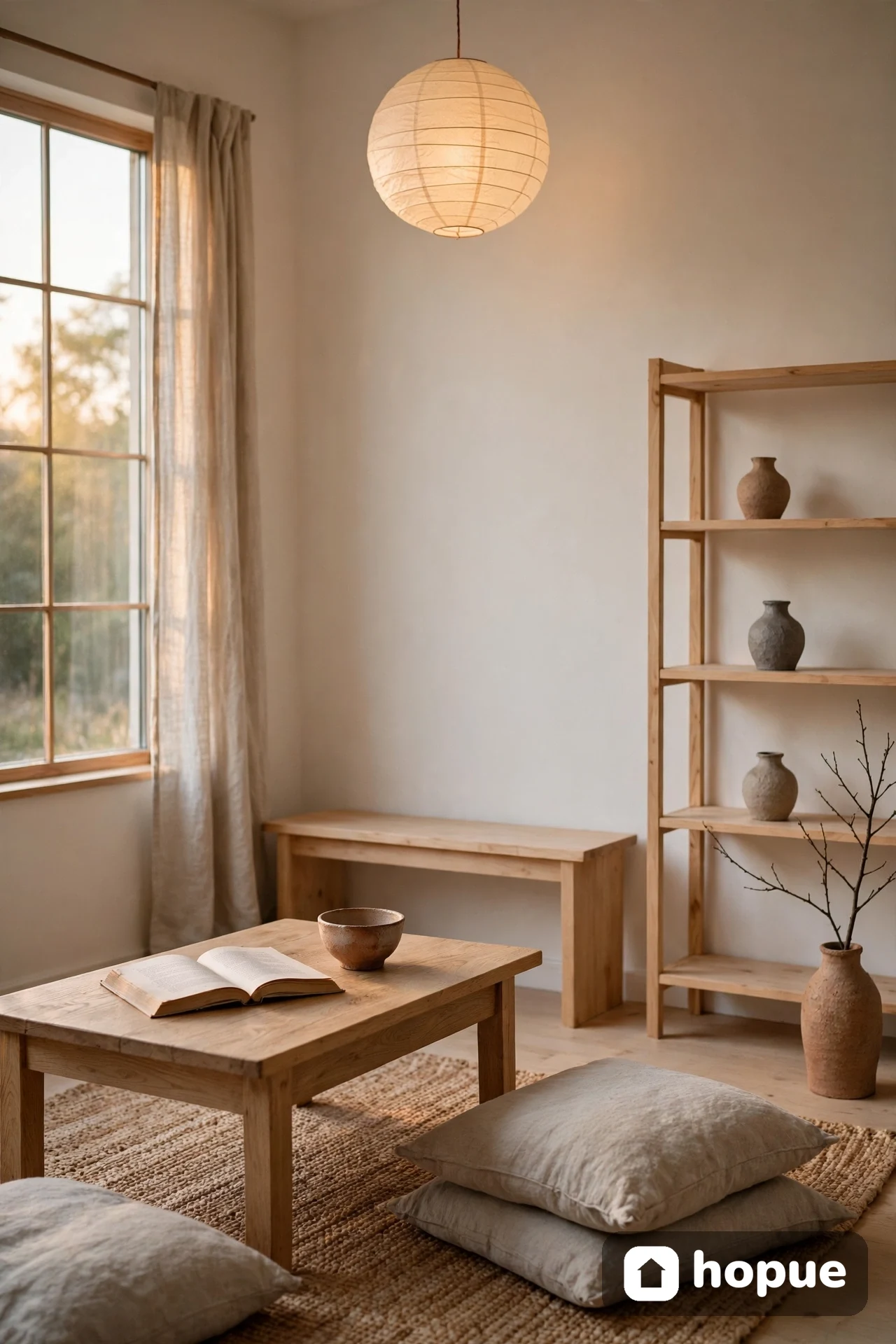
20. Add Floor Cushions for Seating That Stacks Away
Extra seating is a constant problem in a small apartment. Dining chairs take up floor space. A sofa bed is a big commitment. Large floor cushions, in linen, cotton canvas, or a woven cover, stack in a corner or slide under a bed when no one is using them, and pull out in seconds when friends come over.
Choose covers you can remove and wash. Floor cushions live on the floor, so they will pick up dust and crumbs no matter how careful you are. A firm cushion with a textured cover is easier to sit on than a soft, squashy one that flattens under you. Put a rug underneath, or the cushions will slide on hard floors. If you have a low coffee table, floor cushions turn it into a second dining spot for a casual meal. Stack them neatly when you are done. A tidy stack in a corner reads as intentional storage. A scattered pile reads as mess.
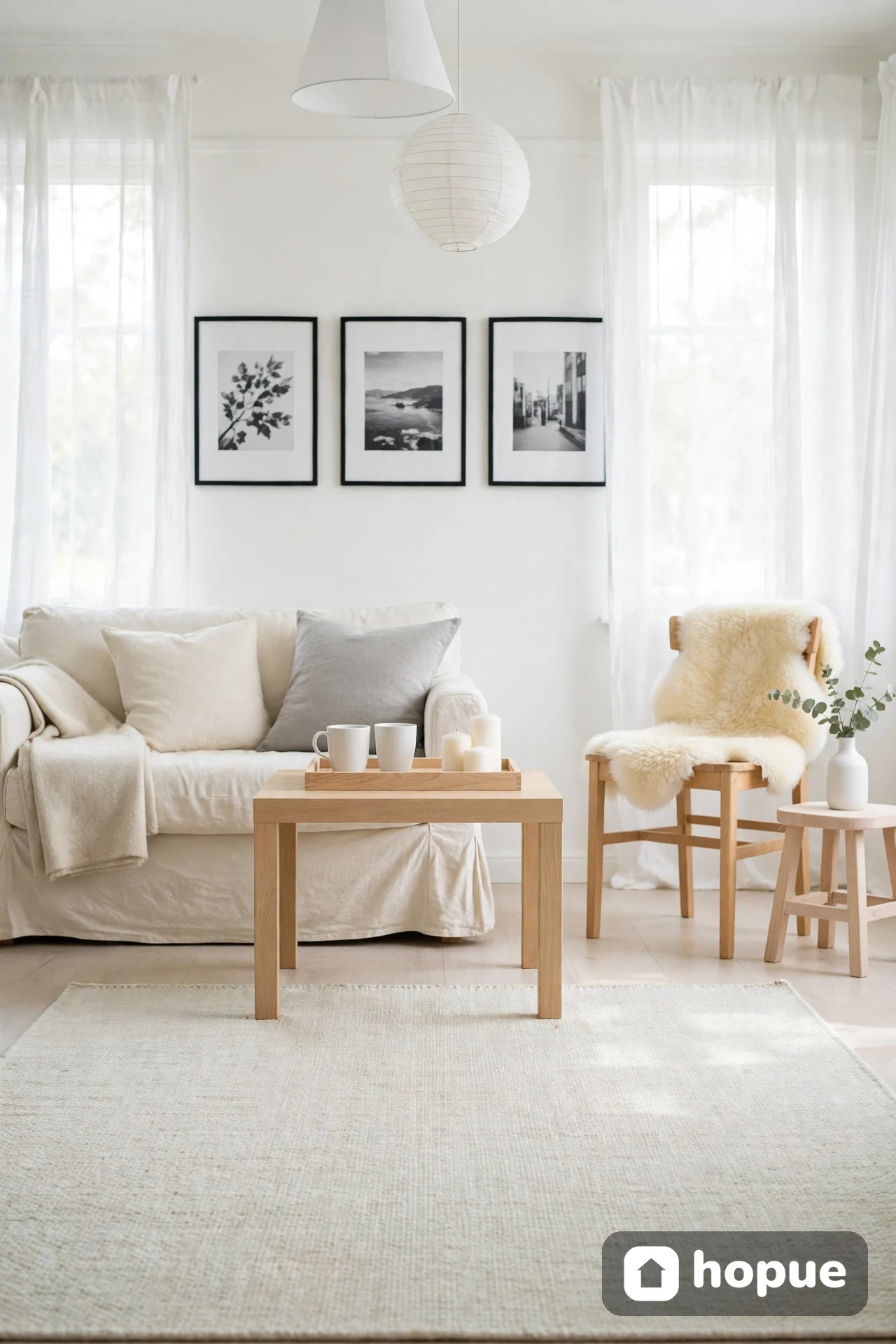
21. Put a Faux Sheepskin Where You Actually Sit to Read
A faux sheepskin draped over every chair in a home can feel like a theme. One, placed on the chair you actually sit in to read, feels like a choice. Drape it over the back and seat of a dining chair pulled into a corner, or over an armchair that is a little too firm. The long fibers soften the edge of the chair and make it the seat people reach for first.
Let one corner of the sheepskin hang over the front edge so you can see the texture from the doorway. Tuck the rest in so it does not slide off every time you stand up. Shake it outside now and then, and brush it with your fingers to keep the fibers from matting where you lean. If you have a pet that sheds, a sheepskin in a light color will show every hair. A mid-tone gray or warm brown will hide it better and still give you the soft layer where you need it.
22. Layer a Throw Over a Dining Bench, Not Just the Sofa
Throws tend to live on the sofa and the bed, and the dining area gets left out. A dining bench, a wood chair, or a stool at a small table benefits from the same idea. Fold a thin woven throw or a linen runner lengthwise over a bench, and the hard seat becomes a place to linger over coffee. The texture also breaks up a run of hard surfaces: wood table, wood chairs, hard floor.
Use a throw that can be washed easily, because dining seating gets food on it. A flat weave or a smooth linen throw will wash better than a chunky knit, which can trap crumbs. Fold it so it sits in the middle of the bench, not hanging to the floor where feet will kick it. If the bench is against a wall, add one small cushion in a different texture at one end. The bench will look dressed, and it will be more comfortable for a long meal, which is the real test in a home where the dining table is also the desk.
23. Soften a Work Corner With Felt and Woven Board
A work corner is usually the hardest-looking spot in a small apartment: desk, laptop, hard chair, bare wall. A felt desk mat under the keyboard softens your wrists and quiets typing. A woven pin board or linen-covered board on the wall holds notes and breaks up the flat wall. Keep the desk mostly clear — the mat and the board are the layers. A small woven basket for pens and chargers stops cables sprawling across the mat. When work is done, swap the to-do list on the board for a postcard, and the corner shifts back to home.
24. Use Planters to Add Texture, Not Just Plants
Plants get all the attention, but the pots they sit in do a lot of the texture work. A terracotta pot, a woven basket planter, a matte ceramic pot, and a smooth glass vase on the same shelf or windowsill give you four textures before you even look at the leaves. The plants soften the room. The pots give the grouping structure.
Group pots in odd numbers, and vary the heights. A tall plant in a woven basket on the floor, a medium plant in terracotta on a stool, and a small trailing plant in ceramic on a shelf will read as a collection. If every pot matches, the plants have to do all the work, and the grouping can look flat. Use a saucer or a liner under woven baskets so water does not soak through to the floor. That practical step also lets you use baskets you already own, instead of buying new planters for every plant.
25. Style a Windowsill With Linen, Clay, and Glass
A windowsill is a good place to practice layering in miniature. Fold a small linen cloth under a clay pot. Set a smooth glass vase beside it. Leave space between pieces — the sill is narrow, and each one has to be different enough to notice. Put the tallest piece at one end so light still comes through, and use flat-bottomed pieces that will not tip when you open the window. Swap one piece with the season: a small branch in winter, a fresh stem in spring. Small, contained, easy to change. Try combinations here before you commit to a larger rug or sofa cover.
26. Swap the Shower Curtain for Waffle Weave and Add a Wooden Bath Mat
A plastic shower curtain and a damp bath mat can make a small bathroom feel cold, even when the water is hot. A waffle-weave fabric shower curtain adds texture the moment you walk in, and it hangs in soft folds instead of sticking to itself. A wooden bath mat, the slatted kind that lets water drain through, adds a hard, warm-toned surface underfoot that contrasts with tile.
Hang the curtain outside the tub on a tension rod if you cannot drill, and use a liner inside if you need one. The waffle curtain is the layer you see. The liner does the waterproofing. Let the wooden mat dry standing on its side after a shower, or it will stay damp underneath and lose its finish. If a wooden mat feels too hard for bare feet first thing in the morning, layer a small waffle towel on top of it. That sounds fussy, but it is the same idea as the rest of the home: hard and soft together, in a space small enough that you notice both.
27. Change One Layer When the Season Changes
You do not need a summer apartment and a winter apartment. You need one layer you swap. In warm months, that layer might be a light linen throw and cotton cushion covers. In cold months, swap the linen throw for a knit one, and swap one cotton cushion cover for velvet. The rug, the curtains, and the furniture stay the same. The room feels different because the layer you touch most has changed.
Store the off-season layer where you can reach it: on a high shelf, in a basket on top of a wardrobe, or in a bag under the bed. If it is buried in a storage unit, you will not swap it. Mark the change on the calendar if you tend to forget, or tie it to something you already do, like changing the sheets for the season. One swap is easy to keep up. A full seasonal redecoration in a small apartment is not, and it usually ends with bags of decor sitting in the hallway for weeks.
28. Add Fringe and Tassels in One Place Only
Fringe and tassels are texture you can see from the doorway. Used in one place, they are a focal point. On the throw, the cushions, the curtains, and the rug, they are noise. Pick the piece you touch most — usually the throw on the sofa — and let the fringe hang over the arm where it moves when you sit down. Keep the cushions on that sofa plain and the rug edge straight. Trim loose threads instead of pulling them. Pulling unravels the edge, and a worn fringe makes the whole sofa look tired.
29. Layer From Floor to Ceiling in One Small Corner
If layering the whole apartment feels like too much, pick one corner and layer it from floor to ceiling. Start with a rug on the floor. Add a chair or a floor cushion with a textured cover. Add a throw over the chair. Hang a woven piece or a linen curtain on the wall behind it. Put a small lamp with a fabric shade beside it. Each layer sits above the last, so your eye travels up the corner and the small space feels taller and more finished.
It does not need to serve a job to be worth doing. The corner is a test: see how the textures work together in one contained place before you spread the idea through the room. Live with it for a week. If you keep going to it, if you sit there or look at it when you walk in, the combination is right. If you avoid it, one layer is wrong. Take that layer away and try a different material in its place. Small rooms reward that kind of slow testing more than a single big shopping trip.
A small apartment does not need a new style to feel cozy. It needs surfaces you want to touch, placed where you will actually touch them, in combinations that make sense for how you live. Start with the sofa or the bed, the two places you spend the most time. Add one layer, live with it, then add the next only if the room still feels flat. The best texture layering in a rental is the kind a visitor notices without knowing why the room feels warm, and the kind you can pack up, wash, and take with you when the lease ends.
Frequently Asked Questions
How do I layer textures in a very small studio without it looking cluttered?
Hold the color steady and limit yourself to three textures in any one sightline. In a studio, you can often see the bed, the sofa, and the table from one spot, so treat that whole view as one grouping. Pick a rug texture, a soft furnishing texture like linen or knit, and one hard texture like wood or woven basket. Repeat those same three across the bed and the sofa instead of introducing new ones in each zone. Leave empty surfaces too. A clear stretch of floor, a bare patch of wall, and an uncluttered tabletop give the textures room to show, and they keep the studio from feeling like a shop display.
Can I layer textures if my landlord will not let me drill, paint, or change fixtures?
Yes, and most of the ideas here were chosen with that limit in mind. Slipcovers, throws, cushion covers, rugs, baskets, trays, lampshades, and tension-rod curtains all come with you when you leave and need no holes in the wall. For wall texture, use removable hooks rated for the weight of a textile piece, and test one hook in a hidden spot first. Avoid anything that sticks directly to paint if you are unsure it will come off cleanly, and keep the original fixtures so you can put them back. Texture layering is mostly about things that sit on furniture and floors, not about changing the apartment itself.
Where should I start if I am on a tight budget and own almost no textured pieces?
Start with the place you touch most, usually the sofa or the bed, and start with one piece you will use daily. A single knit throw, a set of linen cushion covers, or a waffle coverlet will change how the room feels more than five small accessories scattered around. Check what you already own first: a wood tray from the kitchen, a woven basket used for laundry, a linen towel, or a scarf in a texture you like can all be tried in a new spot for a few days before you buy anything. Buy the next layer only after you have lived with the first one and know what is still missing. That slower pace saves money and stops the room filling up with pieces that looked good in the store and do nothing at home.
How do I keep layered textures clean, especially with pets or allergies?
Choose covers you can remove and wash, and favor flat weaves and washable cotton and linen in the spots pets use most. Shake throws and cushion covers outside, vacuum rugs and bouclé with an upholstery attachment, and wash bedding layers on a regular laundry cycle rather than letting them sit. Faux sheepskin and chunky knits trap hair and dust more easily, so keep them to one chair or one end of the bed where you can clean them, and brush them with your hand to lift hair before it mats in. If dust is a problem, skip heavy fringe and thick pile in the bedroom, and use smooth linen and waffle weave there instead. The textures that are easiest to wash are the ones you will keep using, so let cleaning guide where each material goes.