29 Dollar Store Decor Ideas for a Small Apartment
I walked out of a dollar store once with a glass vase, two frames, and a candle I did not need, and somehow that ten-minute trip made my living room feel more finished than the expensive throw blanket I had been saving up for. That is the strange thing about these stores. The pieces are plain on the shelf. They only start to look good once you put them where you actually live, next to things you already own, in light you actually sit in.
You do not need to buy everything at once, and you definitely do not need to fill every surface. The ideas below work best when you pick one or two per room, leave some empty space, and let the cheap find do a quiet job instead of trying to be the star of the apartment. Most of them cost just a few dollars, they come off or move easily when your lease ends, and none of them needs a drill.
1. A Glass Vase Full of Branches
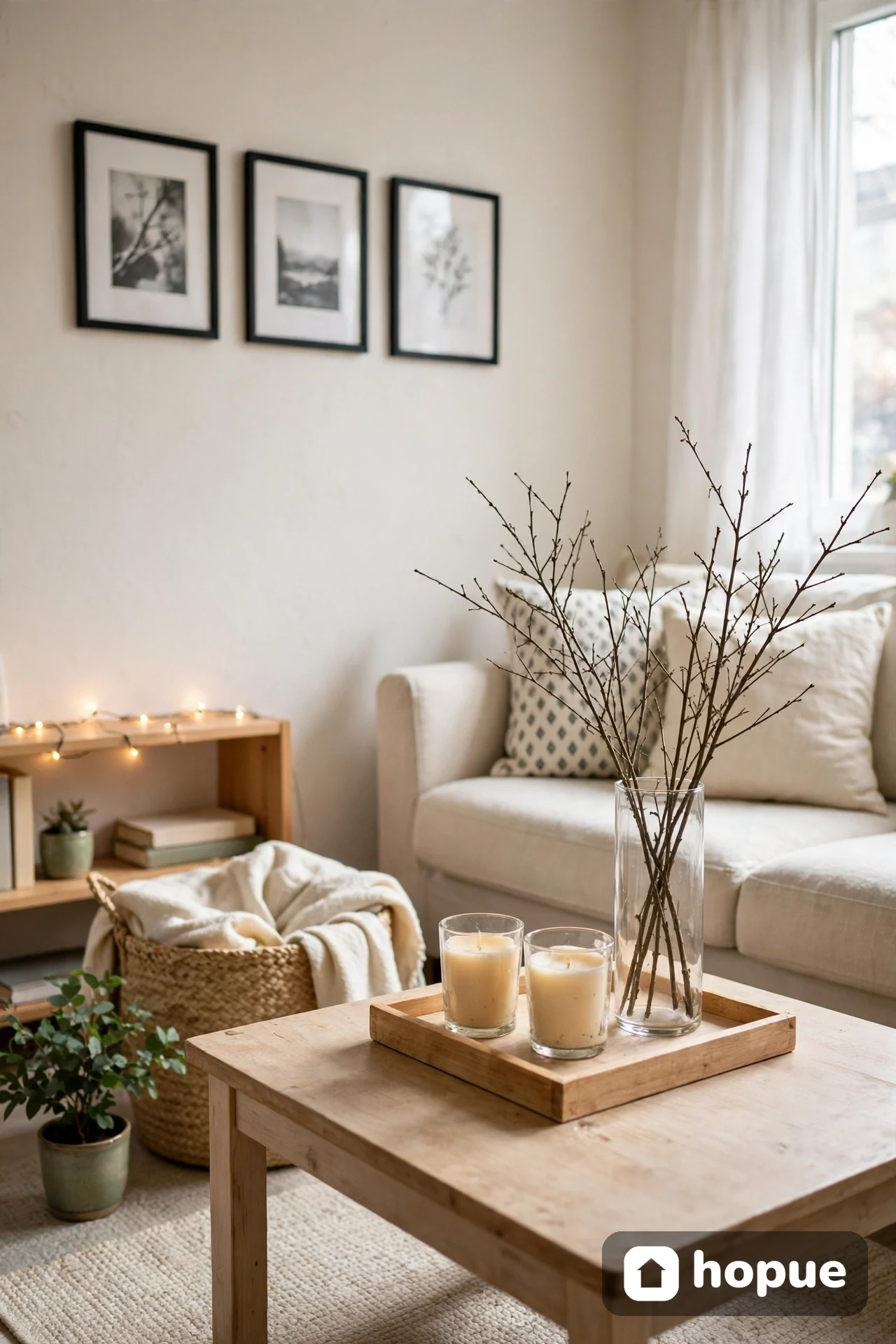
Start with the tallest plain glass vase you can find, the kind that looks a little boring on its own. Fill it with branches cut from outside, or with a few long stems from the grocery store if you would rather not forage. The branches do the work. They give you height without blocking light, and they make a bare corner feel intentional.
I keep mine on the floor beside the sofa in winter, when bare twigs look right, and move it to the dining table in spring with greener stems. Change the water if you use fresh cuts. If the vase wobbles on uneven floors, tuck a folded coaster underneath and stop worrying about it.
2. A Gallery Wall Made From Cheap Frames and Free Printables
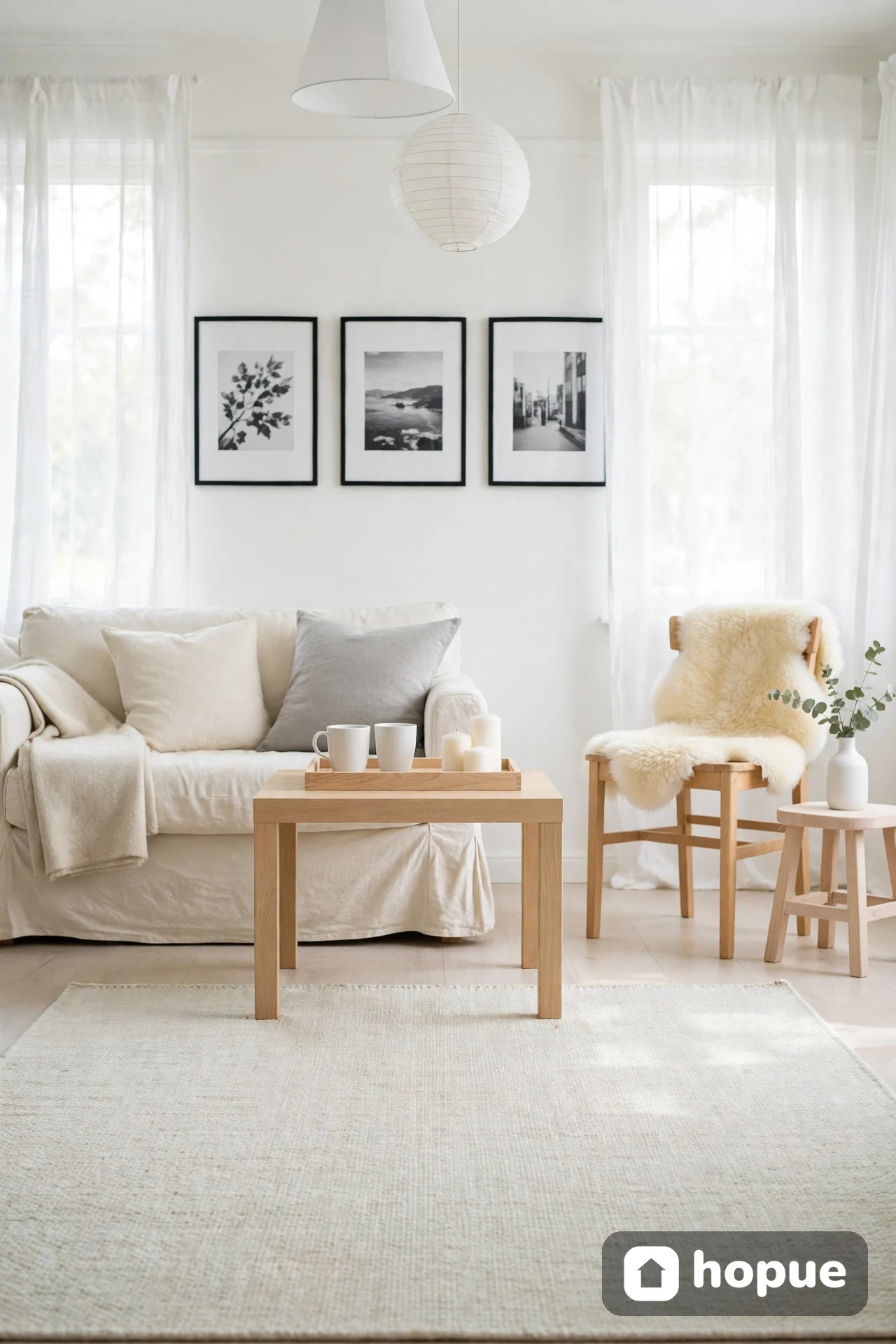
Buy frames in one finish, black or natural wood, in two sizes at most. That sameness is what makes the wall look planned instead of collected by accident. Inside them, use printables you already like, pages torn carefully from an old calendar, or black-and-white photos printed at home.
Hang them close together, with roughly a hand’s width between frames, and step back before you add another one. My first attempt had a gap in the middle that bothered me for weeks. Taking one frame down fixed it. A gallery wall does not need to be symmetrical. It needs to feel balanced when you walk past it, not perfect when you measure it.
3. A Woven Basket That Hides the Throw Blankets
Every small apartment has a blanket problem. There are too many of them, they slide off the sofa, and folding them every night gets old fast. A large woven basket solves it without looking like storage. Roll the blankets loosely, stand them up so you can see the colors, and leave the basket where you actually reach for a blanket.
Mine lives beside the armchair, not tucked in a closet. That matters. If you have to get up and hunt for a blanket, you will leave it on the floor instead. A basket in plain sight is permission to be a little untidy, in a tidy-looking way.
4. A Tray That Turns a Coffee Table Into a Vignette
A tray is a border. Put one on your coffee table, add a candle, a small plant, and whatever you reach for most — a remote, a book, reading glasses left open to the wrong page — and the table has a center instead of a scatter. When guests come over, you lift the whole tray and the table is clear in one move.
Look for a tray with a low edge and a handle if you can find one. Wood looks warm, mirrored looks brighter in a dark room. Either way, keep one corner of the tray empty. That empty patch is what stops it looking like a shop display.
5. Faux Greenery in Pots That Look Like Ceramic
The plants at dollar stores are not fooling anyone up close, but in the right pot, from sofa distance, they read as real enough, especially trailing kinds and small leafy ones. Skip the shiny plastic flowers. Choose matte green leaves, bend a stem or two so it does not sit perfectly straight, and put the plant in a heavier pot you already own or a plain pot you paint with leftover paint.
Set one on a bookshelf where a real plant would sulk in low light. That is the real win here. No watering schedule, no dropping leaves on a rented carpet, and a corner that would otherwise stay bare gets some life.
6. Candles Grouped on a Plate, at Different Heights
One candle alone can look a bit lost. Three together, on a small plate or a saucer, at different heights, look deliberate. Use a tall pillar, a short jar candle, and a tealight in a glass holder. Keep the colors close, all cream, all pale green, so the group reads as one thing.
I light only one at a time in my place, usually the jar, and leave the others as decoration. Never leave a lit candle alone in a room, and keep the plate away from curtains and the edge of the table. The plate catches wax, which is the whole practical point, and it makes the group easy to move when you need the surface back.
7. String Lights in a Jar on a Shelf
A short strand of warm battery lights, coiled loosely inside a large glass jar, gives off a soft glow that a lamp sometimes cannot. It works on a bookshelf, on top of a wardrobe, or in a corner where an outlet is awkwardly far away. The jar keeps the lights contained and stops the cord tangling with everything else on the shelf.
Use lights with a timer if you can find them, so they switch themselves off. If yours do not have one, set a phone reminder for the first week until switching them off becomes habit. In a small room, this kind of low light in the evening makes the place feel calmer than a bright overhead bulb.
8. Pillow Covers Over the Pillows You Already Own
New pillow covers are cheaper than new pillows, and they change a sofa faster than almost anything else. Slip them over the inserts you have, choose one pattern and one solid color that picks up something already in the room, and leave the third pillow alone if you have one. Not every pillow needs to match.
I made the mistake once of buying four patterned covers at once. The sofa looked loud and restless. Two patterned, one plain, and the room settled down. Wash the covers before you use them, and check the zip, because a cheap zip that catches will annoy you every time you fluff the pillow.
9. Two Mats Layered at the Front Door
A small entry feels bigger when the doorway has a little ceremony to it. Layer a larger, flat woven mat underneath and a smaller patterned doormat on top, set slightly off-center. It catches dirt, it gives you a place to leave shoes without them creeping into the living room, and it marks where outside ends and home begins.
This only works if the door can still open over both layers. Check that first, before you fall in love with the pattern. If the door drags, use one thin mat and put the second one just inside, where you step out of your shoes.
10. A Small Mirror Leaned Against the Wall
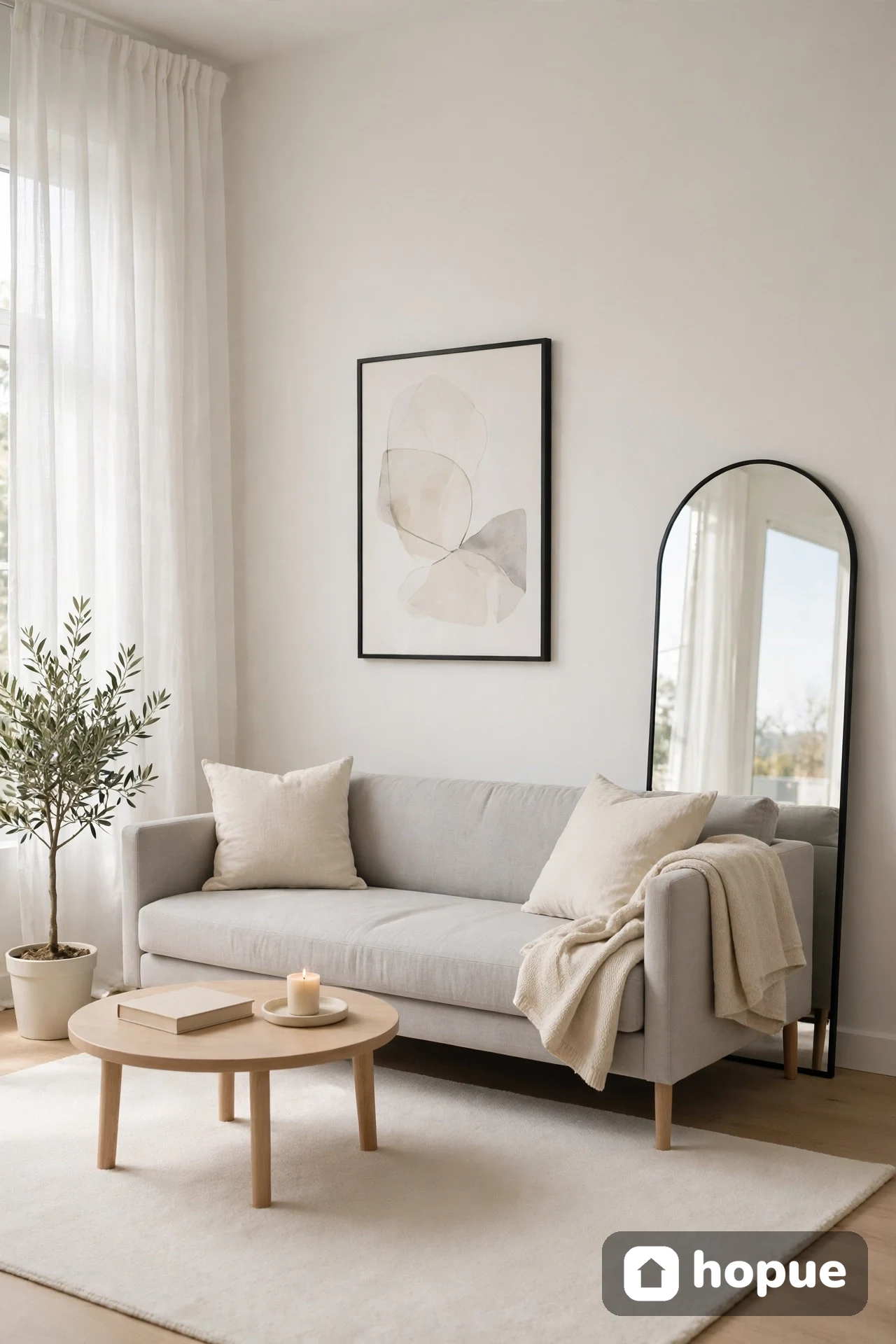
A mirror leaning on a dresser or against the wall bounces light around in a way that matters in a small, north-facing room. You do not need a huge one. A medium mirror with a simple frame, leaned at a slight angle and steadied so it cannot slide, does the job and needs no holes in the wall.
Put it where it reflects a window, not a blank wall or the inside of a closet door. And keep the glass clean, because a dusty mirror in bright light draws the eye for the wrong reason. Mine leans in the hallway and catches the morning light from the kitchen window. It took five minutes to place and I notice it every day.
11. Matching Jars on an Open Kitchen Shelf
Open shelves look messy when every jar and box is a different height and color. Decant pasta, rice, oats, and coffee into matching glass jars with plain lids, line them up with the labels facing out, and leave a gap between groups. The food becomes the decoration, and you can see at a glance what is running low.
Do not decant everything. Spices you use once a year and half-empty bags belong behind a cupboard door. Keep the jars to the handful of things you reach for daily. Wash and dry them properly before filling, and write the contents on a small piece of tape on the bottom if the jars all start to look alike.
12. Cutting Boards Leaned Against the Kitchen Backsplash
A couple of wooden cutting boards, leaned against the backsplash in different sizes, warm up a rental kitchen that is mostly white tile and stainless steel. They are useful, they are easy to wipe down, and they take up no counter space worth worrying about because they stand upright.
Choose boards with different wood tones if you can, and keep the largest one at the back. I lean mine beside the stove, not behind it, because grease splatter near a burner is a chore I would rather skip. When a board starts to look tired, a wash and a dry in the sun usually brings it back.
13. Dish Towels as the Kitchen’s Color
If your kitchen is rented and beige, dish towels are the fastest color you can add without painting anything. Hang two that match, one on the oven handle and one folded over a hook, and keep the rest in a drawer. Stripes, gingham, or a solid color that matches a mug or a plant pot is enough.
Change them with the season if you like, but do not buy a new set every month. Two good ones, washed often, look better than a drawer full of faded ones. And keep one plain towel for drying dishes, separate from the pretty ones, so you are not wiping tomato sauce on the towel you chose for how it looks.
14. Apothecary Jars and a Better Soap Bottle in the Bathroom
Bathrooms collect clutter fast: cotton pads, hair ties, cotton buds, all in their original packaging. Move them into two or three clear jars with lids, and swap the soap bottle for a plain pump bottle you refill. The counter suddenly looks like you meant it, even though nothing expensive happened.
Keep the jars small. A huge jar of cotton pads takes over a small sink. One for daily things, one for spares, and everything else in a drawer or a basket under the sink. Wipe the jars when you clean the bathroom, because water spots on glass show up quickly in bright bathroom light.
15. Rolled Towels in a Basket Instead of a Towel Rail
If your bathroom has one towel rail and two people, or no rail at all, roll clean towels and stand them in a basket on the floor or on a stool. It looks like a hotel trick because it is one, and it frees up the rail for the towel you are actually using. Guests notice it too, in a good way.
Use towels in one color family so the basket does not look like laundry waiting to happen. White is easiest, but a pale grey or sage hides water marks better. Wash the basket now and then, because bathroom humidity gets into everything, including wicker.
16. An Entry Tray and Hooks for Keys, Sunglasses, and Mail
The area by the front door is where small things vanish. A shallow tray on a console or a shelf, plus two or three adhesive hooks on the wall beside it, gives keys, sunglasses, and today’s mail a fixed home. When you come in, everything goes in the tray. When you leave, you check the tray.
Adhesive hooks need a clean, dry wall and a day to set before you hang anything heavy on them. Read the weight guidance on the packet and believe it. I use the tray for mail I still need to deal with and move old mail to a recycling bag the same evening, or the tray fills up and stops working.
17. Wooden Crates Stacked as a Side Table or Shelf
Two wooden crates, stacked on their sides or one on top of the other, make a side table with storage built in, or a low shelf for books and a plant. Sand any rough edges before you use them, because splinters are a real risk with cheap wood, and line the inside with a folded cloth if the wood is rough.
I used a crate beside the bed for a year in a studio. Books went inside, a lamp and a glass of water went on top, and when I moved, the crate carried the books to the new place. That double life is the point. In a small apartment, furniture that only does one job has to earn its floor space.
18. A Tiered Tray as a Seasonal Centerpiece
A two- or three-tier tray on a dining table or a kitchen island holds a surprising amount without taking over the surface. Put a small plant or candle on the top tier, a few seasonal bits in the middle, and everyday things like salt, napkins, or fruit on the bottom. Change only the middle tier when the season changes.
Do not overload it. A tiered tray that is packed on every level looks like a market stall. Leave space on each tier so you can see the tray itself. Mine holds a candle, a tiny plant, and a bowl of lemons most of the year, and I swap the lemons for pinecones in December and pretend that counts as decorating for the holidays. It does, honestly.
19. A Bowl That Changes With the Season
One large, shallow bowl on the dining table or coffee table, refilled every few weeks, is the lowest-effort centerpiece there is. Lemons in summer, small pumpkins in autumn, pinecones and greenery in winter, whatever is cheap and in season where you live. The bowl stays. The contents rotate.
Keep the bowl itself simple, wood or plain ceramic, so it does not fight with what is inside it. I learned to skip fake fruit after buying a bag of plastic lemons that looked shiny and wrong from across the room and sat there gathering dust for months. Real fruit you will eat, or natural things you gathered on a walk, look better. They also give you a reason to change the bowl instead of forgetting it.
20. Decorative Plates on the Wall
A few decorative plates, hung with plate hangers or adhesive disc hangers made for the job, make a wall interesting without a single frame. Mix sizes, keep the colors in the same family, and hang them in a loose cluster rather than a rigid grid. A plate wall works especially well in a dining corner or above a sideboard.
Check the weight before you hang anything, and use hangers rated for the plate. A plate that falls in the night is loud and messy. I started with three plates and added one at a time over months, which meant the wall grew the way my taste did, instead of looking bought all at once.
21. A Photo Line Clipped to String
A length of string or thin twine, fixed with adhesive hooks at each end, with small clips holding photos, postcards, and ticket stubs, is a personal wall that costs almost nothing and changes whenever you want. It suits a hallway or the wall beside a desk, where a formal frame would feel stiff.
Print photos in one size and keep the clips evenly spaced, or the line sags and looks untidy. Replace a photo when it fades in sunlight, and do not hang anything you would mind falling, because clips do loosen over time. My line holds photos from a road trip, a postcard from a friend, and a drawing my niece made. It is the wall visitors look at longest.
22. A Simple Wreath on the Door, Hung Without Nails
A wreath made from faux greenery, hung from an over-the-door hook or a removable adhesive hook, softens a plain front door and needs no holes. Keep it simple, mostly green, with one or two additions that suit the season, dried orange slices, a ribbon, a few pinecones. Too much decoration and it looks like it is trying too hard.
Check that the wreath clears the door frame when the door opens and closes. Mine brushed the frame the first time and shed leaves all over the hallway. A thinner wreath, or one hung slightly higher, solved it. Take it down and shake it outside now and then, because faux greenery collects dust faster than you expect.
23. Contact Paper to Refresh a Tired Tabletop or Shelf
Peel-and-stick contact paper in a marble, wood, or plain color can cover a scratched side table, line a shelf, or refresh the inside of a drawer. It is removable, which matters in a rental, and it costs far less than replacing the furniture. Measure loosely, cut generously, and smooth it down slowly from one edge so you do not trap air underneath.
Peel a corner back after a week in a hidden spot to check it is not leaving residue on the surface underneath. Most removable papers come off cleanly if you warm them gently and pull slowly, but test first on furniture you do not own. I used it on a chipped bedside table and kept it for two years. When I moved, it peeled off and the table underneath looked the same as before.
24. Small Planters Along the Windowsill
A windowsill is a shelf you already have. Line it with small pots of herbs or hardy houseplants, in matching pots, with saucers underneath to catch water. Herbs earn their place because you cook with them. Basil, mint, and parsley are forgiving, and they smell good when you brush past them.
Do not overwater. A windowsill plant in a pot without drainage rots quietly, and you notice only when the smell arrives. Water a little, check the soil with a finger, and move plants back from the glass on very cold nights. If a plant dies, replace it with one of the same kind rather than rearranging the whole sill. Consistency looks calmer than a new arrangement every week.
25. A Bedside Stack: Book, Vase, and One Small Object
A nightstand looks finished with three things: a book you are actually reading, a small vase with one stem or a sprig of greenery, and one small object that means something, a candle, a framed photo, a stone from a trip. Three is enough. A nightstand crowded with chargers, water glasses, and half-read mail is not a styling failure, it is just life, but the stack gives the eye somewhere to land.
Keep the vase small and stable, because a nightstand gets bumped in the dark. I use a short, heavy vase for that reason, and I never put a tall, tippy one beside a bed again after one fell over at midnight. Corral chargers in a small dish or behind the stack so they do not sprawl across the surface.
26. A Desk That Stays Tidy Because Everything Has a Cup
A small desk in a bedroom corner needs storage that sits on top, not underneath, because there is rarely room for drawers. Use a pen cup, a small jar for paperclips and hair ties, and a tiny tray for the things you use daily. Add one framed quote or photo, and stop there. The desk is for working, and a clear surface helps more than a decorated one.
Empty the cups once a week. Pens multiply, and a cup full of dead pens is not decoration. I keep five pens, two pencils, and scissors, and everything else lives in a drawer. That limit sounds strict, but it is the reason the desk still looks tidy on a Friday afternoon.
27. Lanterns and Solar Lights for a Small Balcony
A balcony with no outlet can still glow in the evening. Battery lanterns, solar string lights, and a couple of solar stake lights in planters give you light without wiring or a landlord’s permission. Set a lantern on the floor beside a chair, hang a short strand along the railing, and let the solar lights charge during the day.
Bring battery lanterns inside when it rains hard, even if the box says they handle weather. Cheap seals fail, damp ruins batteries, and I have thrown away one lantern that looked fine outside and was rusted inside the battery compartment. Check your building’s rules about anything hung on a railing before you attach lights, too. Most places are fine with a loose drape. Fewer are fine with hooks or screws, and it is a miserable conversation to have after you have already drilled nothing and still annoyed a neighbor.
28. Shelf Liner and Small Organizers Inside Kitchen and Bathroom Drawers
Nobody sees inside your drawers except you, which is exactly why lining them feels so good. A roll of shelf liner, cut to fit, plus a few small trays or boxes to divide cutlery, makeup, or junk, turns a rummage drawer into a drawer where you can find things. It also protects rented drawer bottoms from stains and scratches.
Measure the drawer by laying the liner inside and marking it, rather than trusting numbers in your head. Cut a little generously and trim in place. In the bathroom, use liner that wipes clean, because makeup and toothpaste will find it. This is not glamorous decorating, but opening a tidy drawer every morning changes how a small apartment feels.
29. Placemats Layered as an Everyday Table Runner
Placemats do not have to stay under plates. Overlap three or four of them down the center of a dining table, slightly angled, and you have a runner that costs less than a proper one and washes more easily. Use woven placemats for texture, or plain linen-look ones if the table is already busy with a centerpiece.
Keep the runner narrow enough that plates still fit comfortably on either side. If diners are elbowing the runner, it is too wide. I use this when friends come for dinner and the table needs to look like I thought about it, then I stack the placemats back in a drawer the next morning. It takes two minutes and it always gets a comment.
A small apartment does not need expensive decor to feel like home. It needs a few things chosen on purpose, placed where you will actually see and use them, and the discipline to leave the rest of the shelf in the store. Start with the room you spend the most time in, try one idea this weekend, and live with it for a week before you buy anything else. The best dollar store finds are the ones you stop noticing because they fit so well, not the ones that shout about how little they cost.
Frequently Asked Questions
Will dollar store decor look cheap in a small apartment?
It can, if everything is shiny, patterned, and new-looking at once. It usually does not when you mix one or two inexpensive pieces with things you already own, keep colors close together, and leave empty space around them. A plain glass vase, a woven basket, or matching jars read as simple, not cheap. The pieces that tend to look cheap are the ones trying hardest to imitate something expensive, glossy fake marble, glittery plastic, or flowers in colors that do not occur in nature. Choose matte finishes, natural materials where you can find them, and fewer pieces rather than more.
Are dollar store candles and string lights safe to use?
They can be, with the same care you would give any candle or light. Never leave a lit candle unattended, keep it away from curtains and the edge of a table, and put it on a plate or holder that catches wax. For string lights, check the cord and plug for damage before you first use them, do not overload an outlet, and prefer battery or LED lights for jars, wreaths, and other places where a cord would be awkward or hot. If a light strand feels warm, smells odd, or flickers, stop using it. Cheap does not have to mean careless, but it does mean you should check the item before you trust it.
How do I hang dollar store decor in a rental without making holes?
Lean things where you can, mirrors, frames, cutting boards, and plates on a sideboard need no fixings at all. For walls, use removable adhesive hooks and strips rated for the weight, applied to a clean, dry surface and left to set for the time stated on the packet before you hang anything. Over-the-door hooks work for wreaths and towels. Avoid adhesive on fresh paint, textured walls, or wallpaper, where it may pull the surface off when removed. When you move out, warm the adhesive gently and pull slowly in the direction shown on the packet, rather than yanking it off the wall.
How do I stop dollar store finds from turning into clutter?
Buy for a specific spot, not for a vague idea of someday. Before you pay, picture exactly where the item will go and what will move to make room for it. If you cannot picture the spot, do not buy it. Keep a one-in, one-out rule for decorative objects in a small apartment: a new vase means an old one goes to a friend or a donation bag. And give a new piece a week in place before you buy anything else for the same room. If you are still happy with it after a week, it earned its space. If you have already stopped noticing it in a bad way, or it is gathering dust, it probably did not.