29 Throw Pillow Styling Ideas for a Small Sofa
I once searched throw pillow styling small sofa late at night, hoping for a quick fix, and every photo showed a couch twice the size of mine. The pillows looked great in those rooms. On my sofa, the same setup left no room to sit. That was the first thing I learned: a small sofa does not need a smaller version of a big-sofa look. It needs its own rules.
Pillows still matter, maybe more on a small sofa than a big one. Two or three well-chosen pillows can make a plain rental couch feel finished, hide a tired cushion, and give you somewhere soft to lean. The ideas below are for renters who cannot swap the sofa, cannot paint the walls, and do not want to spend a lot. Pick one or two to try first. Live with them for a week before you buy anything else.
1. Start With Two, Not a Pile
Two pillows, one at each end, is the safest place to begin. It leaves the middle open for sitting, and the sofa still looks dressed. I tried five once because a photo I liked had five. Within a day, three of them were on the floor, and one ended up behind the sofa. Two stayed put.
If two feels bare after a few days, add a third. If two feels right, stop there. A small sofa looks calm when there is still empty seat showing.
2. Try the Off-Center Trio
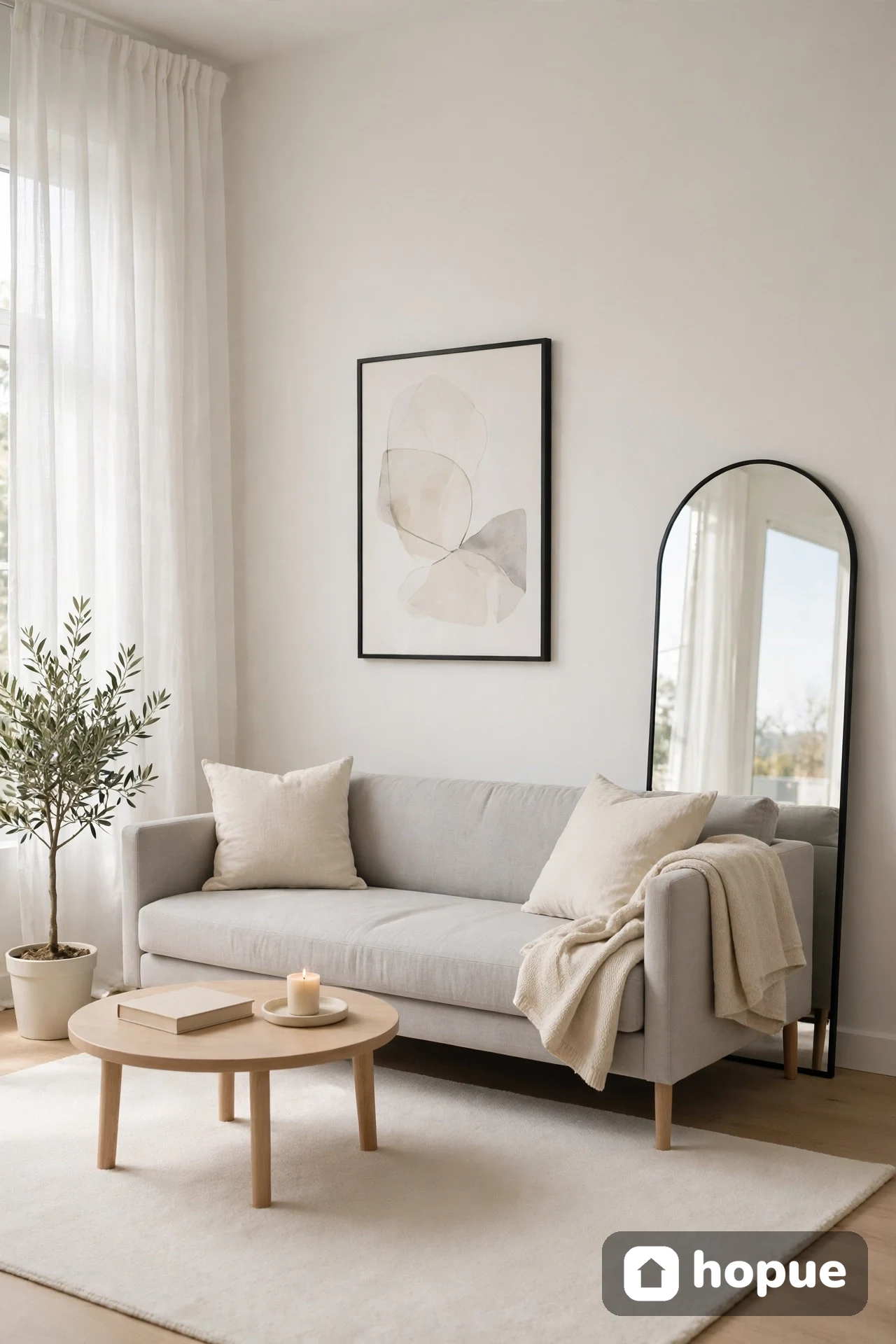
Three pillows do not have to sit in a neat row. Put two at one end and one at the other. The sofa looks relaxed instead of staged, and the heavier side can balance a lamp or a plant on the same side of the room.
This works well when one end of your sofa is the spot you always sit in. Keep the single pillow on that end thinner, so you are not fighting it every time you sit down. The pair on the other end can be fuller and softer.
3. Put One Long Lumbar in the Middle
A long, low lumbar pillow across the middle back cushion changes the whole shape of a small sofa. It fills the gap where the back cushions meet, and it gives your lower back something to lean on without adding bulk at the sides. Choose a cover in a color you already have in the room, like the rug or a curtain, so it reads as part of the sofa rather than an extra. When friends come over, it slides to one end in seconds. No fuss, no restacking.
4. Let the Rug Pick the Colors
If choosing colors feels hard, look down.
Your rug already holds the colors that work in your room, in amounts that work. Pick one color from the rug for your main pillows and a second, quieter color for a smaller accent. I did this backwards for years, picking pillows I loved in the shop and wondering why they clashed at home. The rug test fixed it. Hold the pillow cover next to the rug in daylight before you keep it. Shop lights lie.
5. Keep One Pattern, Keep the Rest Plain
One patterned pillow is plenty on a small sofa. The rest can be solid colors pulled from that pattern. This stops the sofa from looking busy, and it lets the pattern actually stand out. The pattern can be floral, checked, striped, or something with a small print you like. What matters is that it is the only one competing for attention. I have a friend who kept adding patterns because each one was pretty on its own. Together, they made her sofa look noisy. One pattern, done well, is calmer and cheaper.
6. Mix Three Textures You Can Feel
Texture does more work than color on a plain sofa. Try one smooth linen-style cover, one soft velvet-style cover, and one knit or woven cover. Even in the same color, the sofa will look layered instead of flat.
Run your hand over them before you buy, if you can. A cover that looks good in a photo can feel scratchy or slippery in real life, and you will notice that every evening. Texture also hides wear better than a flat, shiny fabric. A slightly nubby weave forgives a lot.
7. Stay in One Color Family
Pick a color family, like warm greens, dusty blues, or soft rusts, and stay inside it. Different shades of the same family look planned without looking matched. A deep green pillow next to a pale sage one looks thoughtful. A deep green pillow next to a bright orange one can look like two different rooms sharing one sofa. You do not need to be strict about it. If a pillow is close in tone and warmth, it will usually fit. If it jumps out every time you walk in, it probably belongs somewhere else.
8. Keep Patterns Small
Big, bold prints can swallow a small sofa. The print ends up bigger than the pillow, and you only see part of it. Small prints, thin stripes, and tiny checks read better at this size. They add interest without taking over. This is one place where looking at the pillow from across the room helps. Step back to the doorway and look. If the pattern still reads clearly but does not shout, it is the right scale. If all you see is one giant flower, save that cover for a bed or a larger chair.
9. Add a Stripe to Make It Look Longer
A pillow with horizontal stripes, laid across a small sofa, can make the sofa feel a little wider. It is a visual trick, and it is a gentle one.
It will not turn a two-seater into a three-seater, but it can stop a short sofa from looking boxy. Keep the stripes thin and the colors close together, like cream and soft tan, rather than high contrast. Loud stripes do the opposite. They chop the sofa into sections. One striped pillow is enough. Pair it with solids so the line of the stripe stays the star.
10. Break the Box With a Round Pillow
Sofas are all straight lines and square corners. A round pillow breaks that up in a way nothing else does. It softens the end of the sofa and gives you something different to lean on. Round pillows also work well in front of a square pillow, tucked into the corner where the arm meets the back. They tend to roll, so do not rely on one as your main back support. Think of it as the extra pillow, the one that makes the setup look less like a furniture showroom and more like someone lives there.
11. Put the Bold Pillow Where Eyes Land First
Every small living room has a spot your eyes go to first, usually the end of the sofa nearest the door. Put your boldest pillow there. It sets the tone for the whole corner, and the quieter pillows behind it support it.
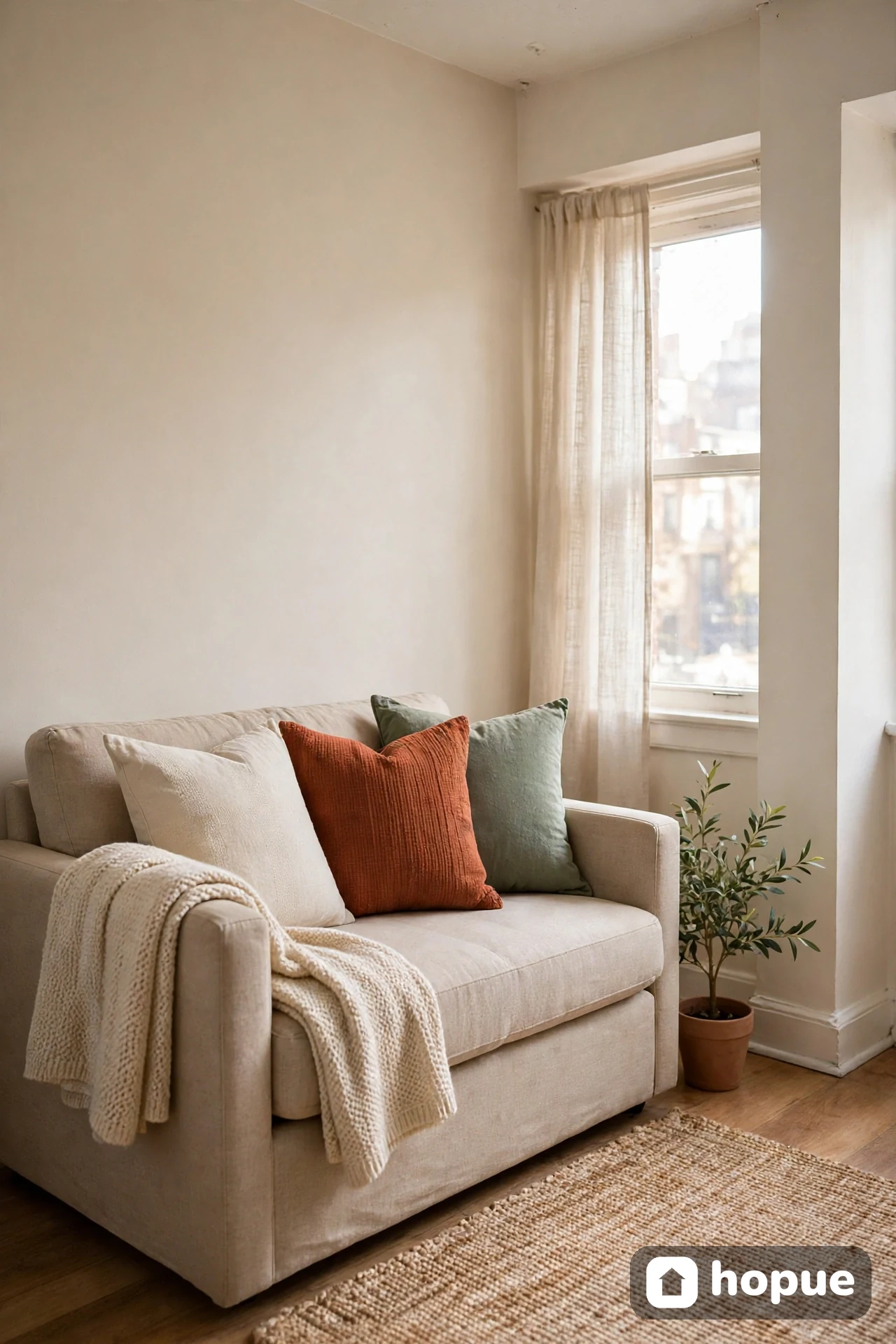
This saves money too. You only need one pillow you love in a strong color or print. The rest can be plain and inexpensive. I learned this from a neighbor whose sofa always looked expensive. She had one rust-colored pillow at the near end and three plain cream ones. That was the whole trick.
12. Use a Dark Pillow to Ground a Pale Sofa
A pale sofa can float in a light room, especially if the walls and rug are light too. One or two darker pillows, in charcoal, deep brown, or forest green, give it weight. They anchor the sofa so it does not look washed out. Dark pillows also hide marks better, which helps if you eat on the sofa or have a pet that claims one end. You do not need all dark pillows. One dark pillow at each end, with a lighter one in the middle, keeps the balance without making the sofa look heavy.
13. Lighten a Dark Sofa With Cream
The reverse works just as well. A dark gray or brown sofa can feel like a big block in a small room. Cream, warm white, or pale oatmeal pillows lighten the top edge of the sofa and make the room feel airier. Keep the cream pillows at the front, where the light hits them, rather than buried at the back. And be honest about your habits. If you drink coffee on the sofa every morning, choose washable cream covers. A beautiful pillow you are afraid to lean on is not doing its job.
14. Cover a Worn Spot on Purpose
Pillows can hide the parts of a rental sofa you wish were not there: a faded arm, a sagging cushion, a small mark you did not cause. Place a pillow squarely over the spot, not half over it. A half-covered mark draws more attention than the mark itself.
This is not cheating. It is what pillows are for in a rented home. Just check the pillow now and then. If it slides and the spot shows again, a slightly larger or firmer pillow will stay in place better than a soft, flat one.
15. Match the Throw, Don’t Copy It Exactly
A throw blanket and pillows in the exact same color and fabric can look like a set you bought in a hurry. Close is better than identical. If your throw is mustard, try pillows in cream and olive, with maybe one small mustard accent. If the throw is chunky knit, try smooth pillow covers so the textures contrast. The throw and pillows should look like they belong together, not like they came out of the same box. Drape the throw over one arm, keep the pillows at the other end, and let the eye travel between them.
16. Pull a Color From Your Art, Not the Sofa
Look at the art, photo, or poster above or near your sofa. Pick the smallest color in it, the one you barely notice, and use that for a pillow. It ties the wall and the sofa together in a way that feels clever without trying too hard. A tiny bit of terracotta in a print becomes a terracotta pillow, and suddenly the whole wall looks planned. This works with books too. A row of books on a shelf can give you a color you had not thought of. It is a good fix when your sofa color gives you nothing to work with.
17. Swap Covers, Keep the Inserts
You do not need new pillows for a new look. Keep good inserts and swap the covers. Covers are cheaper, easier to store, and easier to wash.
This is the single best budget habit for small-sofa styling. Buy inserts once, in a size that fills the cover well, and change covers with the seasons or when you get bored. A flat, tired insert makes even a nice cover look sad, so replace inserts when they stop springing back. Two sets of covers and one set of inserts will carry you through the year.
18. Thrift the Covers, Splurge Nowhere Else
Secondhand shops, estate sales, and online resale listings are full of pillow covers someone else got tired of. Since covers wash well, this is a low-risk place to thrift. Look for sturdy fabric, working zippers, and colors that fit your room. Skip anything with a smell that survives a wash or a stain in the middle of the front. I found a pair of linen-look covers for very little, and they outlasted a new pair I paid much more for. Thrifting also lets you try a color you are unsure about without much risk.
19. Add Trim You Can Take Off Later
Pom-pom trim, tassels, and piping can make a plain pillow look special, but they can also be a commitment. Look for trim that ties on, or add clip-on tassels you can remove when you wash the cover. That way you can try a playful look without ruining a cover you like. Trim works best on one pillow only. Trim on every pillow turns cute into clutter fast. Put the trimmed pillow at the front, where the detail shows, and keep the pillows behind it plain. When you get tired of the trim, take it off. The pillow underneath is still good.
20. Build a Reading Corner at One End
If you read on your sofa, dedicate one end to it. Stack a firm square pillow against the arm, add a smaller soft pillow in front of it, and keep a throw within reach. That end becomes your spot, and the rest of the sofa stays tidy for other people.
The firm pillow behind you stops you sliding down. The soft one in front is for hugging or propping a book. Do not use your best decorative pillow here. Use one you are happy to squash every night. A reading corner that looks perfect but hurts your back is not a reading corner.
21. Choose Washable When There’s a Dog or Cat
Pets and throw pillows can share a sofa, but only if the covers can be washed. Look for covers that unzip fully and survive a normal wash without shrinking into a different shape. Darker colors and busy small prints hide pet hair between washes. Avoid loose fringe and dangling tassels if your cat sees them as toys. Mine did, and the tassels lasted a week. Keep one spare cover for the pillow your pet favors. When one is in the wash, the sofa does not look half-dressed.
22. Style a Sofa Bed Without the Bulk
A sofa bed needs pillows you can move fast at bedtime. Too many pillows means a pile on the floor every night, and a pile on the floor means you stop bothering.
Keep it to two or three pillows, all light enough to toss onto a chair. Use covers that feel good against skin, since these pillows may double as sleeping pillows in a pinch. During the day, stand them upright so the sofa still looks like a sofa. At night, they come off, the bed comes out, and nothing is in the way. Simple wins here.
23. Pile Them in the Corner for Lounging
For a lazy evening, pile two or three pillows into one corner of the sofa and lean into them. It is not a formal look, but it is honest, and it is comfortable. The corner pile works best on a sofa with a chaise end or a deep corner seat, where the pillows can nest without sliding. Keep the other end of the sofa clear, with just one pillow, so someone else can still sit properly. When the evening is over, the pile flattens back into a normal setup in under a minute. Comfort first, photo second.
24. Layer Big Behind, Small in Front
Layering is just putting a larger pillow behind a smaller one. The big pillow gives height and support. The small one in front adds color or pattern where it can be seen.
On a small sofa, keep the size difference clear but not dramatic. If the front pillow is too small, it disappears. If it is nearly the same size, the pair looks like one messy lump. This layering also helps when your back cushions are low. The big pillow behind lifts the line of the sofa, and the small one in front keeps it from looking like you propped up a spare cushion.
25. Mind the Scale: No Pillow Bigger Than a Cushion
Here is a quick check that saves a lot of trial and error. A pillow should not be much bigger than the seat cushion it sits on. When a pillow covers the whole cushion, you lose the seat. When it is far smaller, it looks lost. Hold the pillow up against the back cushion before you commit. If it covers most of the back cushion and still leaves seat room, it is about right. Oversized pillows look great in photos of large sofas. On a small sofa, they eat the very space you bought the sofa for.
26. Give Your Lower Back Its Own Pillow
A small, firm pillow placed low, right where your lower back meets the seat, can make a shallow sofa much more comfortable. This is different from a decorative pillow leaned high against the back. It sits low and stays put while you sit.
Choose a plain cover in a color that blends in, because this pillow is working, not showing off. If it keeps sliding down, tuck it slightly behind the seat cushion. A pillow that helps your back is worth more than a pillow that only looks good, and guests will thank you for it too.
27. Give Spare Pillows a Basket Home
Not every pillow has to live on the sofa. Keep spares in a basket beside the sofa, within arm’s reach. The basket holds the extra pillows, keeps them off the floor, and looks intentional. When you want a softer evening, pull one out. When guests arrive, the spares are already out of the way. Choose a basket that fits the space beside the sofa without blocking a walkway. A basket that sticks out into the room will get kicked daily. This also solves storage in a small apartment, where there is rarely a closet shelf to spare.
28. Rotate Pillows With Your Bedding
Your bedroom and living room do not need separate pillow wardrobes. Rotate covers between the bed and the sofa when you change your bedding. A cover that felt tired on the sofa can look fresh on the bed, and vice versa. This keeps both rooms feeling new without buying anything.
Just keep the fabrics suited to each spot. A delicate cover that works on a bed may not survive daily sofa use. Check that the sizes match before you swap. A bed pillow cover on a square sofa insert will bunch and look wrong.
29. Take One Away Before Guests Sit Down
Before people arrive, take one pillow off the sofa. It sounds backwards, but guests need seat space more than they need styling. A small sofa with one fewer pillow feels welcoming. People can sit without moving pillows aside or holding one on their lap. Keep the removed pillow in the basket from the last idea, so it is still part of the room. When guests leave, put it back. Styling that gets in the way of sitting is styling for a photo, not for a home. Your sofa has to work first.
A small sofa does not need many pillows, and it does not need expensive ones. It needs a few covers in colors that already live in your room, in sizes that leave room to sit, and in fabrics you are happy to lean on every day. Start with two, try one idea at a time, and keep the pillows that earn their place. The rest can go in the basket.
Frequently Asked Questions
How many throw pillows should I put on a small sofa?
Two or three is the honest answer for most small sofas. Two leaves plenty of sitting room. Three works if one is a lumbar or a small front pillow that does not eat seat space. More than that, and you will spend your evenings moving pillows before you can sit down. If you love the look of more pillows, keep the extras in a basket nearby instead of on the sofa itself.
Should I keep the pillows that came with my sofa?
Only if you like them and they fit the room. Matching pillows that came with the sofa often match the sofa fabric exactly, which can make the whole thing look flat and heavy. Try keeping one and pairing it with pillows in a contrasting texture or color. If the included pillows are thin or lumpy, replace them. You do not owe a sofa set loyalty. Keep what works, and let the rest go.
How do I stop my throw pillows from sliding down all day?
Start with firmer inserts, because soft, flat pillows slide first. Place the pillow so its bottom edge tucks slightly behind the seat cushion, and lean it against the arm or the corner rather than the flat middle of the back. A textured cover grips better than a slippery one. If one pillow keeps sliding, it may be the wrong size for that spot. Swap it to the other end or use it as a front layer pillow instead.
Can I style pillows on a sofa bed I sleep on every night?
Yes, but keep it to two or three light pillows you can move in seconds. Avoid heavy or fussy pillows that end up on the floor and stay there. Choose washable covers, since these pillows will get daily use, and stand them upright during the day so the sofa still reads as a sofa. At night, move them to a chair or the basket beside the bed. If moving them feels like a chore, you have too many.
My sofa is a plain rental beige. How do I make pillows look intentional?
Pick one color from something else in the room, like the rug, art, or a blanket, and use it for at least two pillows. Add a third pillow in a neutral that matches the sofa, so the colored pillows look like a choice rather than a random add-on. Keep the textures mixed and the patterns to one. Beige sofas take color well, so you do not need to be timid. The intentional part is repetition: the same color showing up in more than one place.