29 Windowsill Decor Ideas for a Small Apartment
A windowsill is easy to ignore. It collects dust, a spare key, and a plant that looked hopeful in the store and tired a week later. In a small apartment, though, that narrow strip is free surface space, and it sits in the best light in the room. You do not need to buy a shelf or drill a hole to use it. A few things you already own, placed with a little care, can make the window feel finished instead of forgotten.
Windowsill decor for a small apartment works best when it respects what a windowsill actually is. It gets hot in summer sun and cold and damp in winter. Water can drip, soil can spill, and a landlord will notice a stained sill or a cracked pane long before they notice how pretty the arrangement looked. The ideas below are all removable and renter-safe, and most of them cost little or nothing. Pick one, live with it for a week, and add to it only if the sill still feels bare.
1. Start With One Trailing Plant and Nothing Else
One plant is enough. A pothos or a trailing philodendron in a plain pot, set toward one end of the sill, gives the window a shape without crowding it. Let a few vines hang over the front edge. That soft drop makes a boxy window feel less hard, and it costs less than a whole row of plants you then have to keep alive.
Put a saucer under the pot, even if the pot looks watertight. I learned that the hard way in a place with a painted sill. Water found its way out after a heavy watering, sat under the pot, and left a ring I spent an afternoon scrubbing before move-out. A saucer, lifted and wiped now and then, is the whole trick. Check the light, too. A plant that wants bright light will sulk on a north-facing sill, and a shade lover will scorch on a south-facing one in July. Start with the plant, watch it for two weeks, and let it tell you whether the spot suits it.
2. Grow a Kitchen Herb Trio You Will Actually Use
Basil, parsley, and chives earn their place because you cook with them. Three small pots in a row on a kitchen sill look tidy, and snipping leaves while dinner is on the stove feels like a small luxury in a rented kitchen. Buy the herbs you already reach for in the store. Mint is tempting, but it takes over a pot fast and its smell can overpower a small kitchen, so give it a pot of its own if you love it.
Water them over a tray or a folded towel. Kitchen sills get splashed, and soil in the sink drain is no fun to fish out. Turn each pot a quarter turn every few days so the plants do not all lean hard toward the glass. If one herb dies, replace just that one. A trio does not have to match forever. In winter, when light drops off, move the weakest plant to the brightest window you have for a few weeks rather than buying a grow light you have nowhere to store.
3. Line Up Succulents in Matching Tiny Pots
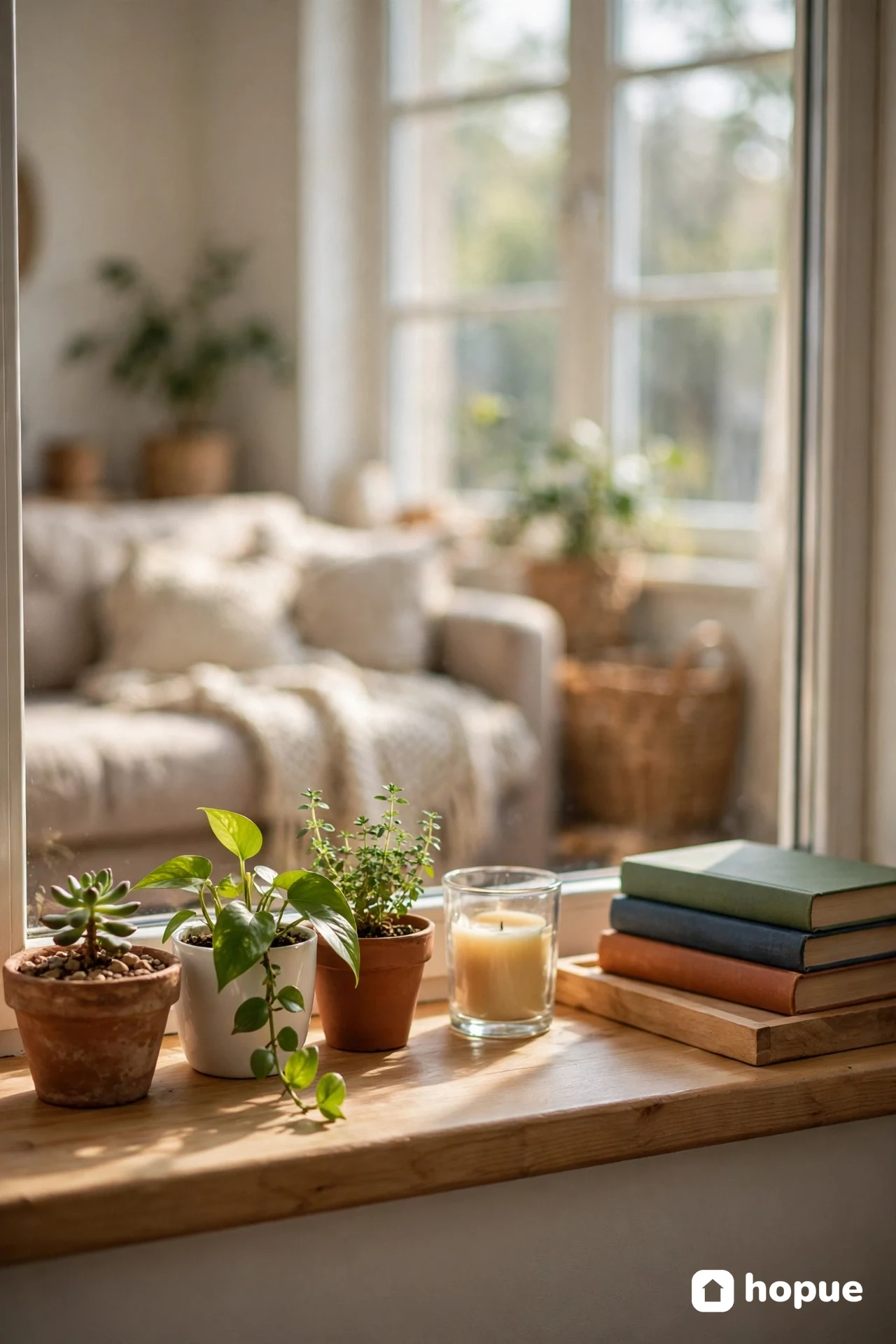
Succulents suit a sunny sill and a forgetful waterer. A row of three or four in matching pots reads as one calm display instead of a jumble of odd containers. Terracotta works well because it dries out between waterings, and the warm color looks good against white trim. Small pots are the safer bet here. A big pot on a narrow sill is an accident waiting for an elbow.
Sun is the catch. A succulent in strong, direct sun can sunburn, with pale patches that do not heal, while the same plant in too little light stretches tall and floppy. A sill that gets bright light for part of the day, with a break at midday, is often the sweet spot. Rotate the pots now and then so they grow evenly. And do not water on a schedule. Stick a finger in the soil first. If it feels damp, wait. Most succulents die from too much kindness, not too little.
4. Set Up a Propagation Station in Glass Jars
Cuttings in water are free decor. Snip a stem from a pothos, a tradescantia, or a herb, drop it in a jam jar or a thrifted bottle, and set it where you can see the roots form. It is the kind of thing guests ask about, and it costs nothing beyond a jar you were about to recycle. Use jars of different heights for a bit of variety, but keep them in a group so a knocked jar does not roll far.
Change the water when it looks cloudy. Slimy water smells, and it will not help the cutting root. Set the jars back from the very edge of the sill, especially if the window opens inward and the sash swings past. I keep mine toward the middle of a deep sill and the ends clear, so I am not reaching past glass jars to open the window on a hot night. When roots are long enough, pot the cutting up or gift it. A windowsill full of jars you never pot up starts to look like a science project.
5. Anchor One End With a Tall Plant
A tall plant at one end gives a wide window balance. A snake plant or a tall, upright fern in a simple pot draws the eye up and makes the rest of the sill feel intentional, even if the rest holds only a book and a candle. Place the tall plant on the side where the window frame gives it some shelter from drafts, not right against a curtain that will brush its leaves every time you pull it shut.
Weight matters here. A tall plant in a light plastic pot can topple when the window is open and a gust comes through. Use a heavier pot, or set the plastic pot inside a ceramic one. Check that the leaves do not press against the glass. Leaves stuck to a cold pane in winter can get damaged, and condensation sitting on a leaf invites mold spots. Leave a finger-width gap of air between plant and glass, and you avoid most of that trouble.
6. Use a Stack of Books as a Riser
A stack of two or three hardcover books lifts a small plant or candle above its neighbors and creates height without buying a stand. It works best with books you actually like looking at, spines facing out, in colors that sit well together. A small succulent on top of a book stack reads as a deliberate display. A candle on top needs more care, which is covered below, so keep this one for plants and objects that do not get hot.
Books on a sill get sun-bleached. Spines fade, pages yellow, and a beloved paperback can warp if condensation drips on it. Use books you would not mind aging a little, or turn the stack so the spines face the room and the pages face away from direct sun. Do not stack books so high that they wobble when you open the window. If the stack rocks when you nudge it, take a book off. A stable, low stack beats a tall, nervous one every time.
7. Corral It All on a Wooden Tray
A tray turns a scatter of objects into a group. Set a wooden tray, a baking sheet you no longer use for food, or a shallow basket on the sill, and put your plants and candle inside its edges. When it is time to clean the window or wipe the sill, you lift one tray instead of moving five separate things. When you move out, the tray comes with you and the sill underneath is still clean.
Choose a tray that fits the sill with room to spare at the front and back. A tray that hangs over the edge looks wrong and catches hips and sleeves. Wood can stain from water, so line it with a folded cloth or a piece of cork if you will water plants on it. I keep a cheap cork trivet under my tray. It is ugly on its own, but nobody sees it, and it has saved the wood from more than one overwatering. If the tray starts to smell damp, take everything off and let it dry fully before you put it back.
8. Keep Candles on a Heat-Safe Tray, Well Away From Curtains
A candle on a windowsill can look lovely and go wrong fast. Curtains move. A breeze lifts a sheer panel, and suddenly fabric is near a flame. Any real candle belongs on a ceramic plate or a metal tray, set well clear of curtains, blinds, and anything that can catch. Never leave it burning when you leave the room, and never let it burn down to the bottom of the jar on a painted sill. Heat can bubble paint and scorch wood, and that damage comes out of a deposit.
Trim the wick before you light it, and keep the candle away from the glass on a hot day. A jar in full sun can get hot enough to soften wax even unlit, and a candle left in a sunbeam can slump to one side. I keep candles on the shadier end of my sill and move them to a table when I actually want to light one for the evening. That sounds fussy. It is also how a candle stays a pleasure instead of a worry. If your lease bans open flames, take that rule seriously and use idea nine instead.
9. Switch to Battery Candles on Drafty Sills
Battery candles solve the draft problem. A window that rattles or a sill near an air vent will blow a real flame around and melt wax unevenly. A battery pillar or a set of small tea lights gives the same warm glow at night without a flame near curtains, pets, or a sleeping cat who likes to patrol the sill at midnight. Many come with a timer, so they switch themselves off after a few hours.
They look best in a real glass holder or a lantern, not sitting bare on the sill where the plastic base shows. Group two or three at different heights, and keep one real candle look-alike out of direct sun, since cheap plastic can warp in a hot window. Change the batteries before they leak. A leaking battery on a painted sill is a stain you will find months later. Battery candles are not a lesser choice here. On a drafty rented sill, they are often the sensible one.
10. Lean a Small Frame Against the Glass
A small framed print or photo, leaned against the window frame rather than hung, adds personality without a nail. Lean it at a slight angle, with the bottom edge on the sill and the top resting lightly against the frame or glass. A black-and-white photo, a postcard from a trip, or a small print in a thrifted frame all work. Size matters here: it should not block much light. The window is still a window.
Check the back of the frame now and then. Condensation can collect behind a frame pressed flat against cold glass, and paper inside can cockle or spot. Leave a small gap for air, and do not lean a valuable original or an old family photo against a window that sweats in winter. Use a copy. If the frame slides when the window opens, put a small piece of museum putty or a non-slip pad under its bottom edge. Both come off cleanly, and both stop the slow slide that ends with a frame on the floor.
11. Put One Stem in a Thrifted Vase
One stem is a whole arrangement. A single eucalyptus sprig, a dried flower, or a fresh stem from the grocery store in a thrifted vase looks calm and finished, and it costs very little. Tall, narrow vases suit narrow sills because they take up almost no depth. A bud vase with one stem also means you are not trying to keep a big bouquet alive in a glass that tips over every time the window opens.
Water in a vase on a sill evaporates fast in sun, so top it up and change it when it clouds. Dried stems skip that chore entirely and suit a sill that gets harsh afternoon sun, where fresh flowers wilt by evening. If you use a heavy glass vase, set it toward the back of the sill, not at the front edge where a sleeve can catch it. A vase that falls from a sill usually takes the sill paint with it. One stem, one vase, plenty of empty sill around it. That empty space is part of the look.
12. Rotate One Seasonal Object, Not a Whole Display
You do not need four full seasonal displays. Leave your everyday sill alone, and swap a single object with the season. A small pumpkin in fall, a sprig of evergreen in winter, a tiny vase of cherry blossom branches in spring, a shell in summer. One change is enough to mark the season, and it takes five minutes and a single storage box for the off-season piece.
Store the seasonal object somewhere dry. A damp basement box will mildew a fabric pumpkin and warp a wooden one. And keep seasonal items off a sill that sweats. A paper decoration stuck to wet glass tears when you peel it off, and a pinecone left sitting in condensation can stain. Set seasonal pieces on a tray or a cloth, and check under them after the first cold night. If the sill is wet underneath, move the piece back a little from the glass. Small swaps stay fun when they do not create cleanup.
13. Run a Short String of Lights Along the Sill Edge
A short string of warm fairy lights along the front edge of the sill glows nicely on dark winter evenings, and it needs no outlet on the sill itself if you use a battery pack tucked behind a plant. Run the lights along the edge, not across the glass, so you can still open the window and clean it. Use small clips or removable hooks on the frame if you need to hold the wire, and test the adhesive on a hidden spot first. Some removable hooks peel paint if they sit in hot sun for months.
Water and real candles are the two things to keep lights away from. A string draped through a plant you water often will get wet, and wet plugs are not worth the risk. Battery lights also avoid a cord trailing down the wall to an outlet, which is one more thing to trip over in a small room. When the season passes, take them down and coil them loosely. Lights wound tight around a card tangle, and tangled lights are lights you will not bother putting up next year.
14. Let Plants Do the Privacy Work
If your window faces a neighbor or a walkway, plants can soften the view in without shutting out light. A row of leafy plants at mid-height breaks up the sightline while still letting daylight through around and between the leaves. It feels less closed-in than keeping blinds shut all day, and it gives you something green to look at instead of a blank blind. This works best on a sill that gets enough light for the plants to stay full. A sparse, leggy plant does not give much privacy at all.
Do not rely on plants alone for a bedroom or bathroom window at night. With lights on inside, people outside can still see in past the leaves. Use a sheer curtain or a removable privacy film for night privacy, and let the plants handle the daytime softening. Check your lease before you put up film, since some landlords do not want anything stuck to the glass, even if it peels off. Plants, by contrast, are almost always fine. They leave no mark, and they move with you.
15. Treat a Deep Sill Like a Shelf
Older buildings sometimes have deep sills, wide enough for a row of books or a small plant and a candle side by side. Treat that depth as a shelf, and layer it. Put taller things at the back, near the glass, and shorter things at the front, so you can see everything from the room. A deep sill can hold a small stack of books, a plant, and a dish without looking crowded, as long as each thing has breathing room.
Depth brings its own chores. Dust settles at the back, where it is hard to reach, and water can pool where you cannot see it. Pull everything off once a month and wipe the whole sill, back to front. Check for condensation at the back corners after cold nights, and dry them before paint starts to bubble. And remember that a deep sill is still a window ledge, not a storage shelf. If you pile it with boxes and spare chargers, the window stops opening easily, and that is a safety problem, not just a style one.
16. Keep a Narrow Sill to a Single Slim Row
A narrow sill is not a failed deep sill. It is a different surface, and it wants a single slim row. One line of small things, a tiny succulent, a candle, a small frame, set in a straight line with space between them, looks neat and stays safe. Anything that overhangs the front edge will get knocked. Anything too deep will block the window handle or press against the glass.
Choose flat-bottomed pieces that sit steady. Round-bottomed pots and wobbly vases have no business on a narrow sill. The heaviest piece goes toward the middle, where it is least likely to be brushed, and the ends stay clear for your hands when you open and close the window. If you love a piece that is too deep for the sill, put it on a table under the window instead. Forcing it onto the sill is how things break. A narrow sill with three good pieces beats a wide sill crammed with ten.
17. Make the Kitchen Sill Work for Cooking
A kitchen windowsill can hold the small things you reach for while you cook, as long as grease and steam do not ruin them. A small dish for a sponge, a bottle of dish soap in a plain dispenser, a wooden spoon rest, and a herb pot are all at home here. Paper, cloth, and anything that will soak up grease stays off this sill. A dish towel draped over a kitchen sill picks up splashes and smells, and it ends up in the wash every other day.
Wipe this sill more often than any other in the apartment. Cooking steam leaves a film, and that film traps dust. A quick wipe while the kettle boils keeps it from building up. Keep anything you will put near food, like a soap dispenser or a herb pot, away from cleaning sprays stored on the same sill. I keep cleaning products under the sink and only the cooking things on the sill, so I never grab the wrong bottle with wet hands. If your kitchen window opens over the sink, leave room to reach the handle without moving everything first.
18. Style the Bathroom Sill for Steam and Splashes
Bathroom sills live in steam. Anything you put there needs to like humidity or at least tolerate it. A small plant that enjoys damp air, a bundle of eucalyptus tied with string, a glass jar of cotton pads with a lid, and a small candle in a lidded jar all do well. Paper prints, untreated wood, and metal that rusts do not. A framed photo in a steamy bathroom will cockle, and a metal tray will spot.
If the sill sits over a tub or near a shower, pull things back from the splash zone. Soap and shampoo splashes leave a film that is hard to clean off wood and fabric. A lidded jar keeps cotton pads dry and looks tidier than an open bowl. If the window fogs up every morning, wipe the sill dry after showers and leave the window cracked when you can. Standing water on a bathroom sill feeds mold in the corners, and mold on a sill is a landlord conversation nobody wants. Choose pieces you can pick up in one hand and wipe under in seconds.
19. Add a Mirror to Bounce Light Back Into the Room
A small mirror leaned on the sill bounces daylight back into the room and makes a small space feel brighter. A round mirror in a simple frame, or a rectangular mirror leaned against the glass at a slight angle, catches the window light and throws it onto the opposite wall. It also reflects the plants on the sill, so the display looks fuller than it is. A small, steady mirror, angled so it does not throw a hard sunbeam onto a sofa cushion or a television screen, is what you want.
A mirror on a sunny sill can focus sunlight the way a magnifying glass does. That is not just a saying. A curved mirror, or a flat mirror angled just so on a bright day, can scorch fabric or overheat a plant leaf. If you see a bright hot spot moving across the room as the sun moves, adjust the angle or move the mirror to a shadier window. Check the frame, too. A mirror that slides will chip the sill. A non-slip pad under the bottom edge and a gap for air behind it keep it steady and dry.
20. Give the Entry Window a Catch-All Dish
If your front door sits near a window, the sill by the door is a natural landing spot. A shallow dish for keys, sunglasses, and loose change stops those things from wandering all over a small apartment. Choose a dish with some weight, so it does not slide when you drop keys into it one-handed. A ceramic dish, a small wooden bowl, or a thrifted saucer all work. One dish is the limit. Two dishes become a junk corner.
Empty the dish once a week. Keys and coins scratch a painted sill if the dish slides, so put a felt pad under it. And do not leave anything valuable in plain sight on a street-facing sill. A dish of keys by a ground-floor window is an invitation to a break-in if someone can see it from outside. If the window faces the street, use the dish for sunglasses and a lip balm, and keep keys on a hook by the door instead. The sill still looks styled, and nothing worth stealing sits in the window.
21. Show One Collection in a Shallow Bowl
Shells from a beach trip, smooth stones from a hike, sea glass, or a handful of vintage buttons all look better gathered than scattered. Put one collection in a shallow bowl or a low dish on the sill, and leave the rest of the sill empty around it. A collection tells a story when it is grouped. The same shells spread across three sills just look like clutter you forgot to put away.
A shallow, stable bowl is the one to use. A deep bowl on a sill hides what is inside it, and a tippy bowl spills stones onto the floor, where they roll under furniture. If the collection includes anything fragile or valuable, think twice about a sunny, public-facing sill. Sun fades fabric and paper, and a ground-floor window puts small treasures in view. My own bowl holds stones and shells only, things I would not mind losing. The pieces that matter to me live on a shelf inside the room, where sun and strangers cannot reach them.
22. Rest a Small Clock Where You Will See It in the Morning
A small clock on a bedroom windowsill earns its place if it is the first thing you see when you wake up. A simple analog clock, a small digital one with a dim display, or a thrifted wind-up clock all work. Keep it low and toward the back, so morning light does not glare off its face and you are not squinting to read it. The point is a calm glance, not a bright screen.
Do not use a clock with a loud tick if you are a light sleeper. That tick sounds charming in a store and maddening at three in the morning. A silent-sweep clock costs about the same and will not keep you up. If the clock runs on batteries, change them before they leak, and keep the clock out of the direct path of condensation. Water and battery compartments do not mix. A clock is a practical object. Let it look practical, and let the plants do the decorating around it.
23. Lay a Folded Cloth Under the Display
A folded cloth under your display softens the sill and protects it at the same time. A linen napkin, a small tea towel, or a piece of fabric cut to fit, folded in half, gives plants and objects a base that stops scratches and soaks up the odd drip. It also lets you change the feel of the sill with the season by swapping the cloth, without moving anything else. A plain cream cloth in summer, a deeper rust or green one in fall.
Choose a cloth you can wash. A decorative runner that cannot be washed will end up stained and you will feel guilty throwing it away. Wash the sill cloth with your regular laundry, and check under it for dampness when you lift it. A cloth left damp on a painted sill can trap moisture and lift paint. I fold mine so the edges sit inside the sill, not hanging over the front, where they catch on curtains and get pulled down. Small detail, big difference in how tidy it stays.
24. Repeat One Color and Let Everything Else Stay Plain
Pick one color and repeat it three times across the sill. Terracotta pots, a terracotta candle holder, and a book with a terracotta spine. Or sage green in a plant pot, a vase, and a cloth. The repetition ties the display together without matching sets or a shopping trip. Everything else stays plain: white, wood, glass, cream. The eye reads the repeated color as intentional, even if the objects came from different places at different times.
Do not repeat the color everywhere in the room to match. One color on the sill, echoed maybe once nearby, is enough. A whole room in terracotta starts to feel like a theme park. And be honest about sun fade. Bright reds and deep blues fade fastest on a sunny sill. A muted, earthy version of your color will hold up better and look softer as it ages. If a pot fades unevenly, turn it. The faded side faces the glass, and nobody in the room is any wiser.
25. Stand Books Upright and Let a Plant Hold the End
Books do not have to lie flat. Stand three or four upright on a deep sill, like a tiny shelf, and use a potted plant as a bookend at one end. The plant’s weight holds the books steady, and the mix of spines and leaves looks like a real shelf, not a stack you ran out of room for. Choose books of similar height so the row looks settled, and put the tallest book at the back of the row if the sill slopes at all.
Watch the weight and the balance. Books leaning against a light pot will push it over. Use a heavier pot, or put a proper bookend at the other end and let the plant sit beside the books instead of holding them. Books on a sill also get dusty at the top, and sun hits the top edges first. Dust them when you dust the sill, and turn the row now and then so one book does not fade while the others stay bright. If the books start to lean, the row is too long for the space. Take one out.
26. Turn the Sill Into a Birdwatching Perch
A window with a view of a tree or a yard can be a birdwatching spot, even in a city apartment. A small pair of binoculars on the sill, a field guide or a notebook beside them, and enough clear sill to lean on comfortably is all it takes. You do not need a feeder to enjoy this. Watching sparrows argue over a branch is free, and it gives a window a purpose beyond light and air.
Do not put a feeder right against the glass if birds will fly into the window. If you want a feeder, hang it well away from the glass or use a suction feeder placed with care and a window decal to warn birds, and check local advice for your area. Direct sun is bad for binoculars, since heat can damage the seals and the lenses. I keep mine in a soft case on the shadier end of the sill and take them out when I sit down to watch. The sill stays clear, the binoculars stay safe, and the birds keep coming because nothing startles them from inside.
27. Choose Scent That Does Not Need a Flame
Reed diffusers, dried lavender in a small bowl, a sachet of cedar, or a simmer pot you bring to the sill only while you are in the room all scent a small apartment without a flame near curtains. A diffuser on a sill works with the air movement from the window, spreading scent gently through the room. Turn the reeds every few days to refresh it, and set the bottle on a small dish. Diffuser oil stains wood and paint fast, and a knocked bottle on a bare sill is a mess that lingers.
In a small space, scent needs a light hand. A strong diffuser in a studio can overwhelm the whole apartment, including the sleeping area. Start with fewer reeds than the bottle suggests, and add one if you can barely smell it after a day. If you have asthma, allergies, or pets, check whether the scent is safe for your household before you buy it. Some essential oils are hard on cats and dogs, and a scented sill at pet height is within reach of a curious nose. Unscented is always a fine choice, too. Fresh air from an open window scents a room better than anything in a bottle.
28. Style Low, Heavy, and Steady When Kids or Pets Are Around
A cat will claim any sunny sill. A toddler will reach for anything shiny on one. Style for the household you actually have. Low, heavy pieces that sit flat, no dangling vines at face height, no small stones a child could swallow, no glass jars at the front edge where a paw can bat them off. A heavy ceramic pot with a sturdy plant, a low wooden tray, and a lidded jar are safer than a row of tippy glass and loose pebbles.
Check plants for safety if pets or small children share the home. Many common houseplants are not safe if chewed, and a plant on a sill is at exactly the height a cat can reach. Move a risky plant to a high shelf or swap it for a pet-safe one, and keep the sill for the safe plants only. Secure cords from lights and blinds well out of reach. A cord loop near a sill is a hazard for a child and a toy for a cat. Low and steady is not boring. It is how a styled sill survives a normal Tuesday with a cat in the house.
29. Leave the Middle Clear So the Window Still Opens
This is the least decorative idea and the most important. Leave the middle of the sill clear, or at least clear enough that you can open the window, close it, lock it, and clean the glass without moving a display. Style the ends. Keep the center open. In an emergency, a window can be an escape route, and a sill piled with pots, books, and candles slows you down when seconds matter. That is not a style choice. It is a safety rule, and most leases and building codes treat it that way.
A clear middle also makes daily life easier. You can air the room out on a stuffy day, wipe condensation in winter, and check the window seal without a full rearrangement. If your window opens inward, leave even more room for the sash to swing. If it slides, keep the track side clear. I style the two ends of my sills and leave the middle bare, and the windows look better for it. The empty space frames the view, and the view is why the window is there in the first place.
A good windowsill does not need to impress anyone. It needs to hold up through watering, winter condensation, hot sun, and the day you need to open the window in a hurry. Start small, use what you have, and let the sill earn its keep one removable piece at a time. The best test is simple: if you can lift everything off in a minute, wipe the sill clean, and put it all back without a mark left behind, you have styled it the renter way.
Frequently Asked Questions
Will plants on my windowsill cause condensation or mold?
Plants can add moisture to the air around a window, but they are rarely the main cause of condensation. Cold glass, warm indoor air, cooking steam, and showers cause most of it. Wipe the sill dry on cold mornings, keep plants in saucers, and leave a small gap between pots and glass so air can move. If you see black spots or paint bubbling at the corners, dry the area, pull plants back from the glass for a while, and tell your landlord if the window seal looks failed. Do not ignore mold. Wiping it away without fixing damp air just means it comes back.
Can I leave plants in direct sun on a south-facing sill all day?
Some can, and some will burn. Succulents, herbs, and many sun lovers handle strong light, but even they can scorch behind glass on a very hot day, since glass traps heat. Watch for pale patches, crispy leaf edges, or soil drying out within a day. A sheer curtain softens the harshest midday sun without darkening the room much. Move tender plants back from the glass in a heat wave, and water in the morning so leaves are dry by the hottest part of the day. If a plant keeps struggling on that sill, it is telling you the spot is wrong for it, not that you are bad at plants.
Are candles safe on a windowsill near curtains?
Only with real care, and often the answer is no. A burning candle needs plenty of space from curtains, blinds, and any fabric that can move in a breeze, a heat-safe tray under it, and someone in the room the whole time it is lit. Check your lease first, since many rentals ban open flames or limit them. On a drafty sill, or a sill with curtains that hang close to the surface, battery candles give the same glow without the risk. If you do burn a real candle, put it out before you open the window wide, since a gust can flare the flame or blow a curtain toward it.
What should I put on a very narrow windowsill?
One slim row of small, flat-bottomed pieces is the whole plan, with the ends left clear for opening the window. A tiny succulent, a small candle in a glass holder, and a slim frame can all fit if each one sits fully on the sill with nothing overhanging the edge. Skip deep pots, wide trays, and anything round-bottomed that rocks. If a piece wobbles when you nudge it, it does not belong there. A narrow sill with three steady pieces looks calmer than a narrow sill crammed with things that fall off.
Can my landlord stop me from styling my windowsill or changing window coverings?
Styling a sill with removable objects is almost always fine, since nothing is fixed to the window or the wall. Window coverings are different. Many leases say you cannot remove blinds, drill into frames, or stick film to glass without permission, and some require curtains of a certain color facing the street. Read your lease before you change blinds, add film, or screw in a rod, and ask in writing if you are unsure. The sill itself should come through without damage: saucers, trays, and pads under pots, water wiped up, and the window left able to open and lock. A clean, working window at move-out matters more than any display.